


More news on this day
Africa’s aviation industry is entering a new growth phase, with passenger traffic nearing record levels, new routes opening across the continent and global carriers racing to plug long-standing connectivity gaps in African skies.
Get the latest news straight to your inbox!
Traffic Rebounds to Record Levels Across the Continent
Recent data from global industry bodies indicates that Africa is among the fastest growing regions for air travel as demand continues to rebound from the pandemic. International analysis of 2024 results shows African airlines outpacing the global average in percentage growth, with double digit increases in passenger traffic and a record regional load factor, even if overall seat occupancy still trails other markets. The rebound is driven by a combination of recovering business travel, strong visiting friends and relatives traffic from large diasporas and a renewed tourism push by several African destinations.
Regional assessments compiled by aviation organizations point to a sustained surge rather than a one off spike. African carriers recorded robust year on year gains throughout 2024, while forecasts for 2025 and beyond project that the continent will remain one of the world’s top growth markets for air travel. Longer term projections from international agencies suggest that Africa’s passenger numbers could multiply several times by mid century as populations expand, incomes rise and infrastructure improves.
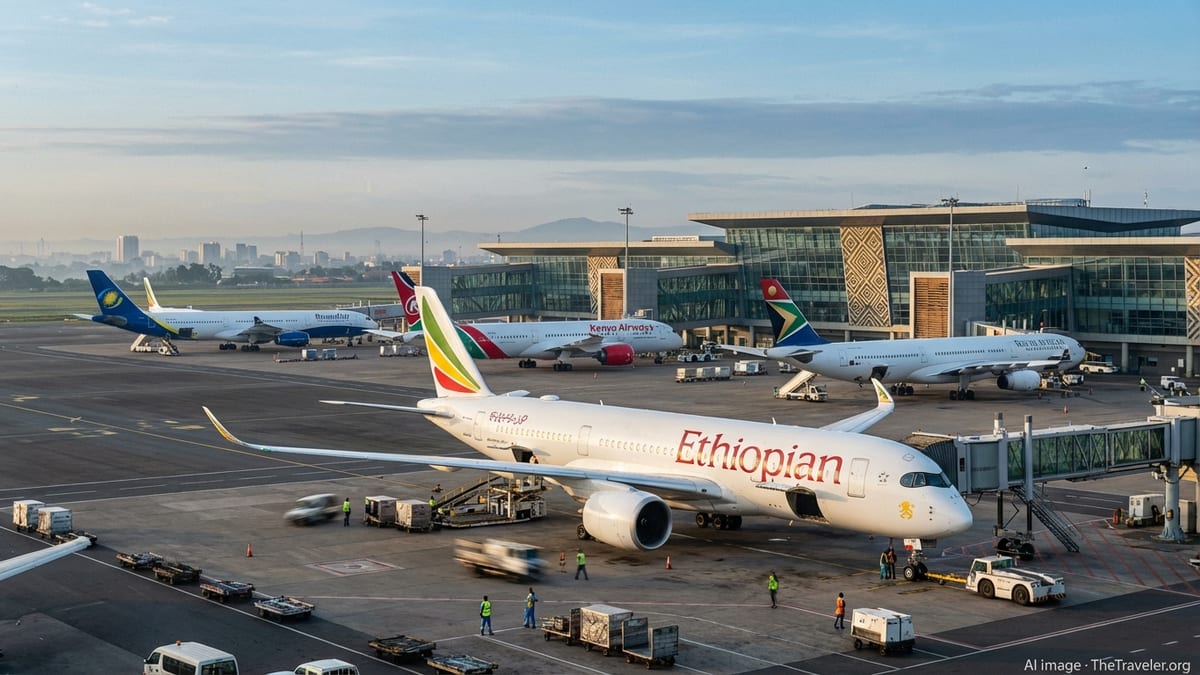
Traffic growth is not evenly distributed, but major hubs in East, West and Southern Africa are consolidating their roles as gateway airports. Addis Ababa, Nairobi and Johannesburg continue to anchor east and southern flows, while Lagos, Accra and Dakar are building influence in West Africa. These hubs are increasingly connected not only to Europe and the Middle East but also to secondary cities across Africa that were previously reached only by lengthy multi stop itineraries.
New Routes and Carriers Redraw the African Map
The surge in demand is coinciding with a wave of route launches and airline investments that are reshaping the continent’s aviation map. Ethiopian Airlines has continued to expand its African network from Addis Ababa, adding destinations such as Port Sudan and reinforcing its position as a pan African connector. Kenya Airways has expanded its schedule with additional intra African and intercontinental flights, using Nairobi to link secondary cities to long haul services.
New entrants are also contributing to the connectivity boom. In Central Africa, Air Congo, launched in late 2024 as the Democratic Republic of the Congo’s new national carrier, is building a regional network from Kinshasa and opening links to key markets in Southern Africa. Aviation analysts note that, by adding capacity in historically underserved areas such as the Congo Basin and Central African interior, emerging airlines are starting to fill long standing gaps in cross border connectivity.
Outside Africa, European and Middle Eastern carriers are targeting emerging African demand with additional capacity and new destinations. United States based carriers have been building selective African networks, while European airlines continue to add seasonal services to leisure destinations in North and East Africa. The result is a more finely meshed web of connections that shortens travel times for both African residents and international visitors.
Gulf and Global Partnerships Deepen Intra African Links
Partnerships with Gulf and other international airlines are playing a central role in the connectivity surge. Emirates has signalled a renewed focus on Africa, increasing services to cities such as Entebbe, Addis Ababa and Johannesburg and reinforcing interline arrangements with regional partners to reach safari and coastal destinations that lie beyond its own network. Public statements from the airline frame Africa as a long term strategic region, with additional frequencies and capacity adjustments responding directly to rising demand.
Other Gulf carriers are moving in the same direction. Recent performance updates from Middle Eastern aviation groups outline network expansions and new codeshare agreements that extend their reach deeper into Africa via local partners. Low cost and hybrid airlines based in the Gulf are also adding African destinations such as Entebbe and Djibouti as part of broader plans to connect their hubs to high growth emerging markets.
Partnership building is not limited to the Gulf. A growing number of African, European and Asian airlines are signing codeshare and interline agreements that allow passengers to book seamless itineraries across multiple carriers. Accra based Africa World Airlines, South African regional operators and other local players are increasingly plugged into these partnerships, providing feeder traffic to long haul flights while gaining access to global distribution channels.
Unserved Routes and Infrastructure Investment Create New Opportunities
Aircraft manufacturers and consulting arms are highlighting the commercial potential of unserved or underserved African routes. Recent route studies published by major planemakers identify dozens of city pairs within Africa, and between Africa and other regions, where passenger demand appears strong enough to support sustainable new services. These analyses also project that Africa will require hundreds of additional aircraft over the next two decades, along with tens of thousands of new pilots, technicians and cabin crew, to support rising travel demand.
Airport projects are moving ahead in several markets as governments seek to capture more of this growth. New and expanded terminals in cities such as Addis Ababa, Nairobi and Dakar are designed to handle growing transfer traffic as well as rising point to point demand. In Somalia, plans for a new international airport for Mogadishu are expected to ease capacity constraints and attract additional international services, contributing to improved regional connectivity after years of underinvestment.
These infrastructure efforts are increasingly tied to broader economic development strategies. Tourism promotion campaigns on the Red Sea and Indian Ocean coasts, industrial zone development near key airports and logistics corridors designed around air cargo are all meant to leverage better air links. The combined effect is to position aviation as both a beneficiary and a driver of Africa’s integration into global trade and travel networks.
Challenges Remain Even as Connectivity Surges
Despite the strong growth trajectory, industry assessments caution that African aviation still faces significant structural challenges. Profitability remains weak compared with other regions, with average earnings per passenger well below the global norm. High operating costs, fragmented regulation, limited access to foreign currency in some markets and lingering infrastructure bottlenecks all weigh on airline balance sheets, even as aircraft load factors improve.
Regulatory fragmentation continues to limit the potential of intra African connectivity. While initiatives aimed at liberalizing air services across the continent have made some progress, many routes are still governed by restrictive bilateral agreements that complicate network planning and drive up fares. Industry studies also note that many African airlines remain focused on their home markets, with relatively few cross border joint ventures or deeply integrated networks compared with other world regions.
Nonetheless, the current surge in travel demand and connectivity is prompting renewed efforts to address these constraints. Regional aviation bodies and economic communities are using the latest traffic data to advocate for streamlined rules, more open skies and greater investment in safety oversight. As more travelers experience the benefits of direct and one stop connections within Africa and between Africa and the rest of the world, political and commercial incentives to keep the growth cycle going are likely to strengthen.