

More news on this day
A transatlantic travel surge is reshaping the UK tourism landscape, with major airlines and hotel chains reporting robust demand from US and European visitors as British shoppers quietly turn supermarket loyalty points into long-haul flights and free hotel nights.
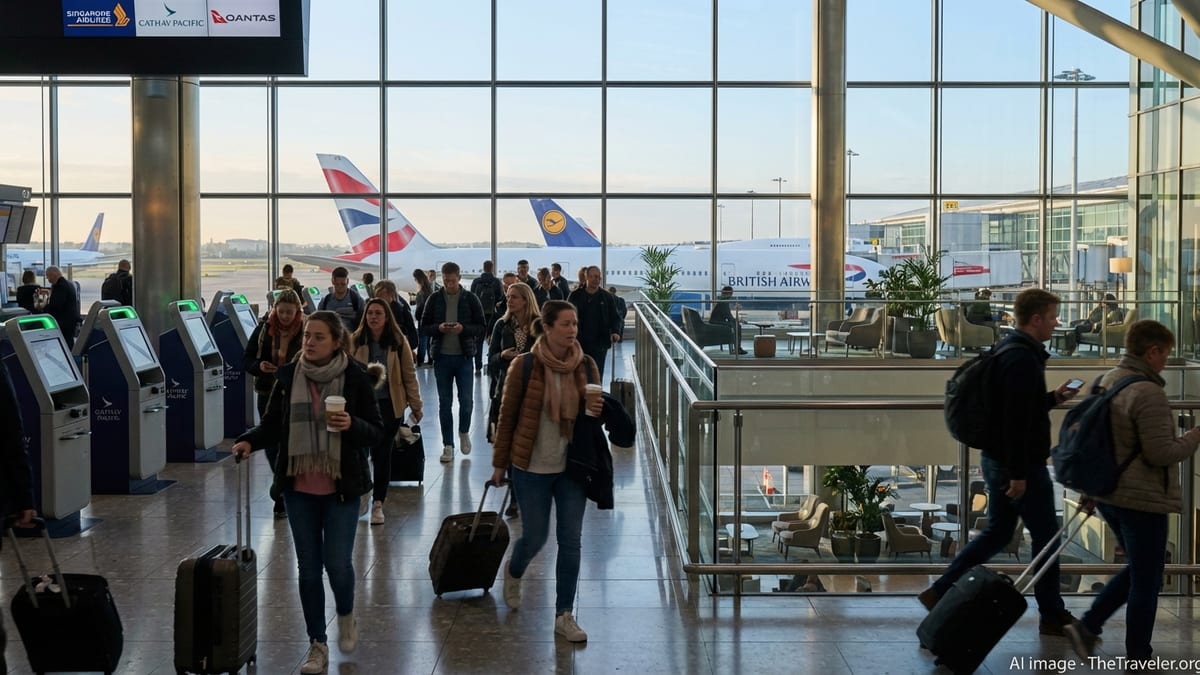
Transatlantic Carriers Lead a Resurgent UK Travel Market
British Airways, Virgin Atlantic, American Airlines and Lufthansa are emerging as the main beneficiaries of a renewed appetite for UK travel, particularly on routes linking London with the United States, France, Germany and Spain. Across Heathrow and other major UK gateways, aviation analysts report strong load factors on transatlantic and key European services as international tourism recovers and business travel stabilises.
VisitBritain’s latest forecast, released in February 2026, expects 45.5 million inbound visits to the UK this year, up from an estimated 43.6 million in 2025 and surpassing pre-pandemic volumes. The agency anticipates inbound visitor spending of £35.7 billion in 2026, with long-haul markets such as the United States delivering the strongest growth, underpinned by dense flight schedules on carriers including British Airways, American Airlines and Virgin Atlantic.
The United States has cemented its position as the UK’s most valuable inbound tourism market, with Americans now accounting for close to one in five pounds spent by overseas visitors. High-frequency shuttle-style services between London and US hubs such as New York, Boston and Los Angeles have allowed airlines to sustain premium cabins and stimulate leisure demand with tactical fares, while Lufthansa and other European carriers are funnelling high-spend travellers into the UK via their continental hubs.
Short-haul services from France, Germany and Spain are also recording solid performance, according to industry executives, as improved economic confidence in the eurozone and a strong dollar encourage more city breaks and shopping trips to London, Edinburgh and other UK destinations. This combination of long-haul Americans and near-European neighbours is underpinning robust yields for the four carriers at the heart of the UK’s air connectivity.
Hilton, Marriott and Accor Enjoy Rising UK Room Rates
Hotel groups Hilton, Marriott and Accor are riding the same wave. Corporate updates through late 2025 pointed to rising average daily rates and high occupancy in key UK cities, with American, French, German and Spanish travellers among the most reliable bookers of branded hotels. Executives at the three groups have repeatedly highlighted London as a standout market, supported by strong demand from US leisure guests and resilient business travel.
VisitBritain data indicates that inbound visitors spent more than £32 billion in the UK in 2024, with further nominal growth each year since. Analysts say a growing share of that spend is flowing into internationally branded hotels, as American and European travellers show a preference for loyalty programmes, consistent service standards and central locations around major rail terminals and airport corridors.
Hilton’s portfolio of business-focused properties around Heathrow and in central London has been buoyed by the ramp-up in flights from British Airways, American Airlines and other transatlantic carriers. Marriott’s upscale and lifestyle flags, from Mayfair to Manchester, have benefited from the influx of US visitors combining work trips with short leisure extensions. Accor, which operates brands including Sofitel, Novotel and Ibis, has captured both the budget-conscious city-break market from continental Europe and the premium segment seeking full-service properties near cultural landmarks.
With VisitBritain forecasting further growth in both visits and visitor spend through 2026, hotel operators are cautiously optimistic that rate erosion will be limited even if economic headwinds emerge. Pipeline data show a continued tilt toward lifestyle and extended-stay properties, aimed squarely at repeat international guests who now view London and other UK cities as regular, not once-in-a-decade, destinations.
How Sainsbury’s Nectar Points Quietly Turn Into Avios and Miles
Behind the visible boom in flights and hotel stays, a quieter revolution is taking place at supermarket tills. Sainsbury’s Nectar programme, one of the UK’s largest loyalty schemes, has become a powerful, if little-publicised, tool for financing international travel. Through a partnership between Nectar and the British Airways Executive Club, shoppers can convert Nectar balances directly into Avios, the currency used for reward flights and upgrades on British Airways and its transatlantic partners.
Under the current arrangement, members can link their Nectar and British Airways Executive Club accounts and convert in both directions. The core rate allows 400 Nectar points to be turned into 250 Avios, effectively monetising weekly supermarket shops, fuel purchases and online spending into long-haul travel value. The reverse conversion is also possible, enabling travellers to turn surplus Avios back into Nectar for in-store savings.
For frequent shoppers, the impact on flight costs can be meaningful. Industry calculators suggest that a typical household that leans into Nectar promotions at Sainsbury’s and other participating retailers can generate tens of thousands of Nectar points a year. Once converted into Avios, those points can offset the taxes and charges on reward flights to popular destinations such as New York, Paris, Berlin or Barcelona, or be pooled with travel-earned Avios from British Airways flights to reach a full reward seat faster.
The partnership effectively blurs the line between everyday spending and premium travel, allowing a family grocery budget to make a noticeable dent in the price of a summer holiday or a transatlantic city break. Travel advisers say savvy customers are increasingly structuring their supermarket and fuel spending around Nectar promotions specifically to build Avios balances without stepping on a plane.
From Hotel Stays to Miles: Stacking Loyalty for Bigger Savings
Loyalty arbitrage does not stop at the supermarket checkout. Hilton Honors, Marriott Bonvoy and Accor’s All Live Limitless programmes all offer ways for UK-based travellers to convert hotel points into airline currency, including Avios with British Airways and miles with Virgin Atlantic. While the transfer ratios are typically lower in value than redeeming points for free nights, they give travellers a way to top up flight balances when planning specific trips.
British Airways lists Hilton, Marriott and Accor among its hotel partners, with published exchanges such as 10,000 Hilton Honors points converting to 1,000 Avios and 4,000 Accor points converting to 2,000 Avios. Marriott Bonvoy points transfer at a base rate of three points to one Avios, with a bonus for larger transfers that can nudge the effective rate higher. Virgin Atlantic offers similar hotel conversion routes into Flying Club miles, including transfers from Hilton Honors and Marriott programmes.
In practice, well-informed travellers are stacking these schemes. A UK visitor might earn Hilton Honors points and airline miles on a paid stay at a London airport hotel before an early-morning departure, convert a portion of those hotel points into Avios or Virgin points when planning a future trip, and then use Sainsbury’s Nectar conversions to close the remaining gap to a reward seat. Combined with occasional airline promotions and off-peak calendars, the cumulative effect can cut the headline cost of transatlantic or European flights by hundreds of pounds.
On the accommodation side, travellers can still use hotel points for free or discounted nights in cities such as London, Manchester or Edinburgh, softening the blow of rising room rates at a time of strong inbound demand. Analysts say the ability to move value between supermarket, hotel and airline schemes is becoming a key differentiator for budget-conscious but travel-hungry consumers.
Americans and Europeans Turn Everyday Spending Into UK Trips
The surge in demand from the United States, France, Germany and Spain is being reinforced by similar loyalty dynamics overseas. Many US travellers arrive in the UK using reward flights earned through American Airlines AAdvantage, British Airways Avios or hybrid credit card currencies, while Europeans often draw on airline miles tied to Lufthansa Group or other European carriers. Once in the UK, they plug seamlessly into the same hotel ecosystems dominated by Hilton, Marriott and Accor.
In that sense, the UK travel boom is as much a story of loyalty economics as it is of pent-up wanderlust. British Airways, Virgin Atlantic, American Airlines and Lufthansa feed high-value visitors into the country; Hilton, Marriott and Accor capture their overnight spend; and programmes such as Sainsbury’s Nectar, Avios and Flying Club keep those travellers in a virtuous cycle of earning and redeeming. For consumers who understand the rules, the result is a steady stream of discounted flights and hotel stays that would be far harder to afford at full cash prices.
With VisitBritain forecasting further growth in international arrivals for 2026 and beyond, industry strategists expect loyalty partnerships to deepen. Supermarket schemes, co-branded credit cards and hotel-airline conversion offers are likely to become even more tightly integrated, giving UK households more ways to turn their weekly shop into a ticket out of the country, and giving overseas visitors extra reasons to return.
For now, the headline numbers tell a clear story. Planes operated by British Airways, Virgin Atlantic, American Airlines and Lufthansa are landing fuller, hotels branded Hilton, Marriott and Accor are busier, and a growing share of travellers on board and in the lobby have quietly paid for part of the journey with points collected on ordinary purchases, long before they roll their suitcase into the departure hall.