

More news on this day
A UK holidaymaker has been barred from flying with Emirates while in transit, leaving his wife and children stranded in Dubai with few realistic options to return home as the airline juggles backlogged passengers and a still-fragile regional flight network.
Get the latest news straight to your inbox!
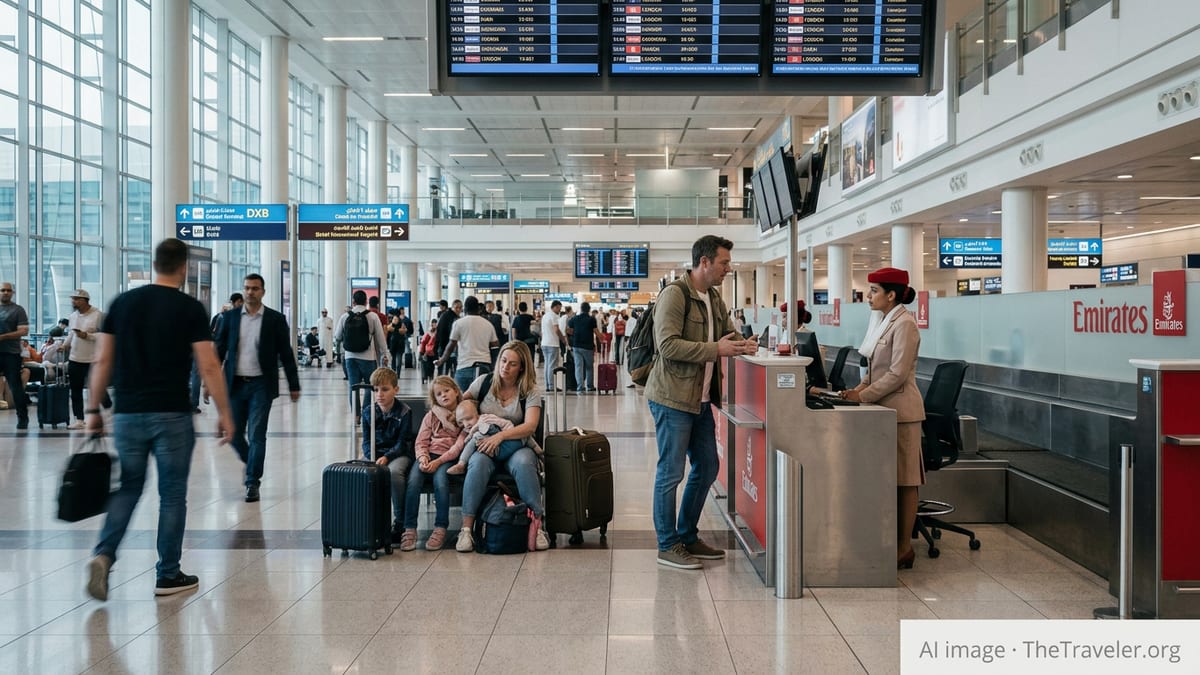
Incident Leaves Family Split Mid‑Journey
The incident unfolded after a UK family connected through Dubai on their way back from a winter-sun break, only to be told at the gate that the father would not be permitted to board any further Emirates-operated flight. The decision, communicated verbally by ground staff, effectively separated the family mid-journey in one of the world’s busiest transit hubs.
According to people familiar with the case, the passenger was informed that he was subject to a travel ban with Emirates, but was given little detail on how long it would last or the exact grounds for the decision. While airlines reserve the right to refuse carriage in cases ranging from disruptive behaviour to security alerts, those decisions typically come with written confirmation and an outline of next steps.
In this instance, the lack of clarity left the traveller and his dependants scrambling to understand whether he could fly with another airline out of Dubai, and whether the family’s existing tickets could be split or reissued in time to avoid an extended overstay in the United Arab Emirates.
The timing has amplified the impact. Dubai has only recently begun ramping services back up after several days of severe regional airspace disruption, and seats on many Europe-bound flights remain scarce as airlines work through mounting backlogs of stranded passengers.
Limited Routes and High Fares Complicate Return Plans
Under normal conditions, families facing a last-minute refusal of carriage in Dubai would have a menu of alternative options: routing via Doha, Abu Dhabi, Muscat or Istanbul on rival Gulf and European carriers. But with airlines still restoring full schedules and prioritising previously cancelled passengers, same-week seats to the UK have been limited and often prohibitively expensive.
Travel agents in Dubai report that economy fares to London and regional UK airports have spiked, reflecting both reduced capacity in recent days and intense demand from visitors trying to get home before school and work commitments resume. For the affected family, the sudden need to purchase new one-way tickets for multiple travellers has turned an already stressful situation into a potentially four-figure financial hit.
Complicating matters, once a passenger is banned by one carrier, that airline will not usually assist with rebooking on a competitor, even if disruption began on its own network. That leaves passengers reliant on their travel agent or personal funds to reach another gateway, sometimes via a neighbouring country, before connecting onwards to the UK.
In the current climate, some travellers have resorted to multi-leg journeys via secondary hubs, piecing together flights on different airlines to secure the final few remaining seats. For families with young children and limited flexibility, such journeys can be logistically daunting and far from guaranteed.
Blurred Lines Between Airline Policy and Passenger Rights
The case underscores the grey area where a carrier’s right to refuse carriage intersects with consumer protection rules. While European and UK regulations set out clear entitlements when flights are cancelled or heavily delayed, bans imposed on individual passengers fall outside common compensation schemes, particularly when airlines cite safety, security or serious misconduct.
Consumer advocates in the UK note that passengers can formally request an explanation in writing and, where appropriate, challenge the proportionality of a ban through the airline’s complaints process or alternative dispute resolution schemes. However, those avenues take time, offering little comfort to a family already stuck in a foreign country, paying for hotels and daily expenses as they wait.
Legal specialists point out that when the first leg of a journey departs from the UK or European Union, certain care obligations may still apply, including food, accommodation and assistance in arranging onward travel during disruption. But those rights become murkier once travellers are marooned at an intermediate hub outside European jurisdiction and the original disruption is linked to the passenger’s own conduct or status rather than operational issues.
With the father unable to board and his family ticketed on the same booking, the question now is whether Emirates will allow the remaining passengers to travel as planned, offer a partial refund, or cancel the booking entirely, forcing the group to rebook from scratch.
Strain on Dubai Hub Exposes Pressure Points
The situation is playing out against a wider backdrop of congestion and disruption at Dubai International Airport. In recent weeks, the hub has swung from near shutdown to sharply rising traffic as regional airspace gradually reopened and airlines raced to restore their schedules. Emirates has been operating a patchwork of repatriation and regular flights, with priority given to citizens and residents of key markets trying to get home.
For transit passengers, this has meant longer queues, more frequent last-minute changes and a growing reliance on digital updates that can be difficult to interpret in the heat of travel. Reports from travellers suggest that some have struggled to secure clear information about their place in rebooking queues, particularly when connecting itineraries involve code-share partners or package tour operators.
The knock-on effect is that passengers like the stranded UK family are competing for the same limited pool of seats as thousands of others affected by earlier cancellations. Hotels near the airport have filled rapidly during peak disruption, pushing some travellers to more distant districts and increasing the cost and complexity of each extra night spent in the city.
Although Dubai’s tourism industry is experienced in handling large volumes of visitors, the combination of operational disruption and individual bans is testing the system’s ability to respond flexibly and humanely in exceptional cases.
Practical Advice for Travellers Caught in Similar Situations
Travel industry experts say the case offers a number of lessons for passengers transiting major hubs such as Dubai. First, anyone informed verbally that they are banned or refused carriage should request written confirmation on the spot, including the specific policy invoked and whether it applies only to a single flight or to all future travel on that carrier.
Second, families travelling on a single booking reference should clarify whether unaffected passengers are still permitted to travel. In some instances, airlines will allow spouses and children to continue their journey, while in others they may insist on cancelling the entire reservation, triggering complex refund and rebooking negotiations.
Travel agents recommend contacting both the airline and, if applicable, the tour operator from a quiet location away from the check-in counters, documenting every conversation and keeping receipts for all extra expenses such as accommodation, meals and local transport. These records can be crucial when seeking reimbursement or making an insurance claim once back home.
Finally, travellers are urged to check the terms of their travel insurance policies, many of which exclude cover for bans or refusals arising from alleged misconduct or security concerns, but may still provide some protection for dependants’ additional costs or for missed segments caused by broader operational disruption.