

Rising above the Willamette Valley in soft, rust-colored folds, the Dundee Hills have become shorthand for Oregon wine at its most graceful. This compact, vineyard‑studded American Viticultural Area (AVA) is the cradle of the state’s Pinot Noir story and today ranks among the most acclaimed cool‑climate wine regions in the United States.
For travelers, it offers an intimate mix of hillside tasting rooms, slow‑food restaurants and valley views that glow at sunset. This guide will help you understand what makes Dundee Hills special, how to plan a visit, and how to taste your way through Oregon’s most famous wine region.
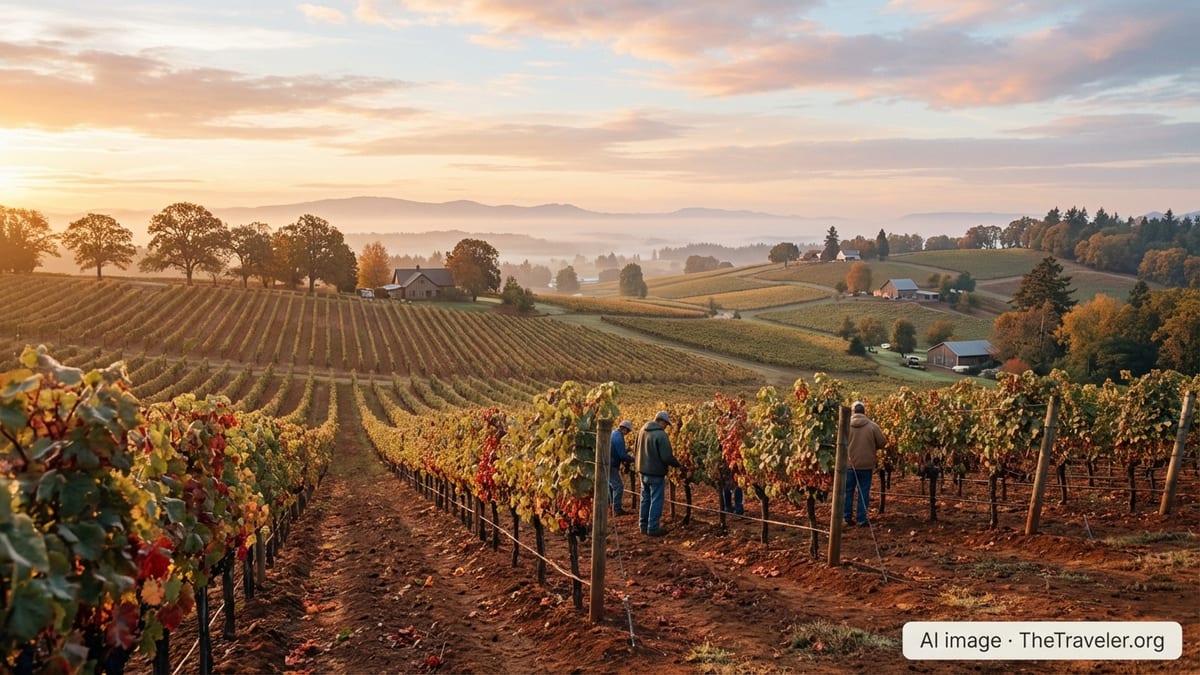
Where in Oregon Are the Dundee Hills?
The Dundee Hills sit in Yamhill County within the larger Willamette Valley AVA in northwest Oregon. They rise just west of the town of Dundee and a short drive from neighboring Newberg, roughly 28 to 30 miles southwest of Portland and about an hour from the Pacific coast. The hills run roughly north to south along the western side of the Willamette River valley, forming a distinct, uplifted island of red earth and vineyards above the surrounding lowlands.
This elevated position matters for travelers and wine alike. Many vineyards occupy slopes between roughly 200 and 800 feet, high enough to escape some valley fog and low-lying frost while still retaining the cool temperatures that Pinot Noir prefers. On a clear day, tasting rooms perched along these ridges look out over quilted vineyard blocks toward the Cascade Range, with Mount Hood often visible on the horizon. It is a compact region that you can drive across in less than half an hour, yet it contains a remarkable concentration of wineries and independent vineyards.
The Dundee Hills earned official AVA status in 2004, one of the earliest sub-appellations carved out of the Willamette Valley. Locally, the area is sometimes called the Red Hills, a nod to its vivid soils. For visitors, that AVA designation serves as an easy shorthand on labels and maps when you are choosing where to taste, stay and explore.
A Brief History: From Pioneers to World Stage
Winegrowing in the Dundee Hills dates back to the mid-1960s, when a small band of pioneers began planting Pinot Noir in what was then farmland and orchards. Among the most influential was David Lett of The Eyrie Vineyards, who planted Pinot Noir and Pinot Gris in the Dundee Hills in 1966, long before Oregon had any real international reputation for wine. At the time, choosing such a finicky Burgundian grape for a cool, rainy corner of the Pacific Northwest was a radical experiment.
Within a decade, that gamble paid off. A 1975 Eyrie Vineyards Reserve Pinot Noir made from Dundee Hills fruit placed among the top wines in a major blind tasting of Pinot Noirs in France in 1979. A subsequent rematch organized by Burgundy producer Robert Drouhin saw the same wine finish just behind a revered Burgundy bottling. The result was symbolic as much as technical: it announced that this quiet Oregon hillside could produce wines in the same conversation as the Old World benchmarks and helped persuade established Burgundy houses to invest in the area.
In the following decades, families and producers from Oregon and beyond established estates on these slopes. Properties such as Domaine Drouhin Oregon, Archery Summit, and others helped cement the Dundee Hills as the epicenter of Oregon Pinot Noir. By the early 2000s, the U.S. government recognized the distinctiveness of the region by granting it separate AVA status. Today, Dundee Hills is one of the best-known names on Oregon wine labels and a natural starting point for travelers exploring the Willamette Valley.
Terroir: Volcanic Soils, Gentle Hills and Cool Maritime Air
The character of Dundee Hills wine begins underfoot. The region is defined by Jory soil, a deep, well-drained, red volcanic earth formed from ancient basalt. This soil, now officially recognized as Oregon’s state soil, is moderately fertile and rich in iron, which contributes to its rusty hue. For grapevines, Jory’s excellent drainage and moderate vigor foster deep root systems and naturally limited yields, conditions that favor concentrated fruit and complex flavors rather than sheer volume.
Climate adds a second layer. The Dundee Hills experience a cool, maritime-influenced climate, with warm, relatively dry summers and wet winters. Annual rainfall is significant but much of it falls outside the growing season. The nearby Coast Range and Chehalem Mountains help shield the hills from the coldest ocean winds and heavy storms, making this one of the slightly warmer pockets of the Willamette Valley. The result is a long, even growing season in which Pinot Noir and other varieties can ripen slowly while preserving acidity.
Elevation and exposure complete the picture. Vineyards are typically planted on southeast to southwest slopes that maximize sunlight while avoiding the hottest extremes. Mornings can start misty and cool, giving way to mild afternoons and crisp evenings. For visitors, that means you can expect layered clothing weather during much of the year, with sunny afternoons followed by a noticeable chill after sunset, especially during spring and fall.
All of these factors combine to produce wines often described as elegant and finely textured rather than heavy or opulent. Tasting through multiple Dundee Hills bottlings, travelers commonly notice a family resemblance: pure red fruit, bright yet balanced acidity, and a subtle but persistent earthiness that locals often attribute to the volcanic soils beneath the vines.
Signature Grapes and Wine Styles
Pinot Noir is the undisputed star of the Dundee Hills. Many wines from this AVA show aromas of red cherry, wild strawberry, raspberry and plum, layered with notes that might include rose petal, forest floor, baking spice or a faint hint of cocoa or black tea. On the palate, Dundee Hills Pinot Noir is often medium-bodied with satiny tannins and a long, graceful finish. While each producer has its own style, the overall impression tends to be one of finesse and clarity of fruit rather than sheer power.
Chardonnay has emerged as a second flagship. Grown in the same cool climate, Dundee Hills Chardonnay frequently combines citrus and orchard fruit flavors with vibrant acidity and measured use of oak. Textures tend to be taut and mineral rather than creamy or heavily buttery, making these wines particularly food friendly. For travelers who know Chardonnay only from warmer regions, tasting a lineup from these hills can be an eye-opening contrast.
Other varieties thrive here in smaller volumes. Pinot Gris and Pinot Blanc are common white wines, often crisp and aromatic, showing notes of pear, apple and white flowers. Some estates experiment with Riesling, sparkling wines and rosé, using Pinot Noir and Chardonnay as base grapes. While production is modest compared with Pinot Noir, these alternate styles offer refreshing options for tasting flights and are ideal for lighter dishes at local restaurants.
Most Dundee Hills wineries focus on estate-grown fruit or carefully selected vineyard sources within the AVA, which means that the name on the label usually reflects a close relationship to a specific slope or block. As a traveler, this gives you the rare chance to taste wines that express small variations in soil, elevation and exposure across a compact area, often explained directly by the people who farm the vines.
Planning Your Trip: When to Go and How Long to Stay
The Dundee Hills are a year-round destination, but the experience shifts with the seasons. Late spring, from roughly May into early June, brings fresh greenery to the vineyards, lighter crowds and milder temperatures. Budbreak and early shoot growth are underway, and tasting room patios begin to open. This is a comfortable time for travelers who prefer quieter roads and more personal attention at the bar.
Summer, from late June through August, is the sunniest and warmest season. Vineyards are in full leaf, and long evenings create a relaxed atmosphere for sunset tastings and alfresco dinners. This is also the busiest period, with more traffic on Highway 99W and fuller reservations calendars. If you are planning a summer weekend, it is wise to reserve tasting appointments and lodging well ahead, especially at popular estates and boutique inns.
Autumn is perhaps the most atmospheric time to visit. From roughly September into October, vineyard leaves shift toward gold and crimson, and harvest activity brings a sense of excitement to the hills. You may see picking crews in the vineyards and feel the energy of fermentations in the air as you walk past open winery doors. Weather can swing between crisp, clear days and rainy spells, so flexible layers and waterproof footwear make sightseeing more comfortable.
Winter is quiet and contemplative. From November through early March, vines stand bare and mists often hang over the valley. Many tasting rooms remain open with reduced hours or by appointment, and lodging prices can be more favorable. This is an appealing season for travelers who enjoy slower travel, intimate conversations with winemakers and lingering over fireside tastings rather than outdoor views.
How to Experience Tasting Rooms Like a Local
Dundee Hills tasting rooms range from modest, family-run spaces to architecturally striking hilltop estates. Whatever the setting, the local culture tends to be relaxed and welcoming rather than formal. Reservations have become increasingly common, particularly on weekends and during peak seasons, so checking hours and booking time slots in advance is recommended. Many producers still accommodate walk-ins during quieter periods, but planning ahead ensures you can visit the places highest on your list.
Most tasting flights highlight multiple expressions of Pinot Noir, sometimes from different vineyard sites or vintages within the Dundee Hills, alongside at least one white wine such as Chardonnay or Pinot Gris. Staff are usually keen to explain how specific slopes, soil depths or vine ages shape each bottling, and they often share the history of their families or estates. Take your time, ask questions and feel free to spit or share tastes to keep your palate fresh if you plan to visit more than two or three wineries in a day.
Food offerings vary widely. A handful of estates have full-service restaurants or tasting menus, while others offer small plates, cheese boards or picnic provisions. Some allow you to bring your own picnic to enjoy on outdoor terraces, especially in summer, provided you purchase wine on site. It is wise to confirm each winery’s policy ahead of time, as regulations and availability can change from year to year.
Transportation deserves some thought. Roads in the Dundee Hills are narrow and winding, with frequent elevation changes. If you plan to taste at multiple wineries, consider hiring a local car service or joining a small-group tour so you can enjoy tastings without needing to drive afterward. If you do drive yourself, designate a sober driver, pace your visits and remember that many of the most memorable tastings come from unhurried conversations rather than racing from appointment to appointment.
Where to Stay and What to Eat
The town of Dundee itself has evolved from a sleepy outpost into a compact wine-country hub with small hotels, inns and vacation rentals. Many properties sit within a short drive of several tasting rooms, and some overlook vineyards directly. Nearby Newberg offers additional lodging, from contemporary boutique hotels to budget-friendly options, still within easy reach of the Dundee Hills. Staying locally reduces your time on the road and lets you enjoy dinners and evening tastings without a long drive back to a city.
Dining in and around the Dundee Hills leans into the region’s agricultural roots. Menus typically feature seasonal produce from nearby farms, Willamette Valley cheeses and meats, and Pacific Northwest seafood. Simple wine bars offer curated flights and small plates, while more ambitious restaurants pair multicourse menus with Pinot Noir and Chardonnay from neighboring estates. Advance reservations are wise on weekends and during harvest, when both locals and visitors compete for tables.
Casual options are plentiful as well. Food carts, cafés and bakeries in the area provide quick lunches between tastings, from hearty sandwiches and salads to pastries and coffee. Many wineries recommend specific local spots, and it is common for tasting room staff to share their favorite places for a relaxed dinner or brunch. Following those local tips often leads to memorable meals that might not yet appear on broader travel radars.
For travelers seeking a deeper immersion, some wine estates and farms offer on-site lodging or vineyard cottages. Waking up among the vines, watching morning fog lift over the rows and ending the day with a glass of estate wine on your own deck can transform a short visit into a fuller experience of life in the Dundee Hills.
Beyond the Glass: Activities and Day Trips
While wine is the main draw, the Dundee Hills and surrounding Willamette Valley offer a range of activities that round out a trip. Scenic backroads invite leisurely drives or cycling, with rolling views of vineyards, hazelnut orchards and small family farms. In spring and early summer, wildflowers appear along the roadsides and in nearby parks, while autumn brings colorful foliage to both hillsides and valley floor.
Hot air balloon flights that launch near Newberg or other neighboring communities provide a dramatic overview of the landscape. Early-morning launches typically coincide with calm winds and soft light, giving passengers a bird’s-eye view of vineyard blocks, river bends and small towns as the sun rises. Flights often conclude with a celebratory toast and can be a memorable way to mark a special occasion in wine country.
Art galleries, craft breweries and small-town main streets throughout Yamhill County add texture to a wine-focused itinerary. Towns such as McMinnville host tasting rooms, shops and cultural events, including gatherings that celebrate Pinot Noir and other wines of the region. Travelers interested in the history of the Oregon Trail and early settlement can also explore regional museums and interpretive centers within a short drive.
For those with more time, the Dundee Hills can serve as a base for day trips to the Oregon Coast, the Columbia River Gorge or even Portland itself. Each lies roughly an hour to ninety minutes away by car, making it easy to balance days of tasting with coastal walks, waterfall hikes or urban dining before returning to the quieter pace of wine country in the evening.
The Takeaway
The Dundee Hills distill what many travelers seek in Oregon wine country: a landscape of gentle hills and volcanic soils, a climate well suited to Pinot Noir and Chardonnay, and a community of growers who have spent decades learning how best to translate their slopes into the glass. For visitors, that dedication shows up as tasting rooms where you can speak directly with winemakers, hilltop patios with wide valley views and wines that favor elegance over excess.
Whether you come for a day trip from Portland or plan a longer stay among the vines, the key is to move at the measured pace the region itself suggests. Choose a few wineries that interest you, build in time for relaxed meals and unscheduled detours, and pay attention to the subtle differences in soil, exposure and style that each glass reveals. With thoughtful planning and an open palate, a visit to the Dundee Hills becomes more than a checklist of tastings. It becomes a deeper introduction to the landscape that helped put Oregon wine on the world map.
FAQ
Q1. Where exactly are the Dundee Hills located?
The Dundee Hills are in Yamhill County in northwest Oregon, just west of the town of Dundee and roughly 30 miles southwest of Portland within the Willamette Valley.
Q2. What makes Dundee Hills Pinot Noir distinctive?
Dundee Hills Pinot Noir is often noted for red fruit flavors, bright yet balanced acidity and silky tannins, with subtle earth and spice tones linked to its volcanic Jory soils.
Q3. When is the best time of year to visit?
Late spring through fall offers the most comfortable conditions, with lush vineyards in summer and colorful foliage and harvest activity in September and October.
Q4. Do I need reservations for tastings?
Reservations are strongly recommended on weekends and in peak seasons. Some tasting rooms accept walk-ins on slower days, but advance bookings ensure you can visit preferred wineries.
Q5. How many wineries can I realistically visit in one day?
Planning for two to four wineries per day allows time to enjoy each tasting, ask questions and travel safely between stops without feeling rushed.
Q6. Is it possible to visit without renting a car?
Yes. Local tour operators and car services offer guided tasting itineraries and private drivers, which can be a convenient option if you prefer not to drive after tasting.
Q7. What other wines besides Pinot Noir should I try?
Chardonnay is a key white wine, often crisp and minerally. Pinot Gris, Pinot Blanc, sparkling wines and rosé from Dundee Hills fruit also offer refreshing alternatives.
Q8. Are the Dundee Hills family friendly?
Many tasting rooms welcome well-supervised children and offer outdoor spaces, though the focus is on wine. Checking each winery’s policies in advance is helpful for families.
Q9. How long should I plan to stay in the area?
A full day allows a good introduction, but two or three nights provide time for varied tastings, leisurely meals and side trips to nearby towns or viewpoints.
Q10. Can I visit Dundee Hills as a day trip from Portland?
Yes. The drive from Portland typically takes about an hour, making Dundee Hills a practical and rewarding day trip, especially if you focus on a small cluster of nearby wineries.