

More news on this day
What is usually the most anticipated period of the Islamic calendar is rapidly becoming the most heartbreaking, as escalating regional conflict and sweeping airspace closures derail 2026 Umrah plans and Eid holiday travel across the UAE, Saudi Arabia and Qatar.
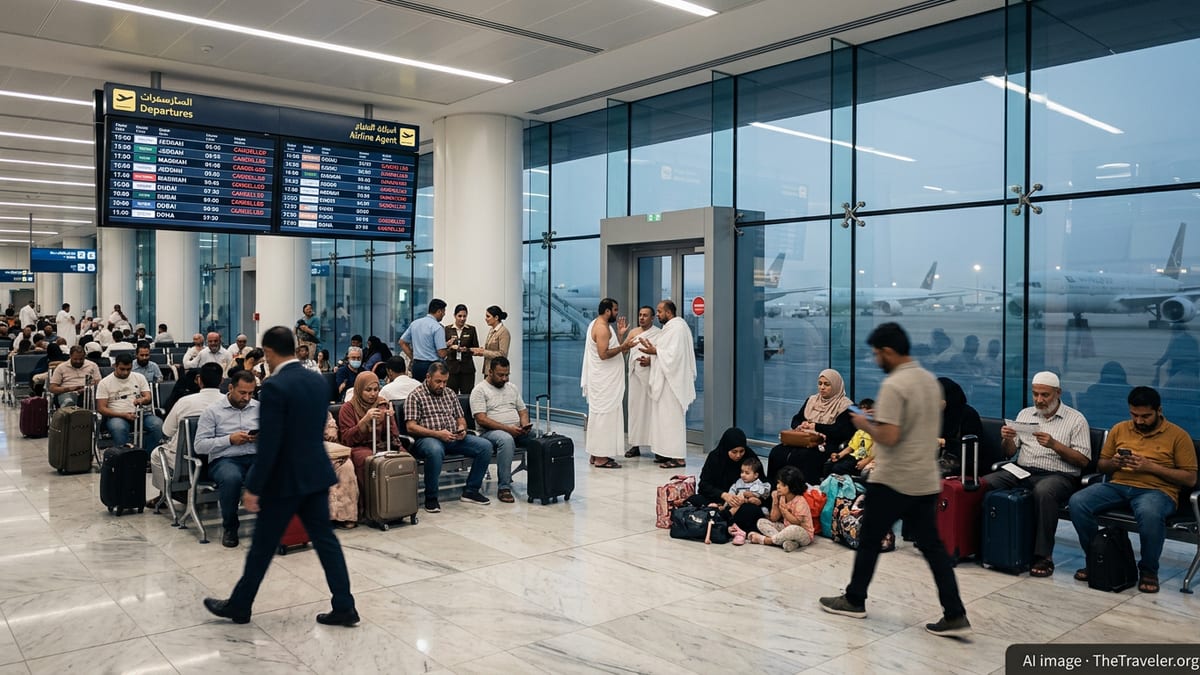
Airspace Closures Turn a Peak Season into a Standstill
With less than a month to go before the expected start of peak Umrah and Eid Al Fitr travel, large parts of Gulf airspace remain shut or heavily restricted following a dramatic escalation of conflict centered on Iran and Qatar. Authorities in the UAE, Saudi Arabia and Qatar have all imposed sweeping flight suspensions, leaving airlines scrambling and travelers facing mass cancellations just as demand for pilgrimage and family reunions peaks.
Industry data over the past week indicates that well over ten thousand flights to, from and through the wider Middle East have been canceled, with Gulf hubs such as Dubai, Abu Dhabi and Doha among the hardest hit. Although a handful of evacuation and limited commercial services have begun to operate on certain corridors, regular schedules remain far from normal. For passengers who booked Umrah trips months in advance, the disruption is emerging at the worst possible moment.
Airlines and civil aviation authorities have stressed that safety considerations are driving the closures, citing missile and drone activity, interceptions over the Gulf and heightened military alert levels. While some carriers are optimistic that more routes can be restored in the coming days, planners are now candid that any full resumption in time for the heart of the Umrah and Eid season is unlikely.
Official Umrah 2026 Programs Frozen as Operators Pull Back
While Saudi authorities have not formally “canceled” the Umrah season, the practical effect of the airspace crisis is that organized Umrah 2026 programs marketed across the Gulf are being suspended en masse. Licensed tour operators in the UAE and Qatar say they have been instructed to halt new bookings, with many existing group packages withdrawn or postponed indefinitely because there is no guarantee that flights into Jeddah and Madinah will operate safely or on schedule.
In recent days, Saudi and regional low cost carriers have extended suspensions on key routes linking Gulf capitals to the kingdom’s western cities, cutting off the main air bridge for pilgrims. Some airlines have tried to keep a skeleton network running to larger Saudi gateways, but these services are subject to last minute changes and complex detours around closed airspace, limiting their capacity and reliability.
Travel agencies that specialize in religious tourism report an unprecedented wave of refund and rebooking requests. Many had structured fixed-date Umrah packages built around school holidays and anticipated Eid Al Fitr time off. With flights in disarray and hotel allocations in Makkah and Madinah now at risk of going unused, operators are racing to renegotiate with Saudi hoteliers, who themselves are facing a sudden collapse in expected Gulf patronage.
For individual pilgrims, particularly first time travelers who have saved for years, the wording of cancellation notices and the lack of clear future dates feels tantamount to an outright cancellation of their 2026 Umrah dreams, even if authorities stop short of declaring the season closed.
Eid Flights Suspended, Families Separated Across the Region
Beyond pilgrimage, the crisis is hitting one of the most emotional aspects of the Eid period: cross-border family reunions. Eid flights that traditionally connect expatriate workers in the Gulf with relatives across the region have been extensively curtailed, with services into and out of the UAE, Saudi Arabia and Qatar sharply reduced or suspended altogether on multiple carriers.
Travelers transiting through Dubai, Abu Dhabi and Doha report long queues at rebooking desks and crowded terminal halls as passengers learn that onward legs of their journeys have been canceled. Some have been able to secure rerouting via still open hubs such as Istanbul or Cairo, but at the cost of long detours, uncertain connections and extra nights in hotels that not all can afford.
For Gulf residents originally planning to spend Eid in Makkah or Madinah and then continue onward to home countries, the domino effect has been severe. With departure flights to Saudi Arabia suspended from several regional points and return flights equally uncertain, many are choosing, or being forced, to stay put. Social media feeds across the UAE, Saudi Arabia and Qatar are now filled with stories of families facing their first Eid apart in years, if not decades.
Carriers that have resumed limited services are prioritizing repatriation and essential travel, leaving little room for discretionary holiday trips. Even where tickets are theoretically available, sharply higher prices, complex routings and the risk of last minute cancellations are discouraging would be travelers from attempting to salvage their original Eid plans.
Emotional and Financial Toll on Pilgrims and Travelers
The disruption is exacting a heavy emotional toll, particularly on those who had planned to combine Umrah with long awaited family gatherings during Eid. In Gulf communities where travel to Saudi Arabia for Umrah has become almost a yearly ritual, the abrupt loss of that journey in 2026 is being experienced as a profound spiritual and personal setback.
Many pilgrims had already paid nonrefundable deposits for flights, hotels and ground transport. While some airlines and hotels are offering waivers or credits due to the exceptional circumstances, refund policies vary widely, and smaller agencies often lack the liquidity to reimburse customers quickly. Households that budgeted for a once in a lifetime trip now find themselves fighting to recover funds just to cover day to day expenses.
The psychological impact is amplified by the uncertainty of the situation. With no definitive timeline for full reopening of key air corridors and no clear guidance on when suspended Umrah and Eid travel might be feasibly rebooked, families are left in limbo. Community leaders across the UAE, Saudi Arabia and Qatar are urging patience, emphasizing that safety must prevail, but acknowledging the deep disappointment rippling through neighborhoods and mosques.
For hospitality businesses in Saudi Arabia, particularly in Makkah and Madinah, the blow is immediate. Hotels, transport providers and small retailers had staffed up and stocked for the usual pre Eid surge from neighboring Gulf states. As group after group cancels, operators are revising revenue forecasts and considering temporary closures, adding an economic dimension to what is already a human and spiritual crisis.
What Travelers in the UAE, Saudi Arabia and Qatar Should Expect Next
Airline executives and aviation analysts caution that while some flight operations are slowly resuming in controlled corridors, the pattern is volatile and subject to rapid change as security conditions evolve. Travelers in the UAE, Saudi Arabia and Qatar are being advised to assume that large scale, pre conflict Eid schedules will not be restored in time for the upcoming holidays.
For would be Umrah pilgrims, the practical advice emerging from operators is to avoid making any new bookings for 2026 travel until there is unequivocal clarity from civil aviation authorities on airspace status and from Saudi regulators on the structure of any revised pilgrimage season. Those with existing reservations are urged to remain in close contact with their airlines or accredited travel agents, document all communications and seek written confirmation of any credits or refunds.
In the short term, limited repatriation and point to point services are likely to prioritize stranded passengers and essential travel over new leisure or religious trips. Overland alternatives from some Gulf states into Saudi Arabia exist but are constrained by capacity, security checkpoints and the long distances involved, meaning they are unlikely to provide a broad solution for the canceled 2026 Umrah and Eid wave.
As the holy month approaches, the region’s most joyful travel season is instead being marked by empty departure boards, packed customer service lines and prayers for a swift and safe resolution. For countless Muslims across the UAE, Saudi Arabia and Qatar, 2026 will be remembered as the year when the journey they cherish most was put on hold.