

More news on this day
United Airlines is gradually reshaping how it sells air travel, shifting from a simple hierarchy of cabins toward a more layered menu of options that lets passengers customize everything from fare flexibility to meals and onboard comforts.
Get the latest news straight to your inbox!
From Fixed Cabins to Flexible Fare Menus
For years, United Airlines presented its product in familiar tiers such as basic economy, standard economy, premium economy, business and Polaris business. That structure still exists on paper, but recent changes indicate a broader move toward unbundling benefits inside each cabin and selling them as a menu of choices, rather than a single take-it-or-leave-it package.
Publicly available information on United’s booking flows shows that what used to be a straightforward economy column is evolving into a three-step ladder of basic, standard and fully refundable options. Travelers now see a single price for economy at first glance, only to be taken to a secondary screen where specific benefit levels, like change flexibility, checked baggage and seat selection, are separated and priced accordingly.
Industry reports on United’s commercial strategy suggest the airline is following a wider trend in aviation: using fare families and branded products to appeal both to budget-conscious flyers and to travelers willing to pay more for comfort or flexibility. Rather than adding entirely new cabins, the airline is carving more options within existing ones, effectively multiplying the number of product combinations a customer can buy.
This approach mirrors developments at rival carriers that have introduced layered offerings such as basic-style fares in premium cabins and more granular main cabin bundles. Analysts describe it as a move away from cabin labels and toward a retail-style grid of price points and features, with airlines aiming to capture extra revenue without alienating travelers who still want a low entry price.
Premium Cabins Explore “Basic” Business Concepts
United’s most visible experimentation is in the premium end of the plane. The carrier has already invested heavily in its Polaris business-class brand and premium economy seats, and now it is exploring further segmentation inside those cabins, including a lower-frills option sometimes described in trade coverage as a potential “basic business” product.
During investor briefings, executives have outlined plans to expand the range of premium fares rather than treat business class as a single, all-inclusive experience. Reports indicate that one proposal would create a stripped-down Polaris fare with fewer perks, such as reduced lounge access or more restrictive changes, positioned at a lower price point to attract leisure travelers who value the seat but can forgo extras.
At the same time, the airline is pressing ahead with hardware changes that support this strategy. New widebody aircraft entering the fleet feature more lie-flat and premium economy seats, and some models are slated to introduce additional business-class suites. By adding physical capacity at the front of the plane and then layering fares within that space, United can target both high-yield corporate demand and cost-conscious travelers looking for a one-time upgrade.
Industry observers note that this premium segmentation resembles what low-cost carriers have done in the opposite direction, adding paid extras on top of bare-bones fares. For United, the goal appears to be creating an accessible entry point into business and premium cabins while still preserving high-priced, fully flexible tickets for travelers who prioritize convenience and status benefits.
Economy Customers Confront a Three-Tier Experience
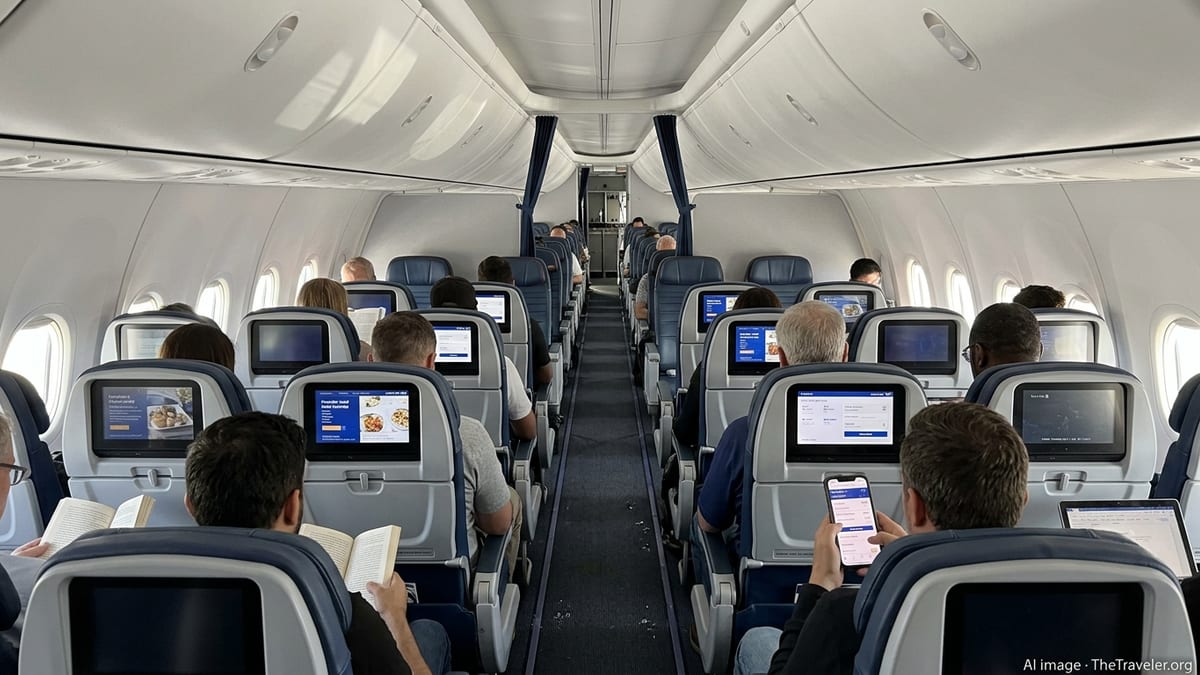
The most immediate impact for many travelers is in the economy cabin, where United’s layered menu is already visible in online booking tools. Basic economy remains the lowest rung, with restrictions on carry-on baggage and changes, while higher-priced economy options add benefits such as advance seat selection, mileage earning rules and more flexible change policies.
Recent updates to United’s app and website have effectively folded the display of basic and standard economy into a unified economy column. Only after selecting that column do customers encounter a secondary screen detailing the differences and prices for basic, regular and fully refundable economy. User commentary on public forums shows that some travelers welcome the clearer side-by-side comparison of what is and is not included, while others argue that the new layout can obscure the true cost of the product they expect.
Publicly shared fare documentation indicates that United is also using this structure to fine-tune how many seats are sold at each benefit level on a given flight. Lower-tier economy fares can be tightly controlled as demand rises, leaving mostly flexible or extra-legroom options available closer to departure. That gives the airline more ability to match price and perks to demand patterns, but it can also make it harder for passengers to predict when a particular combination will be available.
Travel advisers and frequent flyers point out that the result is a more complex buying decision. Instead of choosing simply between basic and regular economy, customers now weigh multiple dimensions: refundability, change fees, baggage, preferred seating and even how their choice may interact with elite status or credit card benefits. The cabin label on the boarding pass may still read “economy,” but the experiences can differ significantly.
Food, Beverages and Add-Ons Become a Retail Shelf
United’s shift toward a menu of choices is not limited to seats and fares. The airline is also reshaping onboard services, particularly food and beverage, into a retail-style offering that can be browsed and purchased in advance. In early 2026, the carrier began rolling out a system that allows economy passengers on many medium-haul routes to preorder fresh “Bistro on Board” meals before departure.
According to published coverage of the program, United plans to make preorder the exclusive way to buy fresh entrees in the economy cabin on eligible flights, with hot and cold options ranging from burgers and tacos to cheese and fruit plates. Snack boxes and smaller items remain available during the flight, but the most substantial meals are increasingly tied to advance selection.
United has signaled that it will expand these choices with seasonal salads, sandwiches and wraps, as well as premium beverages offered only through preorder. The strategy reflects several aims at once: giving passengers more certainty that their preferred item will be available, reducing food waste by preparing only what has been ordered and creating another layer of optional spending that sits on top of the base fare.
Beyond catering, the airline continues to monetize extras such as preferred seating, extra-legroom economy, Wi-Fi passes and early boarding, presenting them more prominently during booking and check-in. Together with diversified fare products, these ancillary options form a broad catalog of upsells that let United extract more value from each seat, even when headline fares remain competitive.
What a Layered Model Means for Future Trips
Analysts who follow airline economics describe United’s shift as part of a larger transformation of the legacy carrier model. Instead of relying primarily on broad cabin distinctions, airlines are increasingly behaving like retailers, offering a range of modular components that can be combined into hundreds of possible trip configurations.
For travelers, that evolution brings a mix of flexibility and complexity. The layered menu can make it easier to pay only for what is needed, particularly for occasional trips where a basic seat and small bag are sufficient. At the same time, those who value flexibility or comfort must take extra care to understand what is bundled into each fare, how change rules differ and which services can still be added later.
Public commentary suggests that loyal customers are closely watching how transparent United remains as it refines this approach. Clear explanations of what each option includes, straightforward pricing steps and consistent terminology across the website, mobile app and third-party booking tools may determine whether the new model feels empowering or confusing.
As United continues to adjust cabin layouts, test new fare families and expand preorder and ancillary services, its product is likely to look less like a staircase of distinct cabins and more like a grid of overlapping choices. For passengers planning trips in the coming seasons, the key will be approaching that grid as a menu to be read line by line, rather than relying on cabin labels alone to describe what the ticket truly buys.