

More news on this day
United Airlines is accelerating a sweeping cabin investment built around three core aircraft types, aiming to put more premium seats and upgraded amenities in reach of everyday travelers rather than reserving comfort for a small elite.
Get the latest news straight to your inbox!
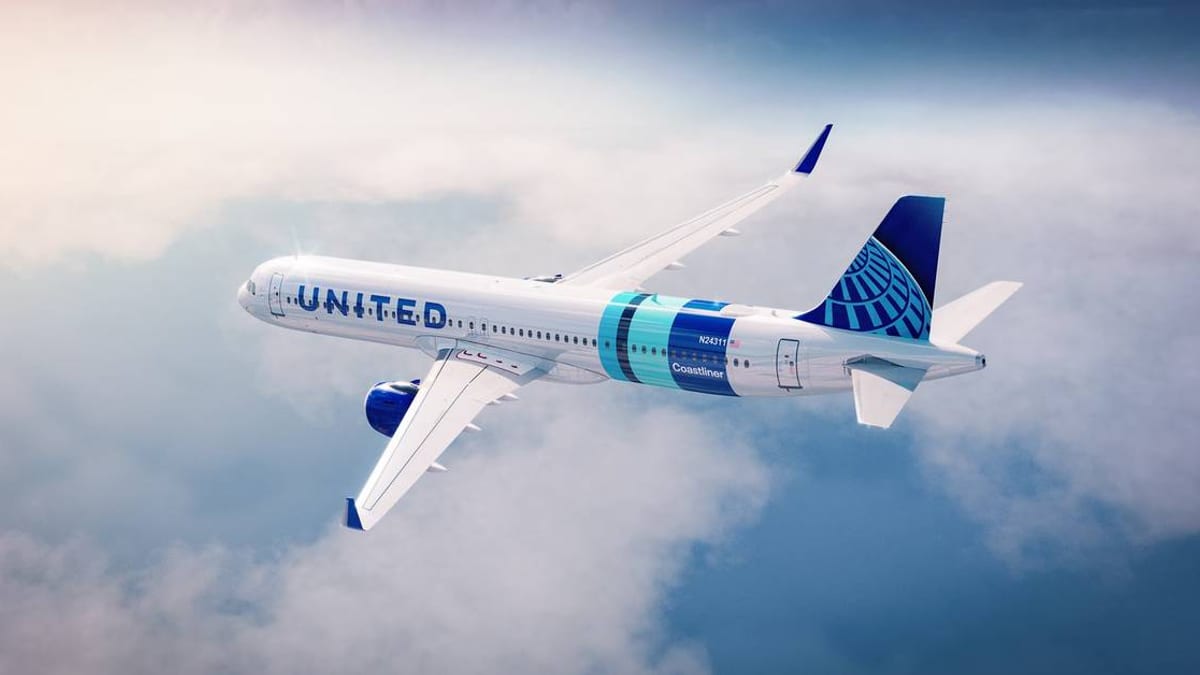
Image by Simple Flying
A Strategy Built Around Three Workhorse Families
Recent fleet updates and investor materials show United concentrating much of its cabin investment on three main aircraft groupings: Boeing 787 Dreamliners for long haul, Boeing 737 MAX and 737-900ER jets for domestic and regional routes, and larger widebodies such as the 777-300ER on high-demand international corridors. While the airline continues to operate a diverse fleet, these categories account for a growing share of its capacity and are increasingly the focus of interior upgrades.
On long haul routes, the 787-9 has become the showcase for United’s new premium direction. New deliveries will debut the “United Elevated” interior, headlined by updated Polaris business suites and an expanded premium economy cabin. At the same time, the airline is methodically refreshing narrowbody cabins with its Signature Interior design, adding more extra-legroom and upgraded domestic first class seats on 737 MAX and 737-900ER aircraft.
According to publicly available financial presentations, Boeing 737 MAX aircraft are described as central to United’s growth and fleet renewal plans, with hundreds of new deliveries expected over the coming years. Alongside the Dreamliner fleet and a smaller pool of flagship 777-300ER jets, these aircraft give the carrier a platform to spread premium offerings more evenly across its network rather than confining them to a limited set of routes.
Industry analysis suggests that by concentrating on these three families, United can standardize more of the passenger experience. That in turn makes it easier to promise passengers a higher likelihood of finding lie-flat seats, premium economy recliners, larger in-flight entertainment screens and power at the seat, whether they are flying a flagship intercontinental route or a domestic transcontinental service.
Elevated 787-9: Making Every Cabin Feel Premium
The centerpiece of United’s latest push is the Elevated interior on new Boeing 787-9 Dreamliners, unveiled in May 2025. Renderings and descriptions published by the airline and reported across aviation outlets highlight a configuration with 222 seats, including 64 Polaris business class suites and eight new Polaris Studio seats at the very front of the cabin.
The Polaris Studio concept adds a “business-plus” layer, with suites that are roughly a quarter larger than standard Polaris, complete with privacy doors, an extra ottoman seating position for a companion, wireless charging and 27-inch 4K OLED seatback screens. The rest of the Polaris cabin also receives sliding doors and the same large-screen in-flight entertainment, positioning United among the most premium offerings for business class on U.S. carriers.
Further back in the aircraft, United is expanding premium economy capacity on the 787-9 to 35 United Premium Plus seats, the highest count in its fleet. These recliners gain design touches that have traditionally been reserved for business class, including soft-touch materials, upgraded cocktail tables and 16-inch 4K OLED screens. The airline is also installing 13-inch 4K displays in Economy Plus and standard economy, significantly raising the baseline for in-flight entertainment throughout the cabin.
United’s own disclosures indicate that at least 30 new 787-9s will be delivered with the Elevated interior through 2027, with the first aircraft expected before the end of 2025 and initial passenger flights planned in 2026 on routes such as San Francisco to Singapore and San Francisco to London. While there are currently no public plans to retrofit existing Dreamliners to this exact standard, the new layout underscores a broader strategy of making every seat on long haul flights feel more modern and more connected.
Narrowbodies Get Signature Interiors and More Premium Seats
Alongside its long haul investments, United is steadily transforming the experience on domestic and regional routes by refreshing its narrowbody fleet, especially the Boeing 737 MAX and 737-900ER. Company updates shared with employees and investors show that by the end of 2025, a large majority of these narrowbodies are expected to feature the carrier’s Signature Interior, with redesigned sidewalls, updated lighting, larger overhead bins and new seats throughout the cabin.
Industry reporting on U.S. premium trends has highlighted that United is increasing the number of premium and extra-legroom seats on key domestic jet types. On certain 737-900ER aircraft, for example, the airline has been shifting the balance of the cabin to offer more Economy Plus seating while maintaining a sizeable first class section aimed at business travelers and frequent flyers. The 737 MAX family is also being delivered with refreshed domestic first class seats and improved technology, including larger personal device holders and enhanced power options.
These changes feed into what analysts describe as a “premium for everyone” concept. While not every customer will buy a lie-flat seat or even a premium economy ticket, more travelers will have access to extra-legroom rows, upgraded seat materials and improved on-board technology on the routes they fly most. For United, pushing premium features into its workhorse narrowbodies is key to maintaining yield while competing aggressively on schedule and network breadth.
United’s March 2026 communications to retired employees noted that 82 new aircraft were added and 119 aircraft received the Signature Interior in 2025 alone, bringing that design to around two-thirds of its narrowbody fleet. The scale of that retrofit effort illustrates how central the 737 family has become to the airline’s plan to elevate the baseline experience across North America.
Growing the Premium Pie, Not Just the Front Cabin
Across its fleet, United is not only improving the quality of high-end seats but also increasing their total number. Internal summaries of 2025 performance report that the airline flew a record 27.4 million premium seats in that year, with those seats representing about 12 percent of all capacity. That marks a significant shift from earlier years when premium cabins were smaller and more tightly concentrated on transoceanic routes.
The new 787-9 layout alone illustrates this direction. By boosting Polaris capacity to 64 suites and Premium Plus to 35 seats, the aircraft becomes heavily weighted toward higher-yield cabins compared with previous versions of the same model. On domestic aircraft, incremental increases in first class and extra-legroom seating densities similarly tilt the mix toward travelers willing to pay more for space and comfort.
Aviation industry coverage indicates that this approach aligns with a broader trend among U.S. carriers, which are responding to strong demand from leisure and hybrid business travelers ready to spend more for a better journey. Rather than treating premium as a niche, United is using its three core aircraft families to make upgraded seating options a visible, widely available part of its network.
For travelers, the practical effect is that routes which once offered only a basic two-cabin layout are increasingly seeing more differentiated products, from refreshed domestic first on a 737 MAX to fully enclosed Polaris suites on a 787-9. For the airline, spreading premium across these key aircraft types is designed to drive revenue resilience in different demand environments while signaling that a higher standard of comfort is becoming the norm rather than the exception.