

More news on this day
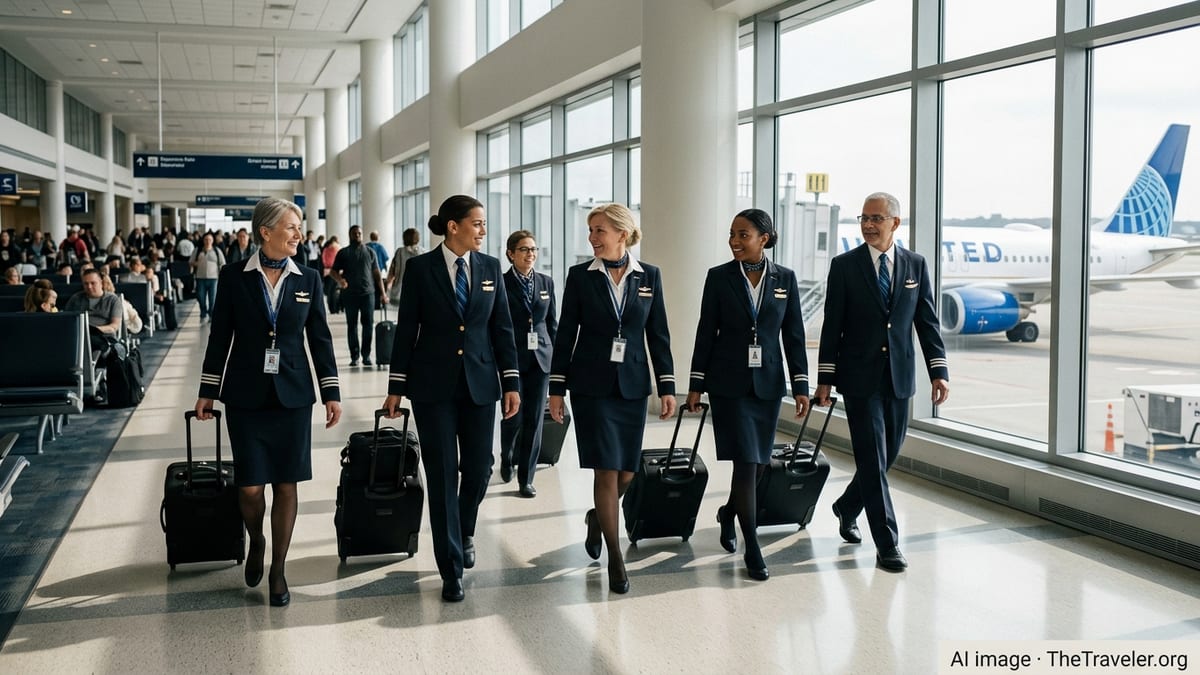
United Airlines has reached a new tentative agreement with the union representing roughly 30,000 flight attendants, a deal that includes substantial pay increases, new boarding pay and scheduling improvements that would position the group among the highest-paid cabin crews in the United States if ratified.
Get the latest news straight to your inbox!
Industry-Leading Wage Scale and Immediate Raises
According to publicly available information and recent coverage of the agreement, the tentative deal between United Airlines and the Association of Flight Attendants-CWA provides immediate raises for all flight attendants upon ratification. Pay scales would then step up over the life of the contract, with top hourly rates reported to reach about 100 dollars by the end of the agreement. That figure would place United flight attendants at or near the top of the U.S. airline industry in terms of hourly base pay.
Reports indicate that the new agreement was reached after months of contentious bargaining and an earlier tentative deal that was rejected by a wide margin in 2025. Pay progression, compensation during ground time and retroactive wage adjustments had been major sticking points. The latest proposal appears structured to address many of those concerns, with higher peak rates and clearer advancement for more junior crew members.
The tentative deal also comes as United is managing higher operating costs, including jet fuel prices affected by geopolitical tensions. Company financial disclosures and recent business reporting highlight efforts to trim unprofitable flying while still investing in labor agreements that secure staffing for its global network. The size of the reported pay increases underscores how central flight attendants have become to the carrier’s long-term operational strategy.
Boarding Pay and Better Compensation for Ground Duties
One of the most closely watched elements in United’s negotiations has been pay for time on the ground, particularly boarding. Traditionally, U.S. flight attendants have not been paid their full hourly rate until the aircraft door closes, despite handling boarding, safety checks and customer assistance beforehand. In recent years, however, boarding pay has become a central demand in labor talks across the industry.
Publicly available summaries of the new tentative agreement indicate that United’s flight attendants would receive dedicated boarding pay for the first time if the deal is ratified. This change mirrors broader trends at other major carriers, where unions have pushed to recognize ground-based duties as paid work. For many crew members, boarding pay can significantly raise overall monthly earnings, especially on schedules with multiple short segments.
The move toward more comprehensive ground compensation also reflects the operational reality faced by cabin crews. Boarding often coincides with tight turnaround times, heavy carry-on loads and higher passenger expectations. By tying additional pay to that specific phase of the operation, United aligns with a growing recognition across the industry that customer-facing responsibilities do not begin only when the aircraft leaves the gate.
Scheduling Improvements and Quality-of-Life Gains
Beyond wages, the tentative agreement is reported to contain a range of scheduling and work-rule improvements aimed at quality of life. Flight attendants at major U.S. airlines have repeatedly pointed to unpredictable reserve periods, limited schedule flexibility and long duty days as key reasons for demanding stronger contracts. United’s flight attendants have been no exception, staging high-profile pickets and informational campaigns over the past two years.
Public materials describing the deal reference better scheduling protections, including adjustments to reserve rules and rest provisions. While specific language will be detailed in the full contract documents provided to members, reports suggest that the package is designed to balance United’s need for operational flexibility with more predictable work patterns for crew.
Quality-of-life changes have become increasingly prominent across aviation labor talks, sometimes rivaling wages in importance. For United, securing a contract that reduces burnout and improves retention is especially significant as the airline continues to rebuild and expand its international and domestic networks. More reliable schedules and stronger rest rules can help ensure that experienced flight attendants remain at the carrier rather than seeking opportunities elsewhere.
Ratification Vote Ahead for 30,000 Flight Attendants
With the tentative agreement now announced, attention turns to the membership vote. Approximately 30,000 United flight attendants will have the opportunity to review the full contract language, attend briefings and ultimately decide whether to approve the deal. Union communication channels are expected to circulate detailed pay tables, work-rule explanations and implementation timelines in the weeks ahead.
Recent history suggests that ratification is not guaranteed. An earlier tentative agreement was voted down in 2025, signaling that flight attendants were willing to hold out for stronger terms even after union negotiators recommended approval. The new proposal includes higher headline pay rates and more robust ground compensation, but members will scrutinize how those gains compare with inflation, cost of living in base cities and recent pilot and mechanic contracts at United and rival carriers.
The timing of the ratification process is also noteworthy for travelers. Public updates from union channels earlier in March referenced a potential timeline that would see voting in May and contract implementation by early summer. If that schedule holds, improved pay scales and boarding pay could take effect ahead of the peak U.S. summer travel season, when United’s system faces some of its heaviest demand.
Implications for Passengers and the Wider Airline Industry
For passengers, the tentative agreement is unlikely to bring immediate, visible changes to service levels, but it could have meaningful longer-term effects. Higher pay and better scheduling conditions may help United recruit and retain experienced cabin crew, which can support more consistent onboard service and smoother operations, particularly during irregular operations such as weather disruptions.
The deal may also add pressure on competing carriers that are still in talks with their own flight attendant unions or preparing for upcoming negotiations. In recent years, wage and work-rule gains won by one group of aviation workers have often served as benchmarks elsewhere, especially among the largest U.S. airlines. United’s reported move toward industry-leading pay and more comprehensive ground compensation could reset expectations across the sector.
At the same time, rising labor costs add to the list of financial headwinds facing airlines, alongside volatile fuel prices and ongoing investment in new aircraft and technology. While strong travel demand has so far allowed major carriers to absorb higher costs, analysts have noted that sustained increases in labor and fuel expenses may eventually influence fares and route planning. United’s decision to advance a robust deal for its flight attendants highlights the balancing act between maintaining competitive pricing and ensuring stable, motivated frontline staff.