

More news on this day
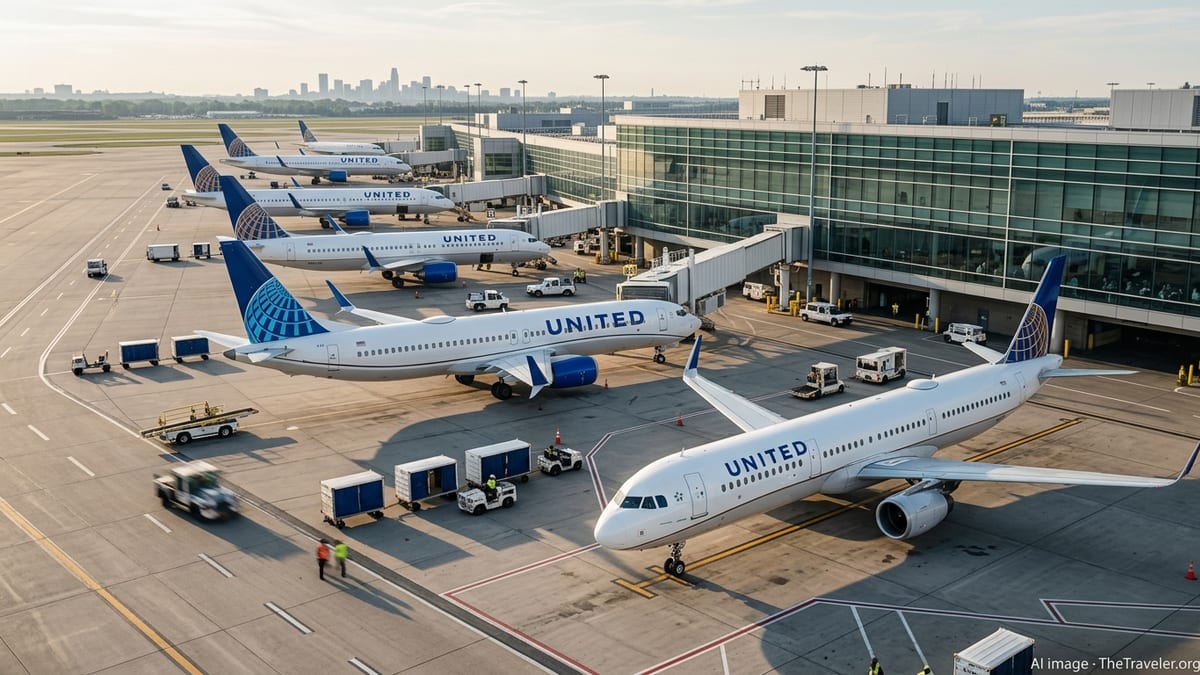
United Airlines is accelerating a sweeping fleet renewal that will see more than 250 additional aircraft delivered by 2028, as the carrier leans on a mix of Boeing and Airbus jets, new cabin interiors and upgraded onboard technology to sharpen its competitive position and cater to rising demand for premium travel.
Get the latest news straight to your inbox!
Surge in Deliveries Anchored in United Next Strategy
Publicly available investor materials and recent industry coverage indicate that United expects to add more than 250 new aircraft to its mainline fleet between now and April 2028, representing one of the fastest large-fleet expansions in the global market. The bulk of these deliveries are tied to the airline’s United Next plan, a multi-year growth strategy first laid out in 2021 and since expanded through additional orders and lease commitments.
Company filings show that United has firm commitments for hundreds of Boeing 737 MAX and Airbus A321neo narrow-body aircraft, along with additional Boeing 787 Dreamliners and future Airbus A350 wide-bodies scheduled into the next decade. Within that broader pipeline of roughly 700 new aircraft through 2032, the period to 2028 is set to be particularly dense, with an average delivery pace that outstrips earlier years and positions the airline with one of the youngest large fleets in North America.
Recent documentation from United’s investor presentations outlines a strategy focused on “upgauging” to larger narrow-bodies. By replacing smaller regional jets and aging single-aisle planes with higher-capacity, more efficient models, United aims to grow seats per departure while keeping a close eye on unit costs and fuel burn. This approach is designed to support both network expansion and higher revenue from premium cabins on busy domestic and transatlantic routes.
The airline’s 2024 and 2025 fleet updates underscore how aggressively it is executing on these plans. Data compiled by aviation analysts shows deliveries of dozens of Boeing 737 MAX 8 and 9 aircraft, as well as an accelerating stream of Airbus A321neo jets, with deliveries expected to ramp further as new contracts, leases and previously held options convert into active fleet additions before 2028.
Balancing Boeing and Airbus to Manage Risk and Capacity
United’s expansion to 2028 is shaped by a more diversified aircraft mix than at any point in its history. Public reports note that the airline has more than 370 Boeing 737 MAX aircraft on firm order and at least 180 Airbus A321neo jets under contract, supplemented by leased A321neos that help bridge gaps created by certification delays for the Boeing 737 MAX 10.
According to published coverage of United’s order book, the airline expects deliveries of 56 additional 737 MAX aircraft between 2027 and 2028, while an earlier order for 50 Boeing 787-9 wide-bodies is scheduled to arrive from 2028 through the early 2030s. At the same time, an October 2023 order for 60 Airbus A321neo aircraft with deliveries beginning in 2028, combined with subsequent lease announcements for 40 more A321neos, further tilts the narrow-body fleet toward larger, next-generation models.
This dual-manufacturer strategy helps United lessen its exposure to program-specific delays and gives planners flexibility to match aircraft types with route profiles. The 737 MAX 8 and 9 families are set to remain core domestic workhorses, while the A321neo is being positioned for higher-density transcontinental services and select international flights that benefit from its range and fuel efficiency.
Industry analysts highlight that United is also gradually phasing out older models such as certain Boeing 767 variants while preparing for a future Airbus A350 fleet that will eventually join its wide-body lineup. The combination of new 787s and future A350s is expected to drive significant reductions in per-seat emissions on long-haul services while allowing the airline to open or reinforce high-yield markets across Europe and Asia.
Cabin Refresh Aims at a More Premium Passenger Experience
The aircraft arriving through 2028 are not just about raw capacity. United is using the influx of new jets to standardize a more premium onboard product, with a strong emphasis on seatback entertainment, connectivity and cabin comfort. Data from the airline’s retrofit program indicates that around 70 percent of its mainline narrow-body fleet has already received the new signature interior, and the goal is to align incoming aircraft with these updated specifications.
Coverage from aviation and business media describes new domestic first class seats with larger privacy wings, increased storage and wireless charging, set to appear on more than 200 Boeing 737 and Airbus A321neo aircraft in the middle of the decade. In economy cabins, the airline is rolling out 10-inch or larger 4K seatback screens with Bluetooth audio, high-output power at every seat and bright LED lighting schemes designed to make cabins feel more spacious.
On long-haul routes, particularly with the Boeing 787-9, United is introducing an “Elevated Aircraft Interior” concept that includes an updated Polaris business class cabin, expanded Premium Plus seating and refreshed economy sections. Reports indicate that these aircraft will feature larger privacy-focused business class suites, upgraded bedding and finishes, along with premium economy seats equipped with privacy dividers, personal device charging and enhanced legroom.
The airline is also signaling a broader focus on accessibility and digital services. Public commentary around the United Next program points to consistent Wi-Fi connectivity, improved in-flight portal experiences and a more unified look and feel across cabins as new aircraft replace older subfleets. For passengers, that means a higher probability that even shorter domestic segments will offer the same entertainment options and charging capabilities previously reserved for flagship international services.
Network Growth and Environmental Goals Tied to New Jets
United’s fleet expansion to 2028 is closely linked with its network strategy, particularly in premium-heavy coastal markets and long-haul international corridors where demand has bounced back strongly. Industry analysis suggests that larger, more fuel-efficient narrow-bodies like the 737 MAX 8 and A321neo are being directed toward key domestic hubs and cross-country routes, freeing up wide-bodies to support growth in Europe, the Pacific and emerging leisure markets.
By replacing smaller regional jets with mainline aircraft, United is able to add more seats and a higher proportion of premium seating on high-demand routes without a corresponding increase in flight frequencies. This approach supports the airline’s stated aim of increasing premium seats per North American departure, a metric that has already risen sharply since the United Next strategy was launched.
Environmental performance is another central pillar of the plan. Corporate responsibility reports show that new-generation aircraft can deliver up to double-digit percentage reductions in fuel burn and carbon emissions per seat compared with the older types they replace. As more of the fleet transitions to 737 MAX, A321neo and 787 models through 2028, United is positioning this modernization drive as a key lever in its long-term climate and sustainability commitments.
These efficiency gains also play a role in protecting the airline from fuel price volatility. More modern aircraft typically offer lower operating costs, giving United additional resilience in a marketplace where demand patterns can shift quickly and competitive pressure from both legacy carriers and low-cost rivals remains intense.
What Travelers Can Expect by 2028
For passengers booking United flights in the next few years, the impact of the 250-plus aircraft expansion is likely to be most visible in the consistency and quality of the onboard experience. As more routes shift to aircraft with the latest interiors, travelers can expect a higher chance of finding features such as large overhead bins, modern lighting, power outlets at every seat and personal screens with streaming content.
Frequent flyers on transcontinental routes are likely to see more wide-body or high-spec narrow-body aircraft equipped with lie-flat or enhanced recliner seats in the front cabin, as well as expanded extra-legroom and premium economy sections. This aligns with United’s focus on attracting corporate travelers and high-spend leisure customers who prioritize comfort and in-flight productivity.
At the same time, the continued addition of 737 MAX and A321neo jets is expected to reduce the number of older, less efficient aircraft in daily service, simplifying the fleet and potentially improving reliability. Aviation observers note that a younger, more homogeneous fleet can support more predictable maintenance schedules and fewer last-minute aircraft substitutions that disrupt the passenger experience.
By 2028, United’s network will still reflect the competitive realities of the broader industry, but the combination of more than 250 new aircraft, upgraded cabins and modernized technology suggests that travelers will increasingly encounter a product designed around comfort, connectivity and environmental performance rather than merely capacity.