

More news on this day
U.S. airlines have stormed into the new year with a record shattering performance, generating an estimated 10 billion dollars in January ticket sales as travelers flocked back to premium cabins and long haul international routes in numbers that surpass pre pandemic highs.
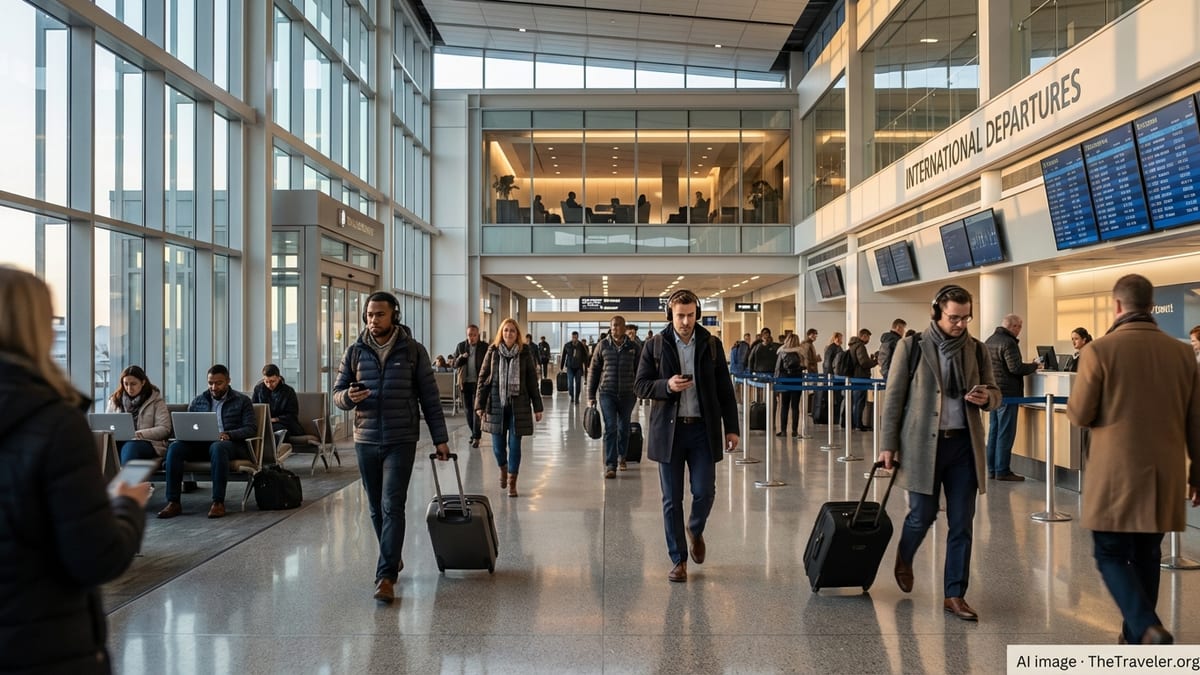
Record January Signals New Phase in Air Travel Recovery
The 10 billion dollar January tally, based on industry and government data for U.S. carriers and ticket sales processed through major travel agencies, marks the strongest opening month on record for the country’s airlines. It follows a year in which global passenger demand not only recovered from the pandemic but pushed to new highs, with international traffic leading the way. Analysts say the milestone underlines how quickly air travel has shifted from a fragile rebound story to one of structural growth, particularly at the top end of the market.
While December 2024 still holds the record for total passengers carried by U.S. airlines, January’s revenue figures reveal a different picture. Carriers are flying slightly fewer people than at the late 2024 peak, according to Bureau of Transportation Statistics data, but they are earning significantly more per seat. That reflects a higher mix of long haul journeys, robust corporate and affluent leisure demand, and travelers willing to pay for extra space and better service in premium cabins.
The surge comes despite lingering economic uncertainty, elevated airfares and geopolitical tensions that have complicated some international routings. Industry executives say customers have adjusted to higher prices and increasingly see travel, particularly for long postponed international trips, as a non negotiable priority rather than a discretionary luxury.
Underlying data from global bodies reinforces the strength of the trend. The International Air Transport Association recently reported that global passenger traffic in 2024 climbed more than 10 percent from the previous year and pushed nearly four percent above 2019 levels, with international demand growing faster than domestic markets. That momentum has carried into the Northern Hemisphere winter season, helping U.S. carriers fill planes at historically high load factors even in what is traditionally a softer month.
Premium Cabins Drive a Revenue Rich Mix
Central to January’s revenue surge is the performance of premium cabins, where business class and premium economy seats have been selling at elevated fares and with fewer empty seats than at any time since before the pandemic. Airlines say they are capturing strong demand from both corporate travelers returning to regular overseas trips and high income leisure passengers who are opting to trade up from standard economy.
Over the last several years, U.S. and international carriers have aggressively reconfigured their long haul fleets, adding more premium economy rows and updating business class suites with lie flat beds and enhanced privacy. Those investments are paying off. In revenue terms, a single business class seat can generate three to five times the income of an economy seat on the same route, meaning even modest increases in premium occupancy can have an outsized effect on monthly sales totals.
Corporate travel, while still not fully back to its pre pandemic volume by some measures, is now skewing toward higher yielding trips that blend work and leisure. Airline executives report that many business travelers are extending stays to include weekends, often bringing partners or family members along. That so called blended travel pattern pushes more passengers into premium economy and extra legroom products, while also sustaining demand during off peak days that once relied heavily on discounted fares.
At the same time, loyalty program dynamics are nudging frequent flyers toward higher cabins. With status thresholds now tied more closely to spending than to miles flown, travelers are more inclined to pay for upgrades rather than chase additional low fare trips. January’s record month reflects that shift, as elite members burn points for premium seats and then continue to top up balances with revenue tickets later in the year.
International Journeys Lead the Charge
The biggest single driver of January’s sales record has been the resurgence of international travel, particularly on transatlantic, transpacific and U.S. to Latin America routes. After several years in which domestic leisure demand dominated, Americans and inbound visitors are again prioritizing overseas trips, from European city breaks and Asian business missions to long stays in beach destinations across Mexico, the Caribbean and South America.
Recent data from global airline associations shows international passenger traffic outpacing domestic growth by several percentage points, with capacity on many major long haul corridors still constrained by aircraft delivery delays and airspace restrictions. That imbalance between demand and available seats has allowed airlines to maintain firm pricing through the winter, especially in premium cabins and on nonstop routes from key hubs such as New York, Atlanta, Dallas Fort Worth, Chicago and Los Angeles.
On the inbound side, federal survey data for early 2025 highlights steady flows of visitors arriving by air from traditional source markets such as the United Kingdom, Brazil, Japan, India and China. Those travelers are concentrating on gateway states including Florida, New York, California, Nevada and Texas, supporting strong hotel occupancy and tourism spending alongside the airline windfall. Many are staying for longer trips and spending more per visit than in previous years, reinforcing the importance of air connectivity to local economies.
Outbound U.S. travel by air has also expanded. Millions of American residents flew to Canada, Mexico and overseas destinations in the first quarter of 2025, continuing a trend of international exploration that began as borders reopened and has gained pace as passports and visas backlogs eased. January’s numbers suggest that the appetite for longer, experience driven trips has not been dulled by higher prices or a strong dollar, even if travelers are making adjustments in other parts of their budgets.
Agency Sales and Corporate Channels Hit New Highs
Behind the headline 10 billion dollar figure is a powerful showing from U.S. travel agencies and corporate booking platforms, which act as critical distribution channels for major airlines. Airlines Reporting Corp. data indicates that U.S based agencies processed more than 100 billion dollars in airfare sales over the course of 2025, the highest annual total ever. That strong run into the end of last year set the stage for a robust January, when agency sales volumes remained elevated and average ticket values increased.
Traditional brick and mortar agencies report brisk business for complex international itineraries, group trips and high end leisure journeys that travelers are reluctant to piece together on their own. At the same time, online travel agencies and corporate booking tools are handling a growing share of premium and flexible tickets as companies encourage staff to resume in person meetings and conferences, often across borders.
Airlines have leaned heavily into these channels, using targeted incentives, dynamic corporate discounts and new distribution technology to push richer content and more fare options. That strategy appears to be paying off. With agency issued tickets accounting for a significant portion of international and premium travel, strong January sales through these intermediaries offer an early indicator of a busy spring and summer for long haul networks.
Corporate travel managers say they have seen a steady rise in forward bookings since late 2025, with particular strength in transatlantic and intra Asia connections that rely on U.S carriers and their alliance partners. While some companies continue to limit internal travel and encourage virtual meetings, external client facing trips are increasingly viewed as essential, especially in sectors such as technology, finance, energy and professional services.
Capacity Constraints Keep Fares Elevated
One reason January revenue soared even as passenger numbers lag slightly below late 2024 peaks is that airlines have been unable to add capacity as quickly as demand has returned. Carriers across North America and Europe are grappling with delayed aircraft deliveries, engine maintenance bottlenecks and staffing challenges that limit how many additional flights they can schedule during peak periods.
Global data for late 2025 shows airlines operating at some of the highest load factors on record, a sign that planes are leaving gates fuller than ever. While that boosts efficiency and profitability, it also leaves little slack in the system to absorb weather disruptions or sudden shifts in demand. For travelers, the result is fewer last minute deals and more competition for seats on popular routes, particularly nonstop flights and those timed to connect with major events and school holidays.
Domestic U.S. capacity has been inching higher but remains influenced by strategic decisions to focus on profitable hubs and reduce exposure to secondary markets. Some regional and cross border routes have been trimmed, even as flagship long haul corridors add frequencies and larger aircraft. That network reshaping further concentrates demand into major coastal and Sun Belt gateways, where airports are already operating close to their infrastructure limits during peak hours.
Industry analysts note that so long as capacity growth remains constrained, record revenue months like January are likely to continue whenever seasonal demand spikes. Airlines have signaled that they intend to prioritize yields and reliability over sheer volume growth, a stance that should support continued strong financial performance but may frustrate cost conscious travelers hoping for sizable fare relief.
Airport Hubs Strain Under Surging Volumes
The rush back to the skies is being felt most acutely at the nation’s major airports, many of which are posting record or near record passenger counts despite only modest capacity expansion. In cities such as New York, Atlanta, Dallas, Denver, Miami and Los Angeles, terminal renovations and new concourses are racing to keep pace with demand for gates, security lanes and immigration facilities.
Even mid sized airports are seeing the effects of the broader boom. In Austin, for example, officials recently reported the busiest month in the airport’s history, with more than two million passengers traveling in October 2025 and a single day record tied to the U.S. Grand Prix. Similar milestones have been logged in other fast growing metropolitan areas where population influx, corporate relocations and a thriving events calendar feed into longer nonstop route maps.
Airport operators warn that sustained growth in premium and international traffic brings additional operational challenges. Long haul widebody flights require more extensive ground handling, customs staffing and gate time than short haul domestic services. Premium passengers expect upgraded lounges, priority security access and reliable ground transportation links into city centers. Meeting those expectations, especially during future peak seasons, will require continued investment in infrastructure, technology and workforce training.
For now, most airports are coping, albeit with occasional bottlenecks at check in, security and baggage claim during peak banks of departures and arrivals. Travelers are increasingly advised to arrive earlier for international flights and to build in longer connections when transiting busy hubs, especially in winter months when weather disruptions can cascade quickly through tightly scheduled networks.
Economic Signals Mixed but Traveler Priorities Shift
The record January performance comes against a backdrop of mixed economic signals in the United States, including uneven consumer spending and concerns about the impact of higher interest rates. Yet within that environment, travel appears to occupy a uniquely resilient position in household budgets, often surviving cutbacks in other discretionary categories.
Surveys of international air travelers conducted for the U.S. government show that visitors and outbound Americans alike are spending more per trip and staying longer, particularly on overseas journeys. Many respondents cite a desire to make up for missed experiences during the pandemic years and to deepen connections with family and friends abroad. That emotional dimension has helped sustain demand for long haul flights and premium cabins even as airfares remain elevated.
At the same time, inflation and cost of living pressures are reshaping behavior at the margins. Some travelers are choosing shoulder season departures instead of peak summer weeks, or opting for premium economy instead of business class while still seeking extra comfort. Others are trading multiple shorter domestic weekends for a single, more ambitious international vacation that justifies the higher ticket price.
For airlines, these shifts play to their current strengths. Long haul networks, alliance partnerships and diversified cabin products allow carriers to capture a wide spectrum of budgets and trip purposes, from once in a lifetime vacations to routine corporate shuttles. January’s results suggest that travelers are willing to adapt their plans rather than abandon them, reinforcing expectations that air travel will remain a growth industry even if broader economic conditions soften.
Outlook: Can the Momentum Last Through 2026?
Looking ahead, industry forecasts point to another year of expanding global air travel in 2026, with total passenger numbers expected to set fresh records if economic and geopolitical conditions remain broadly stable. Trade groups project mid single digit growth in global demand, building on the double digit rebound of 2024 and the solid gains recorded through much of 2025.
For U.S. airlines, a key question is whether the January surge proves to be a one off spike or the opening act of another strong year. Forward booking trends for spring and summer are encouraging, particularly on international routes linked to major events and anniversaries that are expected to draw heavy visitor traffic. At the same time, structural headwinds including volatile fuel prices, supply chain delays and environmental regulations could raise costs and constrain further capacity growth.
Environmental considerations will also loom larger as airlines pursue net zero emissions goals and face scrutiny over their climate impact. While carriers have increased purchases of sustainable aviation fuel and invested in more efficient aircraft, such measures currently account for only a small fraction of total fuel use. Higher ticket prices linked to environmental costs could test the limits of travelers’ willingness to pay in the years ahead.
For now, though, the message from January’s record 10 billion dollars in sales is clear. Air travel, and especially premium international air travel, has not only recovered but is setting new benchmarks. U.S. airlines enter the rest of 2026 with fuller planes, healthier balance sheets and a customer base that remains remarkably eager to fly, even at a higher price.