

More news on this day
International visitors planning trips to the United States in 2026 are entering one of the busiest and most unpredictable periods for the country’s airports, with evolving disruption risks, tighter security processes and large crowds converging around major events such as the 2026 World Cup and America’s 250th birthday.
Get the latest news straight to your inbox!
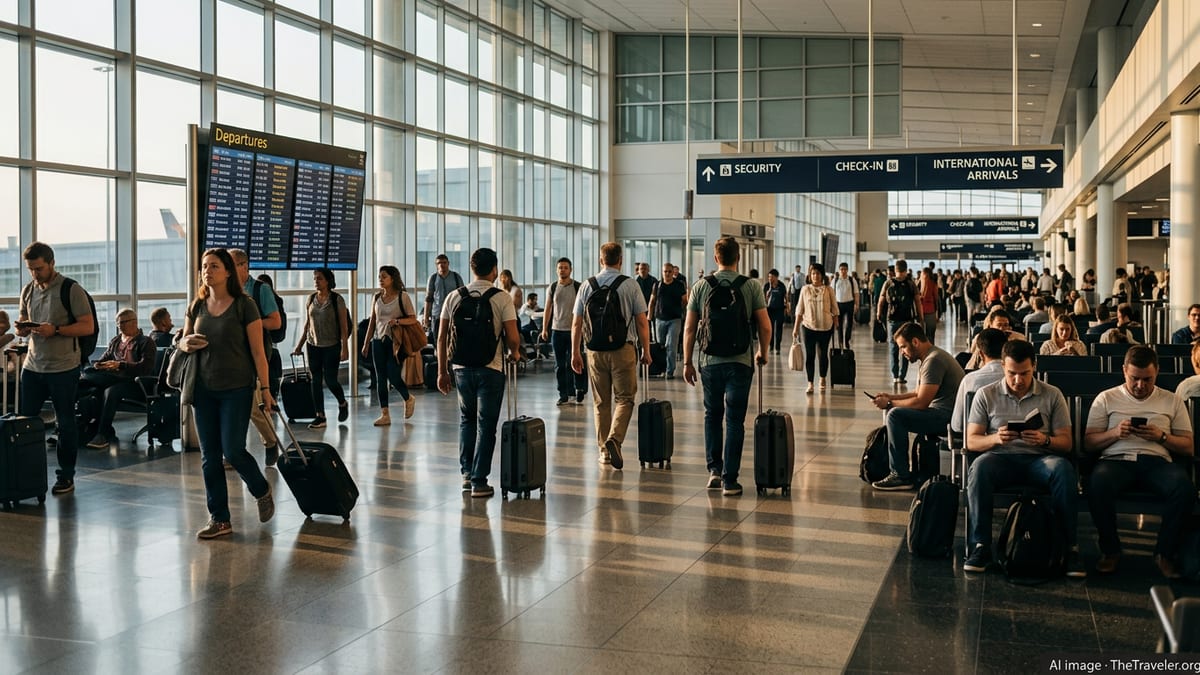
Why US Airports Are Under Unusual Strain
Recent travel seasons in the United States have been marked by a combination of record passenger demand, infrastructure upgrades and staffing challenges, all of which have increased the risk of delays and temporary disruptions. Publicly available aviation forecasts indicate that total passenger numbers are expected to keep rising through 2026, even as many facilities work through backlogs of maintenance and modernization projects.
Flight statistics from recent years show that weather remains the single biggest cause of delays in the United States, but not the only one. Federal aviation data for 2024 indicate that roughly six in ten delays were linked to storms or other adverse conditions, with additional impacts from congestion, runway capacity limits and smaller contributions from staffing or equipment issues. That context is important for visitors who may be used to more predictable operations at smaller or newer airports in other parts of the world.
Reports from late 2025 also highlight the impact of national political and budget pressures on aviation operations. During the 2025 US federal government shutdown, for example, widely cited flight-tracking and news reports documented thousands of daily delays and hundreds of cancellations as air traffic control staffing came under strain and regulators moved to slow traffic in busy airspace. Travelers arriving from overseas can expect those broader systemic factors to matter just as much as individual airline performance.
At the same time, industry and government statements indicate a major push to upgrade technology and expand staffing, particularly in air traffic control. New traffic-management systems, additional controller hiring and targeted capacity limits at some of the most congested hubs are being introduced to reduce cascading delays. Those measures may improve reliability over time, but in the near term they can also mean schedule adjustments and tighter runway operations at specific airports.
Current Closure Hotspots and Infrastructure Projects
While complete airport shutdowns in the United States remain rare, temporary runway closures and partial suspensions of commercial service are becoming more common as older infrastructure is rebuilt. Regional airports in particular are scheduling multi-month runway replacement projects that can significantly reduce or pause commercial flights during construction windows.
One example is Columbus Airport in Georgia, where airport commission documents describe plans to close the main runway for a full reconstruction period from August to late November 2025, temporarily pausing most commercial operations. Similar projects, often timed for outside peak summer travel, are underway or planned at other mid-sized airports as concrete and lighting systems dating back several decades are fully replaced.
Large hubs are also navigating intermittent disruption as they modernize complex runway and taxiway systems. Public coverage of Newark Liberty International Airport in 2025, for instance, detailed extended delays and schedule reductions after repeated outages at an associated air traffic facility, followed later by the accelerated reopening of a major runway after repairs were finished ahead of schedule. These kinds of rolling works can mean shifting patterns of congestion even when an airport is technically open.
On top of planned works, power and IT outages remain a growing concern. In the wider aviation industry, events such as nationwide software problems or airline-specific technology failures have led to ground stops and widespread cancellations in recent years, even when weather is clear. International travelers may not be able to predict specific incidents, but understanding that outages are a known risk can reinforce the importance of flexible connections and strong travel insurance.
Delay Patterns, High-Risk Airports and Best Timing
Published analyses of US flight data for 2025 point to a cluster of major airports with consistently high delay rates, particularly during peak afternoon and evening hours. Hubs serving the New York region, including Newark and John F. Kennedy International, along with Los Angeles International and Boston Logan, have featured prominently in rankings of airports where roughly one-quarter to nearly one-third of flights arrived late during some recent periods.
These patterns are shaped by both geography and network design. Coastal hubs handle dense banks of transatlantic and transpacific services that must be sequenced around domestic traffic, while also being sensitive to coastal storms, marine fog and winter weather. For international visitors, this can mean that flights arriving or departing in the late afternoon are more exposed to knock-on congestion that has built up through the day, especially after earlier thunderstorms or low-visibility conditions.
Travel-management guidance compiled from airline and government sources consistently suggests that early-morning departures are less likely to be delayed, because aircraft and crew are typically already on the ground and the system has not yet absorbed the day’s weather or technical issues. For long-haul visitors booking onward domestic connections, prioritizing morning or midday links from gateway airports can reduce the risk of missed flights and unexpected overnight stays.
Seasonal patterns also matter. Winter blizzards in the Midwest and Northeast and hurricane season impacts along the Gulf and Atlantic coasts routinely generate large clusters of cancellations. Recent severe winter storms, for example, have led to over a thousand daily cancellations across multiple days, shutting down entire airport systems for hours at a time. Travelers who must pass through weather-prone hubs in winter or late summer should allow generous connection times and avoid planning same-day onward rail or long-distance bus connections that cannot be easily changed.
Evolving Security, Identity Checks and Screening Technology
Entry and security screening for international visitors to the United States continues to evolve, with both incremental rule changes and new technology trials at major hubs. Transportation security and border agencies have publicly signaled that they are preparing for record crowds around 2026 events, and are testing new biometric gates and automated identity checks at select airports in cities such as Atlanta, Washington and Seattle.
These systems are intended to reduce bottlenecks, but early deployments can sometimes create confusion for travelers who are unfamiliar with procedures or opt-outs. International visitors may encounter lanes where facial recognition cameras, eGates or digital document scanners are in use alongside traditional manual checks. Reading airline and airport guidance in advance, and keeping passports and US entry documents easily accessible, can speed transit through these mixed environments.
Security rules for carry-on items and electronics are subject to periodic adjustment as screening technology changes. While exact allowances can vary by airline and route, passengers should expect standard international requirements on liquids, laptops and battery-powered devices, and should be prepared to separate these items when requested during screening. Public advisories also emphasize the importance of keeping medication, essential documents and valuables in carry-on bags rather than checked luggage in case of delays or lost baggage.
Border processing times for non-US citizens can be significant during peak arrival waves, particularly at major coastal gateways. Reports from travel organizations and passenger surveys frequently cite wait times of more than an hour at the busiest times of day. Travelers connecting onward to domestic flights should factor this into their itinerary planning and avoid tight minimum connections, especially when arriving in the late afternoon or early evening when multiple transoceanic flights arrive in close succession.
Practical Risk-Reduction Tips for International Visitors
For travelers planning itineraries into the United States in 2026, the overall message from recent disruption data is not to avoid the country’s busiest hubs, but to treat timing, routing and flexibility as key parts of trip planning. Booking longer connection windows, especially when first clearing US immigration, can absorb some of the unpredictable elements of modern air travel, from sudden thunderstorms to local equipment outages.
Where possible, visitors arriving from abroad may wish to choose nonstop flights to their first major destination, even if that means using a larger, more delay-prone hub, and then continue by rail, car or a later domestic flight once they have rested and adjusted to local time. When connections are unavoidable, selecting itineraries that keep all segments on a single ticket and preferably a single airline group can simplify rebooking in case of missed flights.
Travel advisers also underline the value of monitoring flight status closely in the 24 hours before departure, using airline apps and airport information feeds to track gate changes, ground stops or early signs of congestion. Many airlines now issue proactive rebooking options when severe weather or system disruptions are forecast, allowing travelers to move to earlier or later flights without additional fees.
Finally, comprehensive travel insurance that covers missed connections, hotel costs from forced stopovers and lost baggage can provide important financial protection in a system where large-scale disruptions are no longer exceptional events. For international visitors unfamiliar with the size and complexity of US airspace, combining this kind of safety net with careful schedule design offers the best chance of a smooth journey through one of the world’s busiest aviation networks.