

More news on this day
Transatlantic and long-haul leisure travel are entering another period of rapid change, as the United States, Belgium, South Africa, Aruba and other key markets see a wave of new direct routes, expanded winter schedules and selective flight cuts tied to shifting demand and ongoing instability in the Middle East.
Get the latest news straight to your inbox!
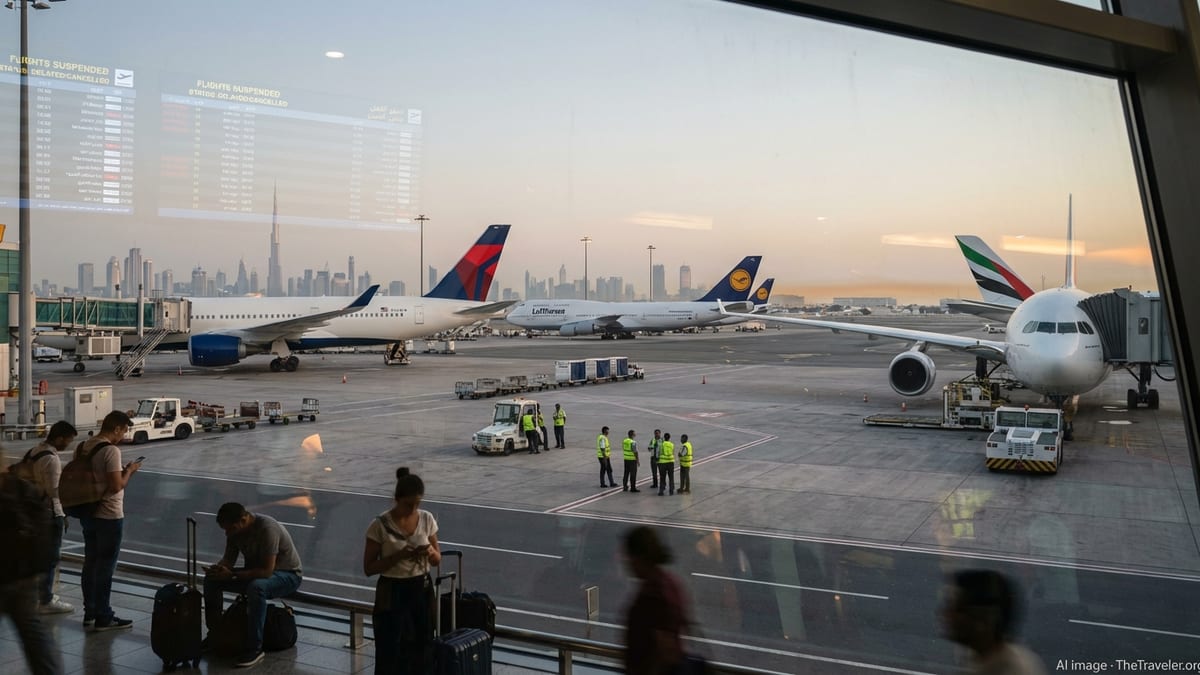
US Carriers Add New Nonstops While Trimming Middle East Exposure
Major United States airlines are continuing to recalibrate their international networks, pairing fresh long-haul links with targeted reductions on routes affected by the conflict involving Israel and Iran. Publicly available flight data and schedule filings show that carriers have focused on strengthening North American and leisure corridors for the upcoming winter seasons, while remaining cautious in parts of the Eastern Mediterranean and Gulf region.
Reports on recent airspace closures and temporary suspensions indicate that some transcontinental flights that once overflew Iran and Iraq have been rerouted or paused, following periods of heightened tensions and military activity. Industry analysis notes that commercial traffic in corridors between Iran, Iraq and the Mediterranean has periodically thinned as airlines reassess risk and insurance costs around the evolving conflict dynamics.
At the same time, US airlines are directing capacity into resilient demand segments, particularly sun destinations, secondary European cities and select African gateways. Corporate presentations and investor updates highlight a strategic tilt toward markets that can support year-round or strong seasonal traffic, as well as joint-venture partnerships that help spread risk across alliances.
Network plans for late 2025 and early 2026 suggest that North American hubs such as Atlanta, Newark and Washington Dulles will remain launchpads for new or expanded links into Europe, Africa and the Caribbean, even as schedules to Tel Aviv, and connecting routes that rely on Middle East overflights, are adjusted in response to geopolitical developments.
South Africa Deepens Direct Links With the United States
South Africa’s aviation market is emerging as one of the main beneficiaries of the latest wave of long-haul route development between Africa and North America. Industry publications and tourism briefings point to continued interest from US carriers in serving both Johannesburg and Cape Town with nonstop or one-stop services, reflecting strong leisure demand and growing business ties.
United States-based airlines have requested additional flexibility for South African routes, seeking the ability to vary frequencies between Johannesburg and Cape Town in line with seasonal patterns. Data compiled by aviation analysts shows that two-way passenger traffic between the US and South Africa has already surpassed pre-pandemic levels, giving airlines confidence to maintain and, in some cases, expand capacity during peak periods.
South African outlets report that Cape Town has secured more seasonal nonstops to the US, turning what was once an underserved market into a more competitive transatlantic gateway. United States travelers now have more options to reach the Western Cape directly, reducing the need for connections through European or Middle Eastern hubs that may be affected by airspace uncertainty.
South African Airways, which has been rebuilding its long-haul network, has signaled plans to re-enter the North American market with services routed via West Africa. According to specialist airline coverage, proposed flights that link Johannesburg, Accra and US gateways are intended to tap into both diaspora traffic and safari tourism, adding another layer of connectivity between the US and Southern Africa.
Belgium and Europe See New Transatlantic and Regional Nonstops
Belgium is also part of the current realignment, with Brussels consolidating its role as a mid-size European hub for transatlantic traffic. Airline network announcements in recent seasons have highlighted new and reinstated US links from Brussels, including routes supported by joint ventures between US and European partners that share revenue and coordinate schedules across the North Atlantic.
European network planning trends suggest that secondary US cities are becoming increasingly attractive targets for airlines in Belgium and neighboring countries. By pairing Brussels and other regional hubs with US airports outside the traditional New York, Chicago and Los Angeles triangle, carriers aim to capture pent-up demand for point-to-point business travel and VFR (visiting friends and relatives) traffic.
Winter schedules across Europe point to more nonstops into US sunbelt cities and Caribbean gateways, funneled through major hubs such as Amsterdam and Paris with onward links from Brussels. Analysts note that this pattern allows Belgian travelers to benefit from additional seat capacity even when the nonstop route map from Brussels itself changes modestly from season to season.
In parallel, European airlines are trimming or deferring growth on certain Middle East and Eastern Mediterranean routes, citing elevated operating costs and uncertainty related to the Israel and Iran conflict. Capacity has been redeployed toward North America and selected African markets where demand visibility is clearer and overnight, long-haul flying remains profitable.
Aruba and the Southern Caribbean Build Out Winter 2025–2026 Flight Plans
Aruba and its neighbors in the southern Caribbean are leaning heavily into winter travel demand from North America, with new and expanded direct services planned for the 2025 to 2026 season. Airport schedule summaries from the region show a dense roster of flights linking the islands with major US and Canadian hubs during the December to March peak.
In Aruba, recently published winter timetables list multiple US carriers operating from gateways such as Newark and Washington Dulles, with frequencies ramping up as the high season approaches. Caribbean tourism news outlets report additional capacity from European airlines via Amsterdam, including higher weekly frequencies that also route through Bonaire, further increasing seat supply into Aruba for the winter.
Neighboring Bonaire has announced an expanded international schedule for the same period, featuring more direct service from North America and Europe. Plans include extra flights from US hubs like Atlanta, regional Caribbean connections to Aruba and Curaçao, and added links to Canada through Toronto, all designed to support dive tourism, cruise extensions and multi-island itineraries.
Local tourism boards describe these network moves as a coordinated effort by Caribbean governments, airports and airlines to secure more nonstop options from the US and Europe. By confirming schedules more than a year in advance, the islands aim to give tour operators and travelers confidence to commit to winter vacation packages despite broader geopolitical uncertainty.
Capacity Cuts and Route Shifts as Conflict Ripples Through Global Networks
While leisure markets such as South Africa and the southern Caribbean gain seats, the ongoing war dynamics involving the United States, Israel and Iran continue to cast a shadow over certain long-haul corridors. International aviation reports following recent escalations describe airspace from Iran and Iraq toward the Mediterranean as intermittently thinned of commercial flights, as carriers re-route to avoid potential risk areas.
Israeli and regional airlines have periodically adjusted schedules, cutting or consolidating flights on routes most exposed to conflict-related disruptions. Some long-haul services from Israel to North America and Europe have seen temporary suspensions or reduced frequencies, while others have been rerouted using more southerly or northerly tracks to bypass sensitive zones.
Global network carriers in Europe, North America and Asia have in turn reevaluated their reliance on Middle Eastern connecting hubs for traffic flows between the US, Africa and South Asia. Industry commentary notes a modest but perceptible shift back toward traditional transatlantic and transpacific routings that do not require overflight of contested airspace, even if that adds flight time or reduces connection options.
For travelers, the net effect in late 2025 and into 2026 is a patchwork landscape: stronger nonstop choices between the US, South Africa, Belgium and Aruba, set against a backdrop of tighter schedules and potential last-minute changes on routes intersecting the Israel and Iran conflict zone. Experts advise that passengers heading to or overflying the wider Middle East remain attentive to airline notifications, while those planning winter escapes to Southern Africa or the Caribbean may find more nonstop options than at any point since before the pandemic.