

More news on this day
Major North American and transatlantic carriers are ramping up Mexico capacity from the United States, Canada, Argentina and the United Kingdom just as Acapulco’s big-brand hotels, including properties managed by Marriott, Hilton and Mundo Imperial, report peak occupancies and prepare for what officials say could be a record-breaking wave of visitors.
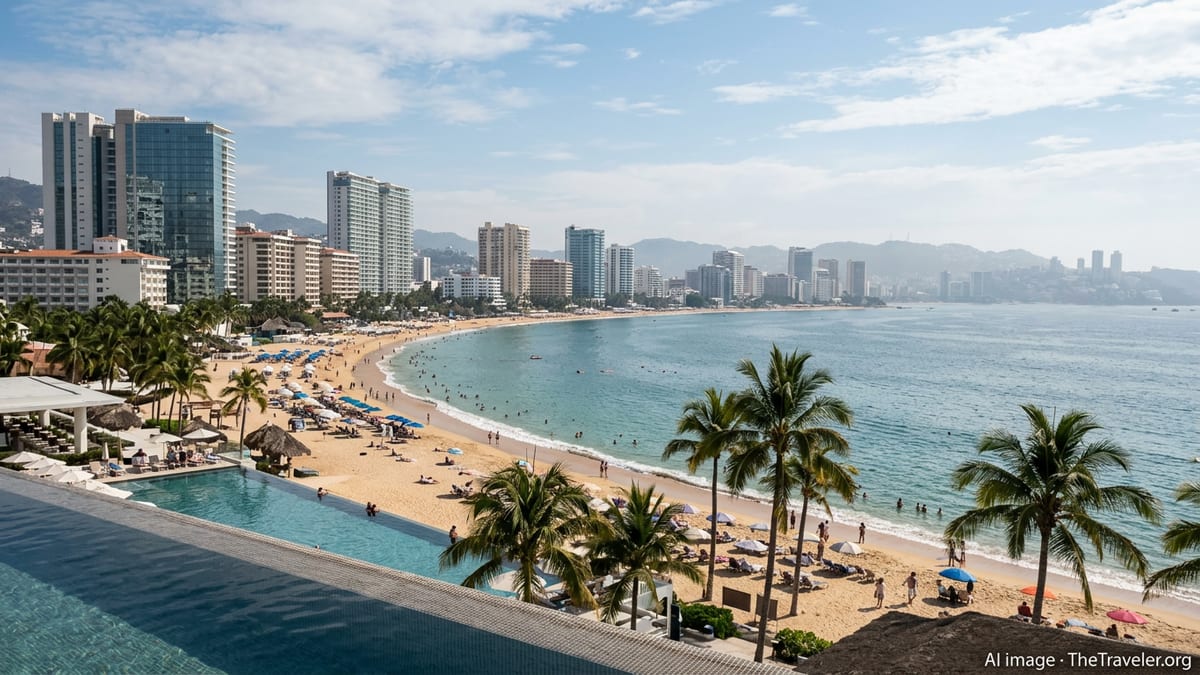
Airlines Expand Seats as Demand for Mexico Soars
After several years of post-pandemic recovery, Mexico has firmly reappeared at the top of leisure travel wish lists in North and South America as well as in Europe. Routes connecting cities in the United States, Canada, Argentina and the United Kingdom to Mexican beach destinations are seeing sustained load factors, prompting airlines to add capacity and refine schedules around peak holiday periods.
U.S. majors such as American Airlines, United Airlines and Delta Air Lines have focused on shoring up high-yield gateways and leisure-heavy hubs, capitalizing on strong demand to coastal resorts on both the Pacific and Caribbean coasts. Industry data show that Mexico continues to rank among the most popular international destinations for U.S. travelers, particularly during long weekends and winter escapes when capacity is routinely stretched.
Canadian travelers are also fueling the boom. Air Canada announced its largest summer schedule expansion in years, increasing system-wide capacity by double digits for summer 2026 and specifically growing Mexico service even as some competitors pare back. The carrier is targeting sun destinations with additional frequencies and seasonal routes, betting that outbound Canadian demand for beach holidays will remain resilient despite higher fares and inflationary pressures.
Although nonstop service from the United Kingdom and Argentina to Acapulco itself remains limited, connections via Mexico City and other hubs have become more attractive as airlines fine-tune schedules. Combined, these flows are driving what Mexican tourism officials describe as a broad-based surge in international arrivals across the country’s major resort corridors.
Acapulco’s Hotel Sector Rebounds After Hurricanes
Acapulco’s readiness to receive this influx is all the more striking given the devastation wrought by Hurricane Otis in October 2023 and a subsequent storm the following year. The twin blows left the vast majority of the city’s hotels damaged and shuttered, crippling a tourism economy that employs tens of thousands of residents and underpins much of Guerrero state’s income.
A concerted reconstruction effort led by federal and state authorities, backed by private investment from major hospitality groups, has transformed the skyline over the past two years. By early 2025, Guerrero’s tourism authorities reported that more than 11,000 rooms were back in service in Acapulco and projected that the city would approach its pre-hurricane inventory of nearly 20,000 rooms by late 2025.
Key milestones have punctuated the recovery. The reopening and upgrading of flagship properties along the city’s Golden and Diamond zones have helped restore confidence among both leisure visitors and meeting planners. The return of marquee events such as the Mexican Open tennis tournament and major conventions has reinforced perceptions that the destination is once again able to host large-scale gatherings safely and reliably.
Tourism officials say those efforts are now translating directly into higher occupancies. Recent holiday periods have delivered hotel occupancy rates in excess of 90 percent in some coastal zones, surpassing competing beach destinations and signaling that Acapulco is regaining its status as one of Mexico’s busiest resort cities.
Mundo Imperial, Marriott and Hilton Lead the Charge
At the center of Acapulco’s comeback are major hotel players with significant footprints in the city. Mundo Imperial Entertainment and Hospitality, which operates several large properties and venues in the Diamond zone, has reported exceptional booking periods, with some months recently reaching around 95 percent occupancy. The group has used reconstruction as an opportunity to modernize infrastructure, emphasizing sustainability upgrades and new entertainment offerings that appeal to both leisure and MICE segments.
Mundo Imperial executives say they expect all of their hotels and entertainment complexes, including convention arenas, to be fully operational ahead of the next peak season. That timeline aligns with projections from Guerrero’s tourism authorities, who anticipate a complete restoration of most of Acapulco’s room inventory by the end of this year, positioning the city to handle significantly higher arrival numbers.
International brands such as Marriott and Hilton are also doubling down on the Pacific coast. While both companies have substantial portfolios across Mexico, from Puerto Vallarta to Los Cabos and Cancún, their Acapulco properties have taken on symbolic importance as markers of the destination’s resilience. Refurbished lobbies, upgraded guest rooms and redesigned pool and beach areas reflect a broader race to meet the expectations of travelers now accustomed to newer resorts in rival destinations.
Hotel managers report that advance bookings from key source markets, including the United States, Canada, Argentina and the United Kingdom, are running ahead of last year for upcoming holiday periods. Many properties are tightening minimum-stay rules and implementing dynamic pricing strategies to manage surging demand while maintaining rate integrity.
International Arrivals Set Stage for Potential Record Season
The confluence of increased airline capacity and expanded room inventory has tourism officials forecasting a potential all-time high for visitor numbers to Mexico’s coastal resorts in the coming winter and spring seasons. Acapulco, which not long ago faced questions about its long-term viability as a mass-market destination, is now being positioned by federal tourism authorities as a flagship example of rapid recovery and renewed international appeal.
Data from recent long weekends and the Easter holiday period indicate that Acapulco is already competing at the top of Mexico’s beach destination rankings, both in overall arrivals and hotel occupancy. Domestic tourism remains the backbone of that rebound, but international travelers carried by American, United, Delta and Air Canada are increasingly visible along the city’s revitalized beachfront promenades and in its convention centers.
Travel agents in the United States and Canada report that clients who might previously have defaulted to Cancún or Los Cabos are now inquiring about Acapulco again, particularly when packaged with competitive airfares and refurbished resort stays. In South America and Europe, improved connectivity via Mexico City and other hubs has widened the funnel for travelers from Argentina and the United Kingdom seeking alternative Mexican beach experiences.
Should current booking trends hold, hoteliers say the coming high season could set new benchmarks for both occupancy and average daily rates in Acapulco. That prospect is prompting properties to accelerate staffing, training and service enhancements to avoid bottlenecks during peak arrival days.
Opportunities and Pressures for a Reemerging Destination
The rapid return of visitors presents both opportunities and pressures for Acapulco. On one hand, the influx of international travelers is a lifeline for local businesses, from small restaurants and tour operators to taxi cooperatives and artisans who endured months of empty streets after the hurricanes. Higher hotel occupancy is translating into renewed employment and tax revenues that local leaders say are critical to financing further infrastructure improvements.
On the other hand, the city must balance its economic imperative with concerns about security, environmental sustainability and social equity. Community groups and international organizations have emphasized that recovery should go beyond hotel corridors and beach zones, pointing to the need for inclusive planning that addresses housing, public services and climate resilience in working-class neighborhoods.
For airlines and hotel chains, the stakes are equally high. Carriers that have invested early in restoring and expanding Mexico service from the United States, Canada, Argentina and the United Kingdom are positioning themselves to capture a disproportionate share of demand if the current boom extends into 2027 and beyond. Hospitality groups that have poured capital into reconstruction are counting on sustained visitor flows and rising room rates to justify their outlays.
As peak-season flights fill up and occupancy boards in Acapulco’s major hotels edge closer to full, the city’s reemergence as a banner Mexican resort will be closely watched across the region. For now, travelers booking beach escapes on American, United, Delta and Air Canada, and checking into properties managed by Marriott, Hilton and Mundo Imperial, are helping to write a new chapter for a destination that has long been synonymous with sun, surf and spectacle.