

More news on this day
The United States Air Force has begun deploying its first permanently based F-35A Lightning II fighters to Misawa Air Base in northern Japan, a move that marks a significant evolution in Washington’s airpower posture and its long-term commitment to deterrence and defense in Northeast Asia.
Get the latest news straight to your inbox!
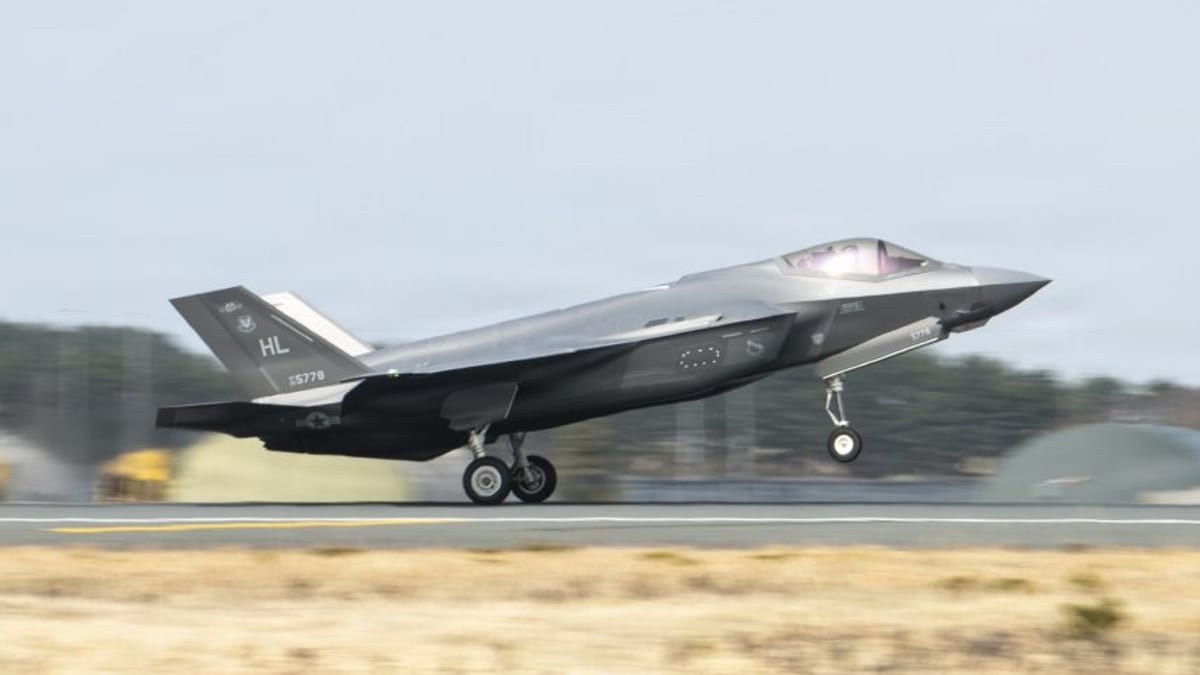
Image by Aviation News
A New Era for Misawa and the 35th Fighter Wing
The transition at Misawa centers on the 35th Fighter Wing, which has long flown F-16 Fighting Falcons as the base’s main combat aircraft. Publicly available planning documents and recent base updates indicate that those fourth-generation jets are being phased out in favor of the fifth-generation F-35A, following several years of infrastructure work and regional consultation.
Reports from defense publications and local Japanese media show that the decision to assign a permanent F-35A presence to Misawa was taken as part of a wider modernization effort across US forces in Japan. The initiative includes replacing aging fighter inventories and consolidating advanced platforms at key locations. Misawa, with its mixed US and Japanese presence and access to airspace over the northern Pacific, has been identified as a central hub for that transformation.
In the months leading up to the arrival of the first permanently based aircraft, Misawa Air Base highlighted the delivery of F-35A support equipment and specialized cargo as a milestone in the transition. Base updates describe airmen receiving and staging maintenance gear, test stands, and other systems required to sustain day-to-day F-35 operations, underscoring that the shift involves both flying units and a retooled support ecosystem.
The move also represents a symbolic change for the 35th Fighter Wing itself. The wing, which has cycled through a series of aircraft types since the Cold War, is now being positioned as a fifth-generation formation designed for high-end missions including air superiority, suppression of enemy air defenses, and networked operations with allied forces.
Regional Deterrence and Strategic Significance
The permanent basing of F-35As at Misawa carries implications that reach beyond the airfield. Open-source strategic assessments emphasize that northern Japan offers ready access to key parts of the Western Pacific, including approaches to the Sea of Japan and the broader North Pacific, while remaining on Japanese territory with established infrastructure and political support.
Analysts note that the F-35’s ability to gather, process, and share information across multiple domains is central to its value in the region. The aircraft’s sensor suite and data links are designed to feed information to other aircraft, ships, and ground systems, increasing situational awareness for both US and Japanese forces. That capability is seen as particularly relevant amid continued missile testing by North Korea and growing air and maritime activity by Chinese forces in nearby waters.
The Misawa deployment is also being interpreted in light of broader US and allied posture changes in the Indo-Pacific. Published coverage highlights parallel moves such as the introduction of F-15EX fighters to Okinawa and the replacement of legacy carrier-based aircraft at Iwakuni with F-35 variants. Together, these steps depict a gradual shift toward a more dispersed, survivable, and technologically advanced force network across Japan.
For regional observers, the arrival of permanently based F-35As at Misawa serves as a tangible signal that the United States intends to maintain a long-term, high-end combat aviation presence in Northeast Asia. At the same time, the basing arrangement remains within long-standing security frameworks, relying on existing agreements with Tokyo rather than creating new treaty structures.
US-Japan Interoperability and Shared Facilities
Misawa is unique among major US air installations in Japan for its deeply integrated structure with the Japan Air Self-Defense Force. The Japanese 3rd Air Wing already operates F-35A fighters from the same airfield, and has gradually built its own experience with the aircraft in local weather conditions, maintenance cycles, and training patterns. Public information from Japanese defense white papers and base reports indicates that these domestic F-35A operations have been underway for several years.
The presence of both US and Japanese F-35 units at a single site is expected to enhance interoperability. Joint exercises, shared maintenance practices, and coordinated mission planning can be conducted with minimal transit time, allowing pilots and support crews from both countries to refine common tactics and procedures. Analysts point out that this co-location also simplifies logistics for spare parts, specialized equipment, and simulator training.
Recent training activities at Misawa and other Japanese bases, including visits by allied F-35 units from Europe and elsewhere in the Indo-Pacific, point to a growing network of operators who can rapidly integrate in a crisis. Publicly available accounts of such exercises emphasize data sharing and combined air defense scenarios, areas in which the F-35 is designed to play a central coordinating role.
For local communities around Misawa, the arrival of additional F-35s adds a new dimension to an already complex relationship with the base. Japanese and US authorities have previously engaged with residents on issues such as aircraft noise and safety, and observers expect that similar discussions will continue as operations ramp up with the new fighters.
Transition From F-16s and Phased Force Realignment
The permanent F-35A presence at Misawa is tied to a phased drawdown of the F-16 fleet previously assigned to the 35th Fighter Wing. Defense and aviation media have tracked the transfer of some of these jets to other US bases in the region, reflecting broader Air Force plans to retire or relocate older aircraft as newer platforms arrive.
According to publicly available planning information, a combination of rotational fighter deployments and infrastructure upgrades has been used to avoid gaps in the base’s combat capability during the transition. Temporary fighter rotations have supplemented Misawa’s force posture at times while hangars, munitions facilities, and maintenance shops were adapted to F-35 requirements.
The shift also fits within a larger US realignment in Japan, which includes changes at other air bases and the gradual introduction of new capabilities such as advanced air-to-air and air-to-surface munitions compatible with the F-35. Observers describe this process as incremental but deliberate, with each step calibrated to sustain readiness while accommodating construction work and local consultations.
For the Air Force, Misawa’s transition is part of a global pattern in which forward-based F-16 and F-15 units are reequipped with F-35s or, in some cases, F-15EX aircraft. The result is a force mix that relies on fifth-generation stealth platforms in core roles, backed by upgraded fourth-generation jets that can carry larger payloads and operate alongside the F-35’s sensor and communications suite.
Implications for Future Operations in Northeast Asia
Looking ahead, analysts expect that the F-35A presence at Misawa will feature prominently in regional exercises, air defense patrols, and crisis-response planning. The base’s location in northern Honshu provides options for rapid deployments across a wide arc, from the Sea of Japan and the Korean Peninsula to more remote parts of the North Pacific.
Publicly available defense planning documents suggest that training scenarios will increasingly emphasize multi-domain operations, where F-35s cue surface-to-air defenses, maritime patrol aircraft, and naval forces through secure data links. Misawa’s expanding fifth-generation infrastructure, including simulators and mission planning facilities, is seen as central to building and sustaining these capabilities over time.
The integration of US and Japanese F-35 units at the same base also points to the potential for more complex bilateral and multilateral drills. Exercises involving partners such as Australia and European F-35 operators could make Misawa a regular waypoint in a wider network of training activities that span the Indo-Pacific.
As the first permanently based US F-35A fighters settle into operations at Misawa, the base is set to play a more prominent role in the evolving security architecture of Northeast Asia. While many details of day-to-day missions remain undisclosed, open reporting leaves little doubt that the airfield is entering a new phase as a front-line hub for advanced airpower in the region.