

More news on this day
Popular Mexican resort cities including Puerto Vallarta and Cancun are grappling with tightened security alerts, suspended transport and widespread travel disruption after the United States expanded a shelter-in-place advisory in the wake of a deadly military operation that killed cartel leader Nemesio “El Mencho” Oseguera Cervantes.
Shelter-in-Place Order Widens After Weekend Violence
The U.S. Mission in Mexico on Sunday and Monday urged citizens in multiple Mexican states to shelter in place following a surge of cartel violence tied to the killing of the Jalisco New Generation Cartel leader. The expanded alert now covers Jalisco, including Puerto Vallarta and Guadalajara, as well as Quintana Roo, which includes Cancun, Cozumel, Playa del Carmen and Tulum, along with parts of Baja California, Guanajuato, Guerrero, Michoacan, Nuevo Leon, Oaxaca and Tamaulipas.
Officials cited ongoing security operations, road blockages and criminal activity, warning that conditions could change quickly on highways and around law enforcement actions. U.S. government staff in several states, including Quintana Roo and Guerrero, have been directed to shelter in place, underscoring the seriousness of the situation and the potential for further unrest.
The advisory urges U.S. citizens to remain in their residences or hotels, avoid crowds and areas of active policing, and keep friends and family informed of their whereabouts. Similar guidance has been issued by Canadian and British authorities, which are advising their nationals already in affected regions to stay indoors and avoid nonessential movement.
Puerto Vallarta and Jalisco See Roadblocks, Suspended Transport and Flight Chaos
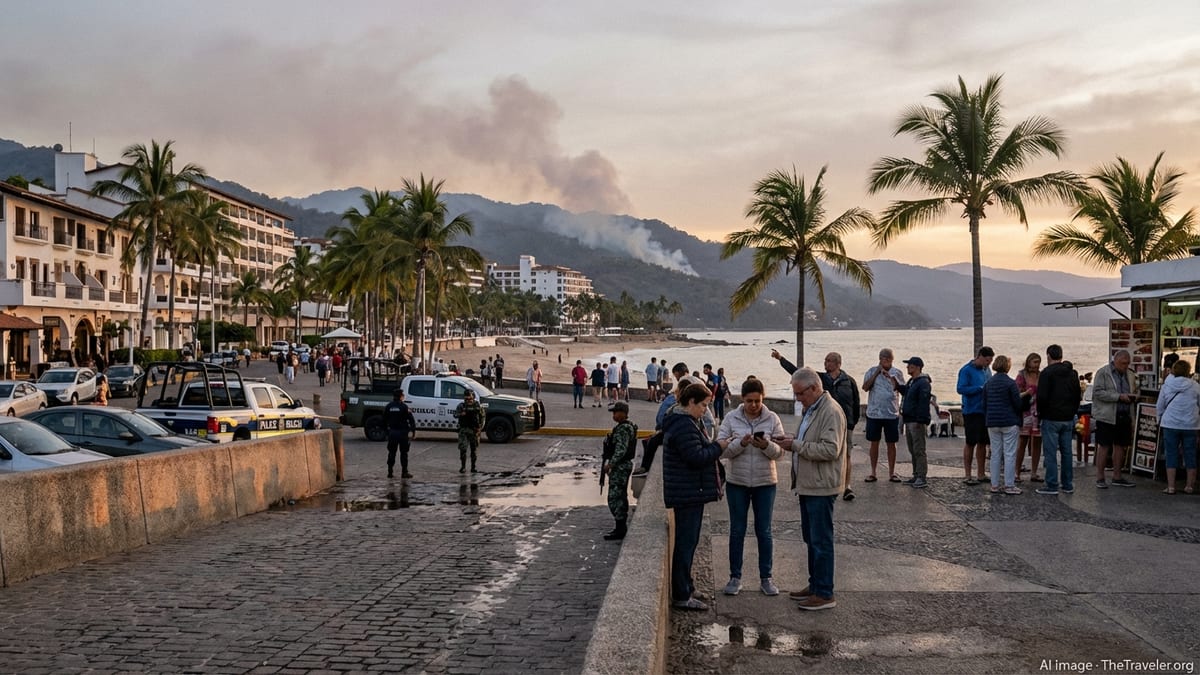
In Jalisco, the epicenter of the security crisis, authorities and eyewitnesses reported vehicles set on fire and used to blockade key roads in and around Puerto Vallarta and Guadalajara. Images shared by local media show plumes of black smoke rising near major thoroughfares and resort areas, a tactic officials say was used by cartel members to slow or divert security forces.
Air travel to the Pacific resort hub has been heavily disrupted. Airlines including Delta, American, Alaska, Air Canada and United canceled or diverted flights to Puerto Vallarta and Guadalajara on Sunday and into Monday, stranding vacationers at hotels and airports across North America who were scheduled to travel for late February and early spring break holidays.
Local mobility inside Puerto Vallarta has also been sharply curtailed. According to alerts relayed by consular officials, all taxis and rideshare services in the city have been suspended until further notice, and some businesses have temporarily closed. Jalisco authorities have urged hotels to keep guests inside while security forces work to clear roadblocks and secure affected neighborhoods.
Despite the turmoil, Mexican President Claudia Sheinbaum said Monday that authorities were working to restore normality and that roadblocks seen over the weekend were no longer in place. She indicated that flights to major tourist destinations, including Puerto Vallarta, were expected to resume progressively by late Monday or Tuesday, although airlines are advising passengers to check their bookings before heading to the airport.
Cancun and Quintana Roo Brought Under Heightened Security Advisory
While the most visible violence has been centered in western Mexico, the heightened U.S. alert now explicitly includes Quintana Roo’s Caribbean resort corridor, home to Cancun, Playa del Carmen, Tulum and Cozumel. The updated security message cites the potential for related criminal activity, road blockages and opportunistic violence in these destinations, even as no widespread incidents on the scale of Jalisco have been confirmed there.
U.S. government staff in Quintana Roo have been ordered to shelter in place, and travelers in the region are being urged to limit movements to essential activities, monitor local news and follow instructions from hotel management and local authorities. Tour operators in Cancun reported a wave of inquiries from guests over the weekend, many asking whether excursions to inland attractions and night-time outings would go ahead as planned.
Travel industry representatives in the Riviera Maya say most beachfront resorts and hotel zones remain calm and operational, but emphasize that conditions could shift quickly if violence spreads or criminal groups seek to test security forces in other states. Some operators have already adjusted itineraries to avoid highway travel after dark and to keep groups closer to resort areas until the security outlook becomes clearer.
Tourists Stranded as Airlines and Authorities Scramble
The sudden escalation caught many travelers off guard at the height of the winter sun season. Reports from Puerto Vallarta describe hotel guests watching columns of smoke from burning vehicles while being instructed to remain inside lobbies and guest rooms. Some visitors rushed to stock up on food and essentials as shops began closing in neighborhoods closer to the affected zones.
At airports across the United States and Canada, families heading to Jalisco and surrounding states for long-planned vacations found their flights abruptly canceled. Airlines have issued travel waivers for affected destinations, allowing passengers to rebook without change fees or, in some cases, postpone trips into March. Travel agents say the uncertainty is prompting some customers to switch to alternate Mexican destinations not covered by the shelter-in-place guidance, while others are delaying travel abroad entirely.
Within Mexico, suspended taxis and ride-hailing services in Puerto Vallarta have made it difficult for tourists to leave resorts, even if their flights are operating. Authorities caution that while some neighborhoods appear quiet, sporadic clashes and roadblocks can materialize with little warning, particularly on routes leading to airports and bus terminals.
Mexican security officials have reported significant casualties among both cartel members and security forces following the operation that killed Oseguera Cervantes, and acknowledge that they are bracing for possible retaliatory attacks. Analysts warn that the combination of high-profile military action and retaliatory violence raises the risk of short-term instability in multiple states.
What Travelers Should Know Before Heading to Mexico
Travel and security experts stress that the current alerts do not mean violence is occurring in every neighborhood of the affected states, but they do signal an elevated and fast-changing risk profile, especially along highways, on the outskirts of major cities and in areas where security forces are active. Tourists who choose to continue with their trips are being advised to remain flexible, build in extra time for airport transfers and be prepared for last-minute changes to flight schedules.
Hotels in Puerto Vallarta, Cancun and other resort hubs are tightening their own security protocols, reinforcing entrance checks, restricting outside visitors and encouraging guests to stay on property, particularly at night. Large gatherings, bar crawls and late-night club outings are being scaled back or canceled by some operators in response to official guidance to avoid crowds.
Travelers are being urged to register with their country’s consular services, ensure phones are fully charged, and keep copies of passports and travel documents accessible in case rapid changes in the security situation require relocation. Those considering near-term trips to Jalisco, Quintana Roo or other states listed in the latest alerts are being encouraged to speak with their airline or tour operator and review travel insurance policies for coverage related to civil unrest.
For now, officials in both Mexico and abroad describe the situation as fluid. As security forces move to consolidate control after the death of one of Mexico’s most powerful cartel leaders, the key message for travelers eyeing Mexico’s most popular beach destinations is to stay informed, stay flexible and, above all, follow shelter-in-place guidance wherever it remains in effect.