


More news on this day
The United States has identified 22 countries and territories worldwide as Level 4 “Do Not Travel” destinations, with nine located in Africa, reflecting heightened concern over conflict, terrorism, crime, health risks, and limited consular access for American travelers.
Get the latest news straight to your inbox!
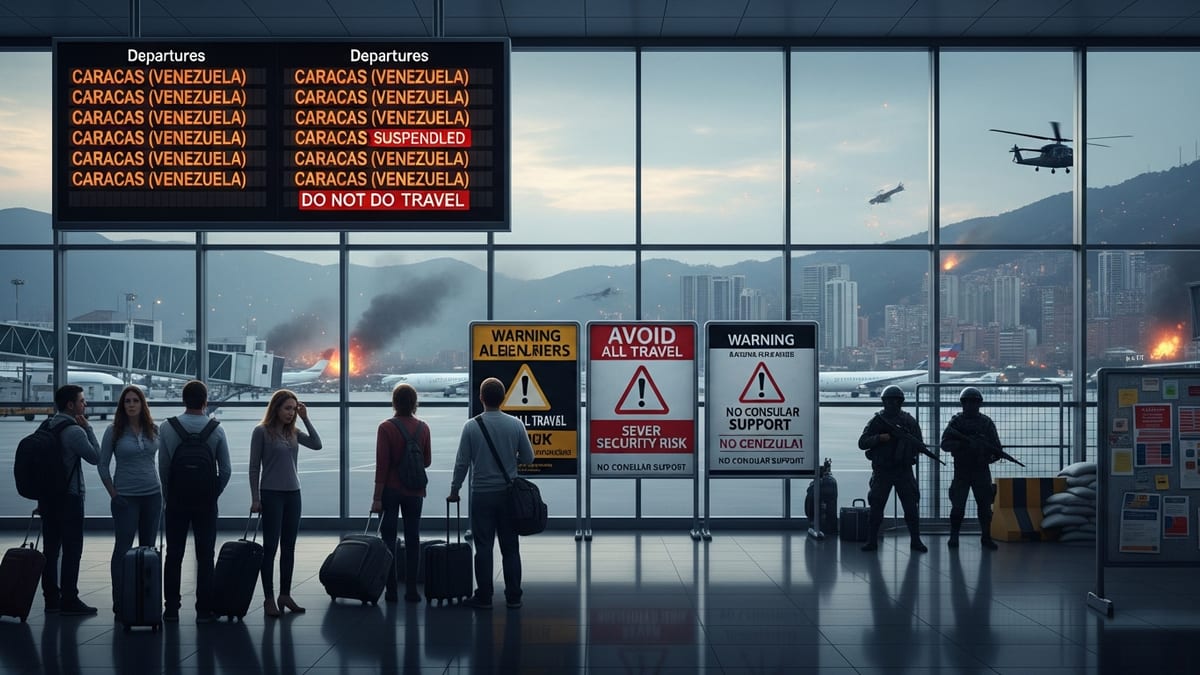
What a Level 4 ‘Do Not Travel’ Advisory Means
According to publicly available guidance from the US Department of State, a Level 4 advisory is the highest tier in Washington’s four-step warning system for international travel. The scale ranges from Level 1, which urges normal precautions, to Level 4, where the government advises that travelers avoid going to the destination entirely due to severe safety or security threats.
Travel advisories are based on a combination of factors that can include armed conflict, terrorism, civil unrest, crime, kidnapping, health emergencies, and limited capacity of US government personnel to assist citizens. State Department information notes that staffing restrictions at embassies or consulates and constraints on movement can be decisive in elevating an advisory to Level 4.
The list of Level 4 destinations is updated as conditions change. Recent tracking of official notices shows that the current roster includes war zones, politically unstable states, and areas facing intense criminal or militant activity. Independent travel-advisory trackers drawing on State Department feeds indicate that, as of early November 2026, 22 countries and territories are categorized under Level 4.
While the advisories are not legally binding for most private US travelers, they carry significant practical weight. They influence travel insurance coverage, corporate travel policies, and the willingness of airlines and tour operators to maintain routes and itineraries involving high-risk destinations.
Nine African States on the Highest-Risk List
Publicly accessible advisory data and recent reporting indicate that nine African states currently fall under the US Level 4 “Do Not Travel” category. These include countries where long-running internal conflicts, coups, or widespread criminal violence have sharply constrained basic services and movement.
Examples on the African continent include the Central African Republic, Libya, Mali, Somalia, South Sudan, and Sudan, which have each been under severe security pressure in recent years. Information on the US travel advisory portal shows that reasons cited for these countries often combine armed conflict, high levels of violent crime, terrorism, kidnapping, and limited or absent central government control in parts of the territory.
Sahel states such as Burkina Faso, Niger, and Chad have also drawn the top-level warning, according to aggregated State Department advisory trackers. These countries have seen a surge in attacks attributed to extremist organizations, as well as military coups and shifting political alliances. In several cases, foreign missions have reduced staff or restricted the movement of diplomatic personnel, a change that tends to be reflected in more severe travel advisories.
Across these nine African destinations, infrastructure disruptions are a recurring theme. Reports highlight conditions such as damaged roads, frequent checkpoints, restricted transport corridors, and intermittent telecommunication services. Such constraints can complicate evacuation efforts, emergency medical response, and routine consular support if US travelers are caught up in an incident.
Global Hotspots Beyond Africa
The current list of 22 Level 4 destinations is geographically diverse and extends far beyond the African continent. Public tracking of State Department advisories shows that countries such as Afghanistan, Syria, Yemen, and parts of Ukraine remain on the highest warning level as active conflicts persist. In these areas, front lines can shift quickly and civilian infrastructure, including airports and major highways, is frequently targeted or disrupted.
Several destinations cited for Level 4 status are located in the Middle East and broader Eurasian region, including Iran, Iraq, Lebanon, and Libya, where security incidents, political tensions, and risks of arbitrary detention have been noted in recent advisory text. North Korea also remains on the list amid longstanding concerns over detentions and the absence of direct US consular presence.
In the Western Hemisphere, Haiti is among the destinations highlighted as Level 4, with public reports pointing to a mix of gang-related violence, kidnappings, and fragile political institutions. In Eastern Europe, Russia and parts of Ukraine are subject to top-tier warnings tied to the ongoing war, restrictions on foreign visitors, and limitations on diplomatic staffing.
This evolving collection of destinations underscores that Level 4 advisories are not limited to any single region or type of crisis. Some countries are experiencing conventional warfare and occupation, while others are struggling with widespread criminal violence, state fragility, or severe governance and rule-of-law challenges.
Implications for US Travelers and Travel Industry
For individual US travelers, a Level 4 designation has immediate consequences. Many travel insurance providers either exclude coverage for destinations under a formal “Do Not Travel” warning or sharply limit benefits available to policyholders who choose to go despite the advisory. Industry analysis indicates that travelers may find it difficult to purchase robust medical evacuation or trip-cancellation coverage for high-risk locations.
Airlines and tour operators pay close attention to government advisories and related regulatory actions. Carriers may adjust or suspend routes if security risks, airspace closures, or sanctions affect a Level 4 country. Organized tour companies often remove such destinations from their itineraries, redirect groups to neighboring countries, or operate only in regions considered safer, if at all.
Corporate security teams and nongovernmental organizations also rely on the advisory scale to inform internal travel policies. Many organizations maintain rules that either prohibit or heavily restrict business trips to Level 4 locations without senior-level waivers and specialized security planning. These policies can impact investment, humanitarian deployments, and media coverage originating from high-risk areas.
Tourism boards and local operators in affected countries may see long-term declines in visitor arrivals from the United States when a Level 4 advisory remains in place. While some travelers still choose to visit despite the warnings, the overall pool of visitors tends to shrink, particularly when airlines, cruise lines, and major hotel brands scale back operations.
How Travelers Can Monitor and Respond to Changing Risks
For Americans planning international travel, the current roster of 22 Level 4 destinations serves as a reminder of how quickly local conditions can shift. Public guidance from the US government urges travelers to review the advisory level for any intended destination and to read the detailed country page that outlines specific risks, affected regions, and recommended precautions.
Authorities also maintain a free enrollment platform known as the Smart Traveler Enrollment Program, or STEP, which allows US citizens to register upcoming trips. Once enrolled, travelers can receive security and safety updates relevant to their destination when new advisories are issued or revised. This service also provides a channel for US embassies and consulates to send targeted messages to citizens in a crisis.
Analysts who follow global risk trends suggest that travelers look beyond the headline advisory level and examine the underlying factors. For instance, in some countries only specific regions are heavily affected by conflict or crime, while others may face time-limited issues such as disease outbreaks or election-related unrest. Checking advisories from multiple governments and reputable travel-security providers can help build a fuller picture of on-the-ground conditions.
For now, the presence of 22 destinations on the US “Do Not Travel” list, including nine in Africa, highlights a complex security landscape. Travelers, airlines, and travel planners are watching for further updates as conflict, political instability, and health concerns continue to reshape international mobility in late 2026.