


More news on this day
The United States has sharply tightened its travel guidance for the Middle East, urging Americans to avoid six high-risk countries entirely and to reconsider most nonessential trips elsewhere in the region as drone and missile attacks, airspace disruptions and political tensions rattle key transit hubs.
Get the latest news straight to your inbox!
Six Countries Under Strongest ‘Do Not Travel’ Warning
Publicly available State Department advisories list six Middle Eastern and adjacent territories at the highest Level 4 tier, advising that U.S. citizens should not travel there because of extreme security threats. These are Iran, Iraq, Lebanon, Syria, Yemen and the Gaza portion of the Palestinian territories. Each is flagged for some combination of armed conflict, terrorism, civil unrest, kidnapping and limits on the U.S. government’s ability to assist citizens on the ground.
Recent media coverage indicates that Iran, Iraq, Lebanon, Syria and Yemen have been consistently categorized at Level 4 through late October 2026, reflecting a sustained pattern of cross-border attacks, militia activity and strikes on civilian infrastructure. Gaza has likewise been treated as an area where travel is considered unsafe for private U.S. citizens due to heavy fighting, restricted access and unpredictable escalations.
Advisories describe these destinations as posing a high risk of life-threatening events for foreign visitors, including rocket fire, improvised explosive devices, targeted and opportunistic kidnappings, and clashes near airports, seaports and overland border crossings. In several of the six, commercial aviation routes have been periodically suspended or rerouted to avoid missile and drone activity, raising the risk of travelers becoming stranded if they enter.
Information from travel advisory summaries also underscores that consular services inside some of these countries are severely constrained or fully suspended. That limitation means that Americans who choose to go despite the warnings may have limited options if they need evacuation, legal assistance or medical support, especially during acute security crises.
Wider Regional Alerts as Houthis Target Infrastructure
The heightened caution around the six high-risk countries is occurring alongside broader regional alerts that affect popular transit and business hubs. Reports from late October and early November 2026 describe a series of missile and drone attacks by Yemen-based Houthi forces, including strikes aimed at Riyadh’s international airport and other critical infrastructure in Saudi Arabia, as well as threats against targets in the United Arab Emirates and along key maritime routes.
Coverage by international outlets notes that these attacks and attempted attacks have influenced travel advisories for countries beyond the six Level 4 destinations. Saudi Arabia and the United Arab Emirates, in particular, remain at Level 3, meaning Americans are urged to reconsider travel due to terrorism, armed conflict and the risk of sudden escalation. Similar Level 3 guidance applies to Bahrain, Israel, Jordan, Kuwait, Oman and Qatar, which together form much of the region’s aviation and logistics backbone.
In parallel with specific country advisories, a worldwide caution updated in July 2026 and subsequent regional security alerts in September and November 2026 emphasize that Americans currently in the Middle East should exercise heightened vigilance. The alerts highlight the potential for flight cancellations, temporary airspace closures and broader travel disruptions following attacks linked to Iran or groups aligned with it, including the Houthis.
These layered warnings mean that even travelers transiting through relatively stable Gulf hubs may face knock-on delays and reroutings when hostilities flare near any of the six Level 4 countries. Airline schedules, insurance coverage and tour operations can all shift on short notice when security conditions deteriorate or when airspace corridors are restricted for safety reasons.
What the Updated Warnings Mean for Leisure and Business Travel
For American vacationers, the combination of six “do not travel” countries and a ring of “reconsider travel” neighbors effectively closes off much of the traditional overland and multi-stop itineraries across the Levant and Arabian Peninsula. Organized tourism to conflict-affected areas of Iraq, Syria, Yemen and Gaza has largely halted, and specialized trips into Lebanon and parts of Iraq that persisted in earlier years have become harder to insure or operate under current risk assessments.
Business travelers are also being forced to adjust. Reports indicate that multinational firms with regional headquarters in Gulf cities such as Dubai, Abu Dhabi, Doha and Riyadh have been reviewing evacuation plans and travel approvals since early 2026, particularly for staff whose roles require periodic visits to high-risk jurisdictions. Some companies are shifting meetings to European or Asian hubs, or relying more heavily on remote negotiations to reduce exposure.
Travel industry commentary suggests that insurance is a critical constraint. Many mainstream travel insurance policies either exclude coverage for trips into Level 4 destinations entirely or impose high premiums and strict conditions. Where coverage is available, travelers are often required to register detailed itineraries, avoid certain border regions and agree to emergency evacuation arrangements through specialized security providers.
The flight network has remained relatively resilient so far, with major Gulf carriers continuing to operate extensive connections across Europe, Asia and Africa. However, the renewed risk warnings and specific references to possible airspace closures have prompted airlines to prepare contingency routings, and travelers may see increased use of longer detours over safer corridors if tensions with Iran and its regional partners intensify.
Practical Steps for Americans Planning Essential Trips
For travelers who judge that they must enter or transit the region despite the warnings, publicly available guidance emphasizes careful preparation. U.S. citizens are encouraged in official materials to review the latest country-specific advisories immediately before travel, enroll in automated alert services, and maintain flexible ticketing that allows for rapid changes if flight paths are disrupted.
Security advisories recommend avoiding protests, political gatherings, military facilities and energy infrastructure, which are frequently identified as potential targets during spikes in regional tension. Travelers are urged to maintain a low profile, vary routines, and keep reliable communication options available, including local SIM cards or roaming plans that work even if an embassy or consulate is operating with reduced staff.
Recent alerts stress that Americans should have contingency plans for temporary shelter in place and for rapid departure if commercial flights are curtailed. This can include holding additional funds for last-minute tickets on alternative routes, knowing the locations of multiple airports or land crossings, and coordinating with employers or family members on how to respond if usual communication channels are disrupted.
Given the fluid situation, prospective visitors are also being advised in public guidance and news reports to check not only U.S. advisories but also airline notices and security information from other governments. Some non-U.S. carriers have on occasion suspended routes into countries that remain technically open under U.S. guidance, affecting travelers who assume that tickets purchased months in advance will be honored.
Implications for Regional Tourism and Transit Hubs
The reinforced U.S. message to shun six high-risk countries is already reshaping travel demand patterns across the Middle East. Tour operators and hotels in relatively stable destinations such as parts of the United Arab Emirates, Qatar and Oman are attempting to reassure clients by emphasizing their internal security measures and distance from active front lines, even as their countries remain under “reconsider travel” advisories due to the broader regional picture.
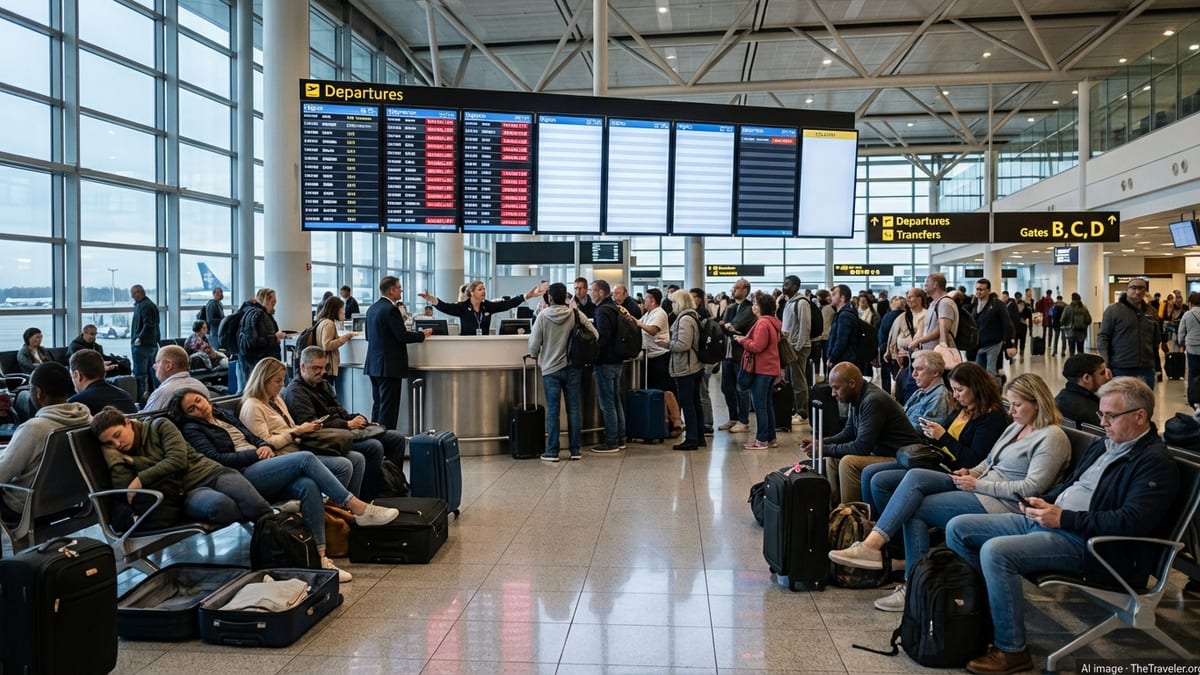
Airport authorities in major hubs have been increasing visible security, according to local and international reporting, with expanded screening and patrols particularly around departure halls that serve routes to and from the highest-risk nations. These measures can lengthen check-in and transfer times, and travelers are being urged by airlines to arrive earlier than usual for Middle East–bound flights.
In the near term, analysts quoted in open-source reporting expect that group tours and cruise itineraries that once combined several Middle Eastern ports are likely to remain curtailed or rerouted to Mediterranean, Red Sea or Indian Ocean alternatives perceived as safer. Independent travelers, who previously stitched together journeys across multiple borders by bus or rental car, face a much more fragmented map in which certain crossings are effectively closed off by security or insurance constraints.
How long the heightened caution will persist depends on the evolution of the conflict involving Iran, regional militias and neighboring states. For now, the combination of formal U.S. advisories and repeated security alerts signals that Americans are being steered away from six particularly dangerous destinations and urged to think carefully before entering much of the surrounding region, reshaping Middle Eastern travel planning well into the current season.