

Thousands of travelers across the United States are facing long lines, missed connections and unexpected overnight stays as airlines including Delta Air Lines, American Airlines, United Airlines and Air Canada cancel 134 flights and delay 3,746 more at major hubs from Atlanta and Chicago to Washington D.C., Newark, Miami, Austin, Albany and Seattle.
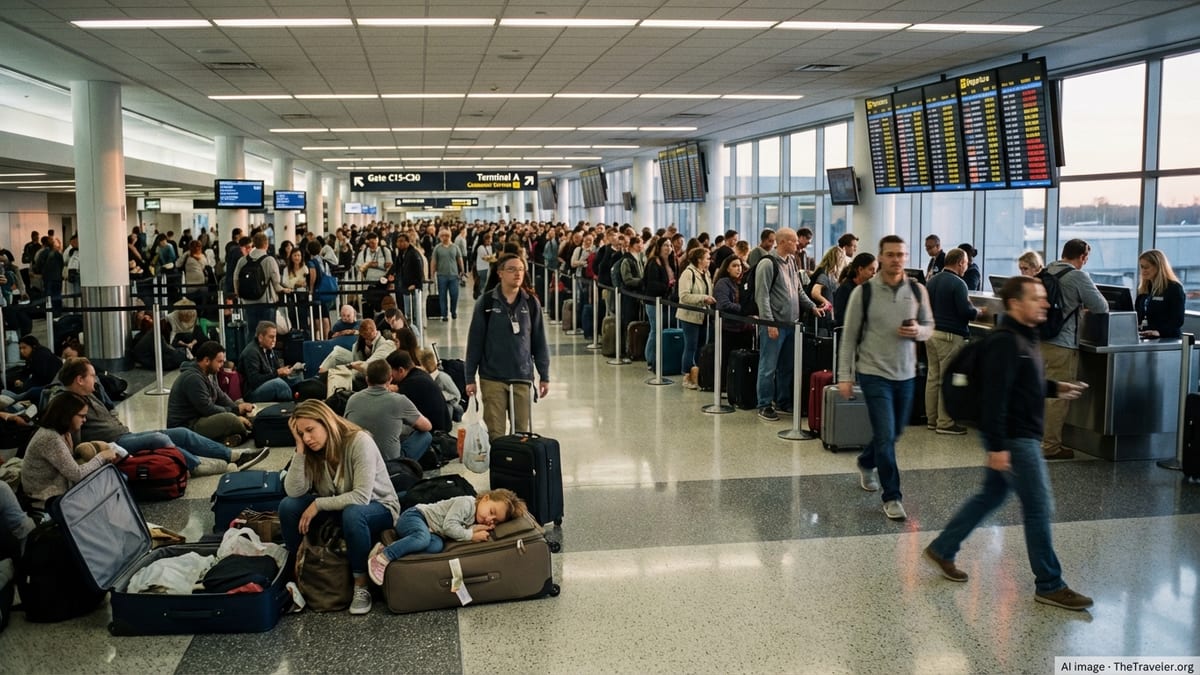
Nationwide Disruptions Hit Major U.S. Hubs
The latest wave of disruptions has rippled across some of the country’s busiest airports, snarling operations during what was expected to be a routine travel period. Data compiled from flight tracking services shows that delays now stretch across the entire domestic network, with congestion building at key connecting hubs.
Atlanta’s Hartsfield Jackson, the world’s busiest passenger airport, has seen a sharp rise in departure and arrival delays, as air traffic controllers meter traffic during periods of low visibility and high volume. Chicago O’Hare, Washington National, Newark Liberty and Miami International are reporting similar patterns, with delayed aircraft causing knock on effects across airline schedules.
While the raw numbers of 134 cancellations and 3,746 delays are lower than those seen during historic holiday meltdowns or severe winter storms, the breadth of affected airports means disruption is widely felt. Travelers are encountering gate holds, rolling departure times and long waits for available aircraft and crews, even on routes untouched by weather.
At smaller and mid sized airports such as Albany and Austin, delays have been compounded by their reliance on tightly scheduled regional operations. When a single inbound aircraft arrives late, it can cascade into multiple delayed departures, leaving passengers with limited rebooking options and few alternative flights.
Weather, Equipment Failures and Volume Combine
Operational reports from aviation authorities and airline statements point to a mix of factors behind the latest disruption. Persistent low cloud ceilings and reduced visibility in several regions have forced air traffic managers to slow arrival and departure rates, particularly at tightly constrained airports like Newark and Washington National.
In the Northeast and Mid Atlantic, intermittent rain and low clouds have required increased spacing between aircraft, stretching already busy schedules. On the West Coast, Seattle Tacoma has been dealing with changing wind patterns and patchy showers that complicate runway use and require additional caution, contributing to ground delays and airborne holding.
Complicating the weather challenges are equipment issues and infrastructure strains. At Washington National, an equipment outage affecting part of the airport’s operations has led to extended ground delays and longer turn times at the gate. In Miami and other congested hubs, routine taxiway congestion has escalated into longer than usual departure queues as traffic peaks at certain hours of the day.
High passenger volumes are amplifying the strain. Airlines have been operating near full capacity on many routes, leaving little slack in the system to recover when problems arise. Once a morning push of flights is disrupted, the resulting late aircraft and displaced crews can echo well into the evening, even after weather conditions improve.
Delta, American, United and Air Canada Among Hardest Hit
The disruptions are spread across carriers, but large network airlines with extensive hub and spoke operations are bearing much of the impact. Delta Air Lines, with its massive operation in Atlanta and a strong presence in Seattle and other affected airports, has logged dozens of cancellations and hundreds of delays as it works to reposition aircraft and crews.
American Airlines, which operates key hubs at Miami, Washington National and other affected airports, is also seeing significant schedule disruptions. Delays have stacked up across its domestic network, affecting both short haul shuttle style flights in the Eastern corridor and longer routes connecting to the Midwest and West Coast. Even a relatively small number of cancellations has caused sizable headaches where alternate flights are already heavily booked.
United Airlines, anchored at hubs such as Chicago O’Hare and Newark, is contending with weather and congestion challenges in both the Midwest and the Northeast. With aircraft arriving late into Newark and Chicago, United’s tightly timed bank structures have been strained, leading to missed connections and rebookings deep into the week.
Cross border travelers have not been spared. Air Canada, which relies on U.S. gateways like Newark, Washington and Seattle for connecting traffic, has seen its own operations affected by knock on disruptions. Delayed U.S. departure and arrival times have impacted onward connections to Toronto, Montreal and Vancouver, leaving some international passengers stranded overnight or forced to reroute.
Scenes of Frustration in Terminals Nationwide
Inside terminals, the operational statistics translate into long, often tense waits. At Atlanta, Chicago and Miami, check in halls and security checkpoints have grown crowded as travelers arrive early in hopes of finding alternative options, only to discover their original flights have slipped further down the departure board.
In Newark and Washington D.C., long lines formed at airline customer service counters as canceled flights left entire planeloads of passengers needing new itineraries. With limited hotel availability near major hubs and many flights already close to full, agents have struggled to find near term solutions for travelers hoping to maintain tight business schedules or reach family events.
Albany, Austin and other smaller airports have seen their own scenes of frustration. Without the same depth of flight options, passengers there have fewer choices when a regional flight is delayed or scrapped. Some have resorted to renting cars to reach nearby major airports in the hope of finding a same day departure, while others brace for overnight stays in terminal seating areas.
Social media platforms have filled with images of packed gate areas, sprawling luggage queues and departure boards lit with yellow and red delay indicators. Travelers report spending hours on hold with call centers, refreshing mobile apps repeatedly and weighing whether to abandon flights altogether in favor of road or rail alternatives where available.
Strain on Airline Recovery Plans
Airlines now face the delicate task of restoring normal operations while managing passenger expectations. Recovering from a day marked by hundreds of delays is not as simple as clearing a backlog once weather improves. Aircraft must be repositioned to where they are needed for subsequent days’ schedules, and crew members must remain within strict working hour limits governed by federal regulations.
In practice, that means some disruptions are likely to persist into tomorrow as carriers reshuffle assets, swap aircraft types on specific routes and rebuild their normal timing patterns at key hubs. Flights scheduled for early morning departures may still be affected if the aircraft arrives late the previous night or if crews are required to rest after extended duty periods.
Airline operations centers are using a mix of schedule trimming and tactical adjustments to restore reliability. In some cases, carriers are proactively canceling a small number of flights on select routes to free up aircraft and crews, prioritizing high demand or strategically important connections. While this helps stabilize the network, it can also mean fresh cancellations for travelers who initially believed they had escaped the worst of the disruption.
The current event also highlights ongoing challenges facing the industry, from tight staffing in some operational roles to the complexities of aging airport infrastructure. While airlines have invested heavily in technology to manage irregular operations, sudden combinations of weather, equipment issues and high load factors continue to test the resilience of those systems.
Travelers Scramble for Alternatives and Assistance
For those caught in the middle of the disruption, finding alternatives has become a race against time and limited inventory. At airports like Miami and Seattle, passengers with canceled flights have reported sprinting between nearby gates as airline staff announce last minute seats on earlier or rerouted departures, often available only to those who can reach the desk quickly.
Others have turned to nearby airports to bypass bottlenecks. Travelers from Albany, for example, have sought seats on flights departing from New York City area airports, while those in Austin have looked toward Dallas Fort Worth or Houston for more robust options. Rental car counters in several affected cities have seen brisk business as people opt to drive hundreds of miles to salvage business meetings or family gatherings.
Customer service options have been strained under surging demand. Many travelers have found airline apps and websites to be the fastest way to rebook, but these systems can lag under heavy loads, and not all passengers are comfortable navigating self service tools in a stressful environment. At the same time, call centers are contending with long hold times as they prioritize customers already stranded away from home.
For international travelers and those with complex itineraries involving multiple airlines, rebooking can be especially challenging. Coordination between carriers on through tickets or codeshare flights often requires manual intervention, slowing the process and leaving some passengers uncertain about when and how they will reach their destinations.
Officials Urge Vigilance and Flexibility
With delays and cancellations distributed unevenly across the country, aviation officials and travel experts are urging passengers to stay vigilant and build extra time into their plans. They recommend checking flight status frequently before leaving for the airport and keeping an eye on both the inbound aircraft and local weather conditions at departure and arrival cities.
Travelers are being advised to make use of multiple communication channels, including airline mobile apps, text alerts and airport display boards. Having up to date contact information in airline profiles can help ensure that passengers receive timely notifications about schedule changes, gate moves or rebooking options when flights are disrupted.
Flexibility remains a key asset. Passengers with nonessential trips or flexible schedules are encouraged, when possible, to move travel to off peak days or flights less exposed to cascading delays. Those who must travel are urged to pack essentials like medications, chargers and a change of clothes in carry on bags in case of extended delays or unexpected overnight stays away from home.
For travelers already on the road, staying calm and patient in crowded terminals is easier said than done, but industry veterans note that frontline staff are often managing the same uncertainty as passengers. Clear communication, realistic expectations and a willingness to consider creative rerouting options can improve the chances of reaching a destination as the system gradually recovers.