


More news on this day
Flight delays and lengthy tarmac waits in the United States have climbed to their worst levels in years, according to new analyses of federal transportation data that point to a strained aviation system struggling to keep up with booming demand.
Get the latest news straight to your inbox!
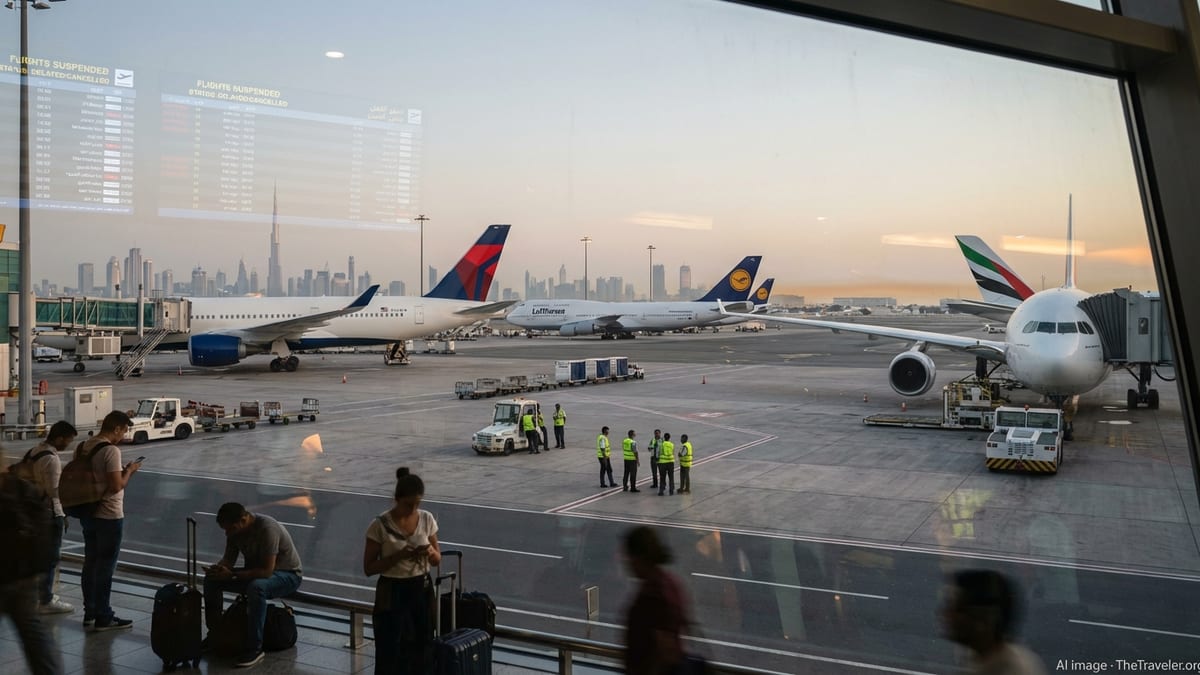
Report flags sharp rise in long ground holds
Newly compiled figures drawing on the U.S. Department of Transportation’s Air Travel Consumer Report indicate that tarmac delays have surged to their highest volumes since federal limits on on-board ground holds took full effect in 2010. Consumer watchdog analyses of full-year 2024 data and early 2025 numbers estimate that domestic tarmac delays exceeding three hours rose by more than 60 percent compared with the previous year, even as outright cancellations remained relatively low by recent standards.
Publicly available summaries of federal datasets show that airlines reported well over 400 domestic tarmac delays beyond three hours in 2024, up sharply from the prior year and representing the heaviest burden of long waits in many years. Preliminary tallies for 2025 suggest that the upward trend is continuing, with more passengers spending extended stretches on aircraft waiting for takeoff clearance or an available gate.
The same analyses find that overall on-time performance deteriorated to its weakest point since the mid-2010s. Based on published coverage of the latest consumer report, 2025 is shaping up to be the poorest year for punctuality since 2014, marking a reversal after modest improvements seen as the industry emerged from the pandemic shock.
While federal rules cap most tarmac delays at three hours for domestic flights and four hours for international services, regulators allow limited exceptions for safety, security and air traffic control directives. Analysts note that the recent spike is occurring despite these protections, suggesting that operational buffers built into airline schedules and airport workflows have been eroded.
On-time performance slides as travel demand booms
Behind the headlines on tarmac waits is a broader picture of slipping reliability. Federal statistics cited in recent government and media summaries show that roughly 78 percent of domestic flights arrived on time in 2024, a decline from 2023 and weaker than several pre-pandemic years. Early indications for 2025 point to a further slide, with nationwide on-time performance falling to its lowest level in more than a decade.
The deterioration is unfolding against a backdrop of record or near-record passenger volumes. Industry and government briefings in late 2024 and early 2025 highlighted that U.S. carriers moved more travelers than in any previous year, as leisure and business demand fully rebounded. That surge has left less slack in the system when storms, equipment issues or staffing constraints arise, increasing the likelihood that a localized disruption will ripple across multiple hubs.
Some measures of reliability have nevertheless improved since the most turbulent phases of the pandemic era. Transportation Department updates in 2024 pointed to the lowest nationwide cancellation rates in at least a decade, with airlines emphasizing aggressive hiring, schedule trimming and technology investments. The latest tarmac and delay statistics, however, suggest that many of those gains have come by turning cancellations into late or heavily delayed departures rather than by eliminating disruptions altogether.
Federal analysts who compile long-term trend reports on aviation performance have also documented how late-arriving aircraft have become an increasingly important driver of subsequent schedule problems. When the network operates near capacity, a single disruption can propagate through dozens of flights, contributing to both missed connections and extended ground holds as aircraft and crews fall out of position.
Multiple forces behind delays, from weather to staffing
Recent research and industry assessments point to a mix of familiar and emerging forces behind the rise in delays and tarmac waits. Weather remains the most visible issue, especially during convective summer storm seasons and severe winter events, but its impact is compounded by crowded skies and airports that are often operating close to their physical and staffing limits.
Studies of Bureau of Transportation Statistics cause-of-delay categories show that national airspace system issues, including air traffic control constraints and volume-related slowdowns, have taken on a larger role in recent years. Periodic staffing shortfalls and technology disruptions within the air traffic system have amplified bottlenecks at the busiest hubs, forcing airlines to hold aircraft on the ground as they wait for departure or arrival slots.
At the airline level, carriers are navigating their own operational pressures. Reports on recent industry disruptions describe how IT outages and crew misalignment have triggered cascading delays, even on days when weather was relatively benign. When flight crews time out under federal duty limits or aircraft are stranded away from their scheduled routes, airlines can be left with little choice but to board passengers, push back and wait for brief windows in the system to open.
Academic work examining the post-pandemic aviation network has further highlighted the growing contribution of security and airport processes to overall delay patterns. As transportation security protocols and screening sensitivity have evolved, checkpoints and ramp operations have at times become additional choke points, feeding into the same chain of late arrivals and ground congestion that ultimately traps passengers on the tarmac.
Passenger impact grows despite existing protections
For travelers, the practical impact of the latest numbers is felt less in abstract percentages and more in hours spent waiting. Data compiled by travel analysts and financial publications for the first months of 2026 show that on-time performance at some major U.S. airports has fallen into the upper 60 percent range, with average delay durations at certain facilities topping 80 minutes for late departures.
Even at airports that retain relatively strong track records, the sheer volume of traffic means that a small shift in punctuality statistics translates into millions of extra passenger-hours spent in terminals or on parked aircraft. A Places to Travel analysis of Bureau of Transportation Statistics data covering 2023 and early 2024, for example, estimated that flyers collectively lost more than two million hours to delays at a single busy U.S. airport over a little more than a year.
Existing tarmac delay rules were designed to limit the most extreme experiences, such as passengers being confined to aircraft for many hours without the option to deplane. Consumer advocates now argue that the recent rise in long ground waits, even within regulatory limits, illustrates how close the system is running to those boundaries on peak travel days. They contend that more transparent reporting of controllable versus uncontrollable delays would help travelers understand how much of the disruption stems from airline decisions versus external conditions.
For now, publicly available complaint data and survey results continue to show punctuality and unexpected delays among the top frustrations for U.S. air travelers. While safety performance remains strong by historical standards, the reliability challenges highlighted in the latest reports suggest that passengers planning peak-season trips in 2025 and 2026 may need to build in extra time and flexibility as the aviation system works through its bottlenecks.
Calls grow for closer oversight and long-term fixes
The latest figures on flight delays and tarmac waits are already feeding into a wider policy debate about how to strengthen protections and modernize the air travel system. According to recent coverage of federal and consumer group reports, watchdog organizations are urging transportation officials to step up enforcement of existing tarmac rules and to use civil penalties more aggressively when airlines exceed legal limits without qualifying exemptions.
State-level regulators are also becoming more active. A bipartisan group of state attorneys general has formed a partnership focused on aviation consumer issues, with agreements in place to share data and coordinate investigations where patterns of potential violations emerge. That effort adds another layer of scrutiny to carrier operations at a time when travelers are increasingly vocal about delays, missed connections and on-board waits.
Industry groups, for their part, have continued to call for greater investment in air traffic control staffing, facilities and technology, arguing that government-managed infrastructure is a significant contributor to congestion and delay. Policy papers and public statements from airline trade associations in 2024 and 2025 have pressed for accelerated hiring of controllers, modernization of key systems and expanded use of performance-based navigation to squeeze more capacity from existing airspace.
Longer term, transportation research organizations and academic studies suggest that addressing the structural drivers of delay will require a combination of new infrastructure, smarter scheduling and more resilient networks. With demand expected to keep rising into the late 2020s, the recent spike in tarmac waits and late arrivals is being viewed as an early warning that the current system, while safe, is increasingly brittle under stress.