


More news on this day
Air travelers on both sides of the Atlantic are facing a fresh wave of delays and cancellations today, as a major technical issue in the United Kingdom’s air traffic control system coincides with stormy early‑September weather and heavy post‑holiday demand.
Get the latest news straight to your inbox!
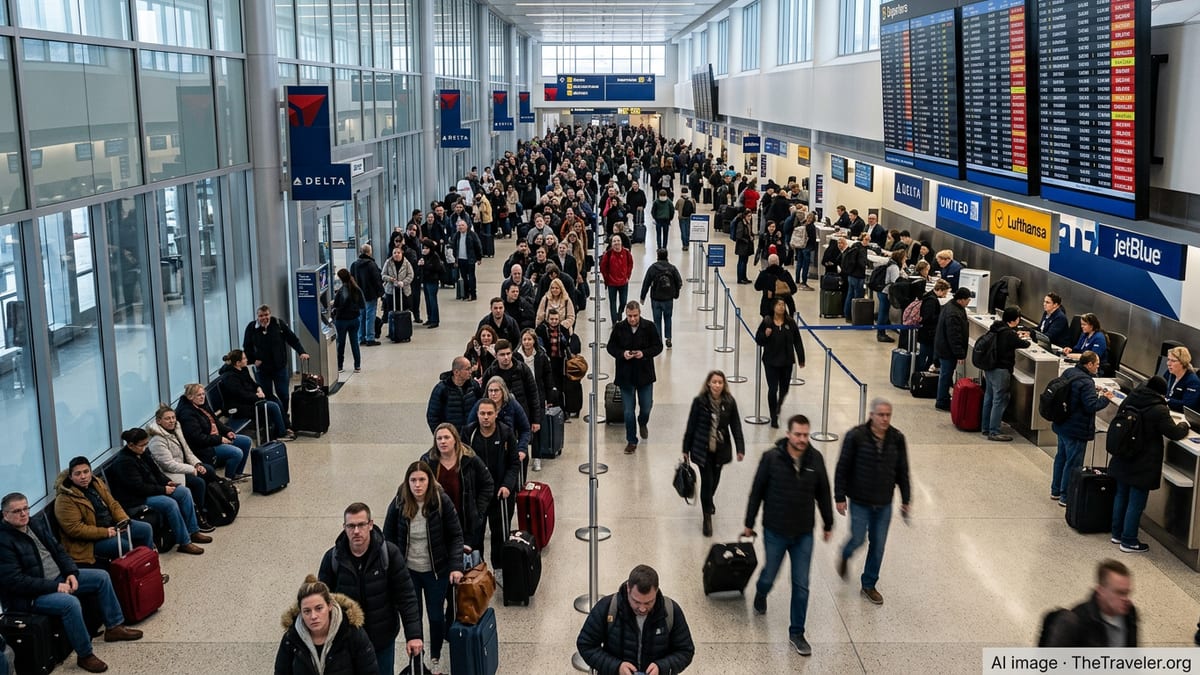
UK Air Traffic Control Glitch Triggers Mass Disruptions
Flights across the United Kingdom and parts of Europe were heavily disrupted on September 8 after a problem in the country’s air traffic control systems forced widespread restrictions on movements in and out of British airspace. Monitoring site Flightradar24 reported that more than 600 flights were canceled by midday, with hundreds more delayed, affecting major hubs such as London Heathrow, Gatwick, and Manchester as well as regional airports across the network.
According to published coverage, Britain’s National Air Traffic Services identified a fault in its flight data processing systems that limited the number of aircraft that could be safely handled at any given time. Although the underlying technical issue was later reported as resolved, schedules remained severely out of position, with knock‑on delays extending into the evening as airlines attempted to re‑crew flights and reposition aircraft.
Travel tracking dashboards that log significant operational events showed multiple UK and European airports flagged at their highest disruption levels from late morning onward. These tools, which aggregate delay and cancellation information in real time, indicated that the most acute problems were concentrated in and around London but also affected routes into Ireland, continental Europe, and long‑haul connections to North America.
Airlines serving the UK market, including low‑cost and full‑service carriers, published rolling advisories throughout the day warning of cancellations, missed connections, and aircraft being out of position. Several operators advised passengers not to travel to the airport unless their flight status showed as operating, and to expect longer lines at customer service desks as rebooking queues grew.
Europe’s Busy Late‑Summer Skies Under Strain
The UK systems issue landed during one of the busiest periods of the late‑summer travel season in Europe, compounding existing pressure on airports and air navigation services. A recent network briefing from Eurocontrol, the agency that coordinates European air traffic management, shows that nearly 60,000 flights across the continent were affected by air traffic flow management restrictions in the last reported week, representing around 23 percent of all operations.
Those figures reflect a combination of factors, including strong demand, capacity constraints at some air traffic control centers, and earlier weather‑related disruptions. While the majority of flights continue to operate close to their planned times, even a modest reduction in available airspace or airport capacity can quickly translate into a significant share of services running late when traffic is near seasonal peaks.
Publicly available information from European carriers indicates that the UK airspace disruption has had spillover effects on flights that never touch British soil, particularly for airlines that rely on UK hubs for aircraft and crew rotations. Some operators have highlighted “knock‑on” delays where aircraft stranded in Britain were scheduled to operate later flights within mainland Europe, forcing rolling cancellations or last‑minute aircraft swaps.
Data from Eurocontrol’s airport and diversion tools also shows that several large European airports are operating close to their parking and stand capacity during peak hours this month. With limited room to accept diversions or prolonged ground delays, operational plans leave little margin when a major state such as the UK experiences an unexpected systems outage.
US Travelers Face Parallel Delays Amid Stormy Weather
While Europe contends with system and capacity constraints, travelers in the United States are encountering a more familiar cause of disruption: weather. Aggregated FAA‑based tracking sites for September 8 indicate elevated levels of delays and cancellations at several large hubs, with thunderstorms and unsettled conditions across parts of the Midwest and East Coast slowing departures and arrivals.
Industry analysis published this week notes that the first half of September often brings a shift in weather patterns that can heighten operational risk. Meteorological outlooks have highlighted a recurring “ring of fire” storm setup across central parts of the country, producing lines of strong thunderstorms capable of closing arrival and departure corridors into major hubs and forcing reroutes that eat into already tight schedules.
Aviation data reports show that when storms, airspace restrictions, and heavy demand converge at major US hubs during holiday periods, reactionary delays tend to build over the course of the day. Flights that depart late in the morning can lead to aircraft and crews arriving behind schedule for afternoon and evening departures, generating waves of knock‑on disruptions even after the weather has improved.
Recent commentary on US operations points to airspace congestion constraints at busy airports such as Chicago O’Hare, where regulators have previously asked carriers to pare back schedules when on‑time performance deteriorated. Observers expect similar dynamics to play out whenever storms hit one or more large hubs simultaneously in the coming weeks.
Why Small Shocks Create Big Travel Headaches
Although technical failures and severe storms grab the headlines, underlying delay statistics for both Europe and the United States suggest that much of the disruption passengers experience is “reactionary” in nature. Analyses from Eurocontrol’s Central Office for Delay Analysis indicate that, in a typical month, reactionary causes such as late‑arriving aircraft contribute more minutes of delay per flight than many primary causes like airport weather or government‑related constraints.
US data compiled by the Federal Aviation Administration shows that, over a multi‑year period, various forms of weather have accounted for the majority of system‑impacting delays lasting more than 15 minutes. However, those initial weather impacts often ripple across networks as late departures force schedule compressions, tighter connection times, and, eventually, missed flights when crews or aircraft cannot be repositioned in time.
Operational experts note that modern airline schedules are built to maximize aircraft utilization and seat capacity, especially during peak travel seasons. This approach keeps fares more competitive but reduces slack in the system. When a technical issue such as the UK flight data processing fault or a line of severe storms removes even a small slice of capacity, tightly wound schedules have limited ability to absorb the shock.
Publicly available academic work on aviation delays further underscores the complexity of these chain reactions, highlighting how factors as diverse as air traffic control procedures, airport infrastructure limits, and even space‑weather‑related communication disturbances can interact with more familiar weather and demand pressures to increase delay rates.
What Today’s Disruptions Mean for Travelers
For passengers already en route, today’s disruptions translate into longer journeys, missed connections, and in some cases overnight stays near busy hubs. Airlines in the UK and Europe have been directing customers to updated travel advisories outlining rebooking options and, where applicable, information on care and compensation under regional regulations.
In North America, carriers are leaning heavily on mobile apps and text alerts to provide rolling updates as weather systems move through key regions. Travelers are being encouraged through public channels to check flight status repeatedly on the day of travel rather than relying on information from the time of booking, and to build additional time into tight connections when itineraries allow.
Looking ahead through the rest of September, network forecasts from European and US aviation bodies point to continued strong demand combined with typical seasonal weather variability. Analysts following airline performance expect a pattern of relatively smooth days punctuated by severe disruption whenever storms, staffing constraints, or technical issues align at one or more major hubs.
For those planning imminent trips, publicly available guidance from aviation agencies and industry groups remains consistent: confirm your flight status early and often, monitor airport and airline alerts, and be prepared for plans to change with little notice when systems or weather reduce capacity in an already busy global air traffic network.
Associated Press: UK air traffic control issue triggers mass flight cancellations
Eurocontrol: Flash Briefing, week 35 traffic and delay overview
AviNews: US flight delays and cancellations rise in early September 2026
FAA: Weather delay frequently asked questions and statistics