


More news on this day
The United States currently designates 22 countries and territories under its highest Level 4 “Do Not Travel” advisory, a category reserved for destinations where publicly available information indicates a greater likelihood of life-threatening risks and severely limited consular assistance if emergencies occur.
Get the latest news straight to your inbox!
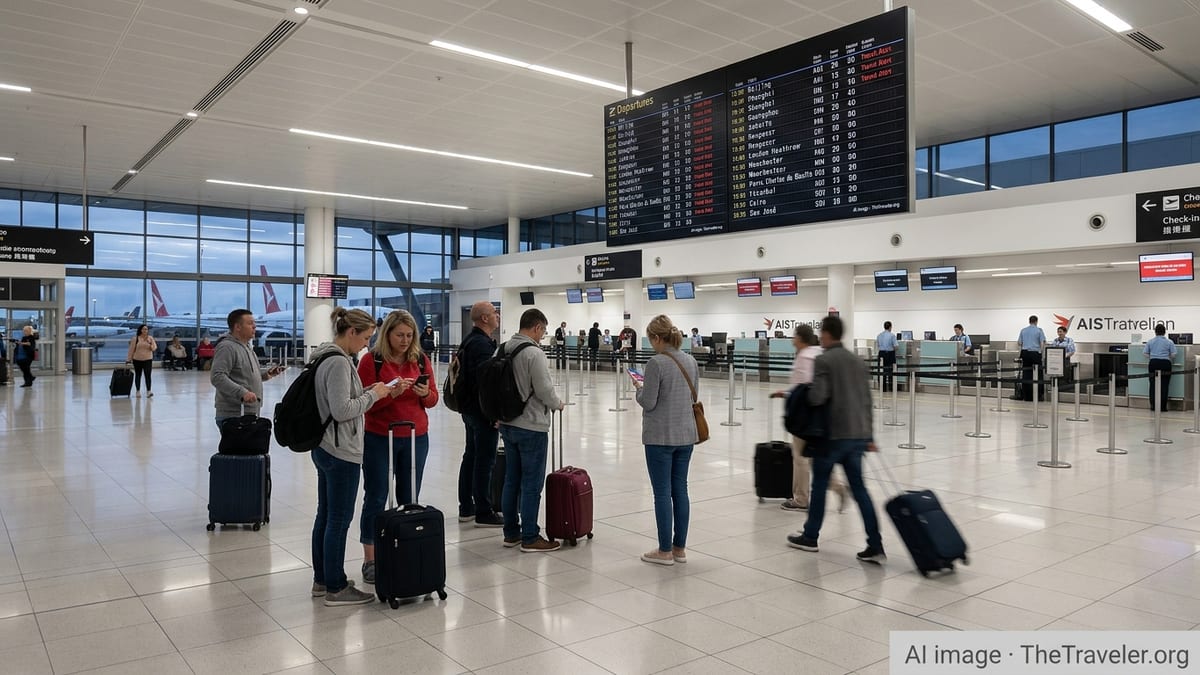
What the Level 4 ‘Do Not Travel’ Warning Really Means
Publicly available State Department guidance explains that Level 4 is the most serious advisory in the U.S. four-tier system, which ranges from Level 1, “Exercise Normal Precautions,” to Level 4, “Do Not Travel.” At this top level, travelers are urged to avoid visiting altogether, or to leave as soon as it is safe to depart if they are already present in the affected country.
According to safety information made available by U.S. consular services, Level 4 advisories are issued when conditions create a greater likelihood of life-threatening risks, and when the U.S. government may have very limited ability to provide assistance such as evacuations, emergency services or on-the-ground support. Officials also stress that conditions can change rapidly, sometimes prompting sudden updates to advisory levels and country-specific guidance.
Level 4 warnings often cite a combination of factors, including armed conflict, terrorism, civil unrest, kidnapping, arbitrary detention, crime, health system collapse, or natural disasters. In many cases, travel insurance coverage, commercial flight availability, and local security arrangements are also affected by the same instability that triggered the advisory.
Travel-advisory trackers compiled from State Department data show that the Level 4 designation can apply either to an entire country or, in some cases, to specific regions of a country, while other areas remain at a lower level. However, the group of 22 countries highlighted here are places where the “Do Not Travel” label applies nationwide.
Which Countries Are on the Current List
Based on recent compilations of the State Department advisory feed published by travel-risk monitoring services and travel media, 22 countries and territories are currently subject to a full Level 4 “Do Not Travel” advisory in 2026. These lists draw directly on the department’s live advisory database and note each change as it is posted.
Coverage from travel and data-analysis outlets focusing on U.S. advisories indicates that the Level 4 group is heavily concentrated in regions experiencing war, insurgency, or chronic instability, including parts of the Middle East, North and East Africa, and the Sahel, as well as selected countries in Eastern Europe and Asia. Gaza is listed as a separate entry at Level 4, in addition to countries already affected by conflict in the same wider region.
Several of the countries on the list have been at Level 4 for years because of protracted conflict and weak state institutions, while others were escalated more recently after major security or political crises. Outside observers who track updates note that the list has fluctuated around the low-twenties mark through much of 2026, with new advisories occasionally pushing the total higher before some destinations are downgraded if conditions improve.
Because the State Department continuously updates individual country pages, the exact roster of Level 4 destinations can shift quickly. Travelers considering any high-risk destination are urged in public guidance to review the latest country-specific advisory on the department’s official site immediately before booking flights or departing.
Why These Destinations Face the Harshest Warning
Analysis of the current Level 4 countries shows that each listing typically cites multiple overlapping risks. In active war zones and areas of widespread insurgency, reasons frequently include terrorism, the presence of armed groups, shelling or airstrikes, unexploded ordnance, and the possibility of foreign nationals being targeted for kidnapping or wrongful detention.
Other countries on the list are there primarily because of severe internal instability and violent crime. Publicly available advisories for some destinations reference high levels of gang violence, weak or under-resourced law enforcement, and a history of attacks or kidnappings involving foreigners. In these cases, authorities warn that travelers may not be able to rely on local emergency services, and that the U.S. government’s ability to intervene is constrained by security conditions.
Health and infrastructure concerns also appear across a number of Level 4 entries. In certain countries, advisory text highlights the near-collapse of public health systems, limited availability of medicines, and the lack of reliable hospitals capable of handling serious illness or injury. Combined with damaged transport networks, intermittent electricity, and disrupted communications, these constraints complicate both everyday travel and emergency response.
In several cases, cross-border tensions and landmine contamination further aggravate the risk profile. Travel analysts note that some Level 4 advisories explicitly discourage overland travel near borders, warning of military checkpoints, sporadic closures, and the possibility that routes commonly used in the past may now be unsafe or impassable.
How the Advisory System Works for Travelers
The State Department’s advisory system uses four standardized levels to describe risk, along with a set of lettered risk indicators that flag specific concerns such as crime, civil unrest, terrorism, kidnapping, wrongful detention, health risks, and natural disasters. Each country’s page contains an overall level and sometimes different levels for regions or provinces, reflecting the uneven distribution of risk inside a single destination.
Public information from the department emphasizes that these advisories are intended as a tool to help travelers make informed decisions, not as binding travel bans for private citizens. However, universities, companies, study-abroad programs, and nongovernmental organizations frequently adopt internal policies that restrict or prohibit official travel to Level 4 countries, citing the same risks identified in the government advisories.
The department also encourages U.S. travelers heading overseas, particularly to higher-risk locations, to enroll in the free Smart Traveler Enrollment Program, known as STEP. By registering an itinerary and contact details, travelers can receive security updates and allow consular officers to better locate and communicate with them in the event of a crisis or natural disaster abroad.
Because international conditions change rapidly, especially in fragile states, advisory language stresses the need to monitor developments up to and throughout a trip. Changes in conflict dynamics, major political events, or large-scale demonstrations can trigger fast revisions to a country’s level or to guidance on specific regions, border crossings, or transport hubs.
Practical Steps for Americans Considering High-Risk Travel
For Americans who, despite the Level 4 guidance, still plan or are required to travel to high-risk areas, expert commentary compiled by travel-risk and insurance providers highlights the importance of detailed contingency planning. This begins with checking the exact wording of the current advisory, including any regional distinctions, and confirming whether airlines are still operating commercial routes into and out of the destination.
Specialist security firms and international insurers frequently recommend reviewing medical evacuation coverage carefully, ensuring it extends to countries under Level 4 designations and provides clear procedures for requesting assistance. In some destinations, travelers are advised to identify multiple exit options, such as alternative airports or land crossings, in case primary routes are disrupted suddenly by security incidents or closures.
Publicly accessible guidance from consular and emergency-response organizations further suggests that travelers compile a local contact list before departure, including hospitals, clinics, reputable transport providers, and the nearest U.S. embassy or consulate or, if there is none in-country, the mission responsible for citizens there. Maintaining redundant communication methods, such as local SIM cards and offline maps, is also widely recommended in environments where infrastructure may fail without warning.
Analysts who follow global risk trends note that the presence of a Level 4 advisory can affect more than personal safety. It may influence airline schedules, cruise itineraries, and tour operations, and can lead to complex questions around legal liability for organizations sending staff or students abroad. As a result, the list of 22 “Do Not Travel” destinations is closely watched not only by individual travelers, but also by universities, corporations, insurers, and humanitarian groups planning movements in and out of volatile regions.