

More news on this day
Escalating tensions between the United States and Iran are rippling across the Persian Gulf, prompting fresh warnings from Western governments and forcing airlines and travelers to reassess plans to the United Arab Emirates, Qatar, and other key transit hubs.
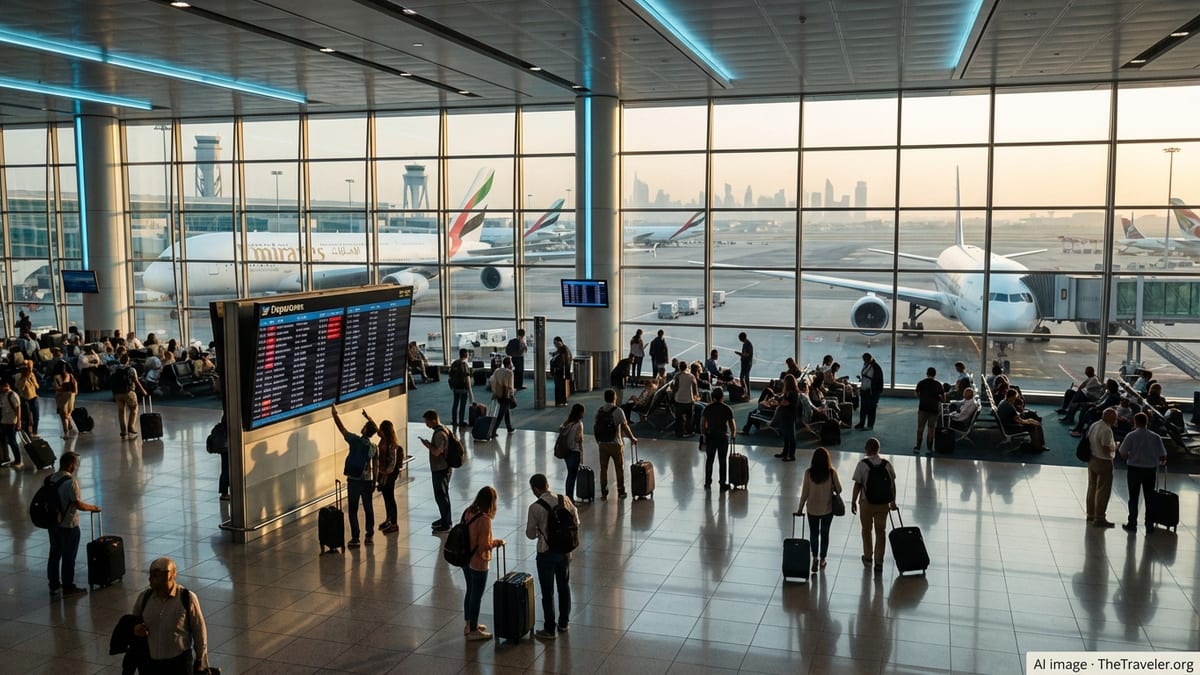
Western Governments Tighten Warnings for Gulf Travel
As Washington and Tehran trade threats over Iran’s nuclear program and regional activity, the United States, United Kingdom and several European partners have updated their messaging to citizens with trips planned to the Gulf. While the UAE and Qatar remain open for tourism and business, officials are emphasizing the potential for rapid deterioration if diplomatic efforts stall or military miscalculation occurs.
Current US travel advisories continue to distinguish between Iran itself, which carries the highest warning level, and Gulf neighbors such as the UAE and Qatar, where travelers are urged to exercise increased caution due to the risk of terrorism and the possibility of missile or drone activity in the wider region. Officials stress that these Gulf states are not active conflict zones but sit close to potential flashpoints, including the Strait of Hormuz and key US military facilities.
British and European authorities are delivering similar messages, highlighting that air hubs such as Dubai and Doha are considered operationally safe yet exposed to any sudden escalation between the US and Iran or its regional partners. Governments are asking citizens to register travel details, maintain flexible itineraries and closely follow embassy channels for any shift in posture.
Airspace Squeezed as Airlines Prepare for Detours
The most immediate impact of rising tension is being felt in the skies. Gulf carriers, including major airlines in the UAE and Qatar, are quietly preparing contingency routings in case portions of Iranian or adjacent airspace are temporarily restricted or closed during military exercises or a potential clash. Aviation analysts note that even limited no-fly zones over Iran or surrounding waters would force long-haul services to take longer, more southerly tracks.
Recent Iranian military drills and temporary hazard areas across parts of the Gulf of Oman and near the Strait of Hormuz have already prompted precautionary advisories to airlines to avoid certain corridors. Industry experts warn that a broader airspace shutdown, even for a short period, could trigger significant delays, diversions and higher operating costs, particularly for Europe–Asia itineraries that rely on Gulf hubs for connections.
For now, scheduled passenger flights to Dubai, Abu Dhabi and Doha are operating largely as normal, and regional airports remain calm. However, carriers are drawing on lessons from previous regional crises, pre-planning alternative routings, boosting fuel margins and preparing communication strategies for passengers in case of sudden airspace changes or short-notice cancellations.
What Travelers Should Know Before Visiting the UAE and Qatar
Travel security specialists emphasize that, despite intense geopolitical rhetoric, daily life in Gulf tourism centers continues much as usual. The UAE and Qatar both maintain extensive security apparatuses, with highly monitored public spaces and tight controls around critical infrastructure. Visitors still encounter efficient immigration processes, busy malls and beaches, and heavily trafficked business districts.
At the same time, travelers are being urged to plan with a new level of situational awareness. This includes checking official travel advisories immediately before departure, monitoring local news once on the ground and enrolling in government traveler enrollment programs where available. Tourists and business travelers alike are advised to keep copies of passports and visas, maintain updated contact details with their hotels or employers and know how to reach their embassies in an emergency.
Insurance coverage is another critical consideration. Policies that explicitly cover political unrest, airspace closure, or trip disruption due to military activity can provide an important safety net. Experts advise reading the fine print to confirm whether events such as regional conflict, closure of the Strait of Hormuz or diversions around Iranian airspace are covered triggers for reimbursement or evacuation support.
Beyond the UAE and Qatar: A Region on Edge but Open
The current standoff is not confined to any single border. Shipping-security briefings point to elevated risks for maritime traffic through the Strait of Hormuz and nearby sea lanes, where both Iran and US-led forces have expanded military activity. Energy markets have responded, with oil prices reflecting a growing risk premium tied to possible supply disruption if conflict were to affect tanker movements.
Neighboring Gulf states, including Bahrain, Kuwait, Oman and Saudi Arabia, are watching closely and coordinating behind the scenes, knowing their airspace and ports could be affected by any exchange of fire or tightening of sanctions. Many of these countries host US military assets, making them potential staging grounds or targets in a worst-case scenario, even if authorities publicly stress their preference for de-escalation and continued diplomacy.
Despite this, borders remain open, resorts are operating and business travel continues, underscoring a familiar regional pattern in which geopolitical tension coexists with a functioning tourism and aviation industry. For travelers, the takeaway is less about canceling all plans and more about staying flexible, informed and prepared for sudden shifts.
Practical Risk Management for Today’s Gulf Traveler
Security consultants advising multinational companies in the region are urging a structured approach to Gulf travel during this period. Organizations are being told to maintain real-time headcounts, use travel-tracking tools and require regular employee check-ins when staff transit or work through Gulf hubs. Individual travelers can borrow similar practices on a smaller scale by sharing itineraries with trusted contacts and establishing regular communication routines.
On the ground, visitors are encouraged to avoid sensitive locations such as protests, political gatherings, or areas near foreign military facilities, and to follow instructions from local authorities in the event of heightened alert levels. Basic preparedness steps, such as knowing the layout of one’s hotel, keeping essential items in a small go-bag and having backup digital copies of key documents, can make a significant difference if plans change quickly.
Ultimately, experts say, the Gulf today is a region where high-end tourism, global air connectivity and serious strategic rivalry intersect. As US–Iran tensions ebb and flow, travelers to the UAE, Qatar and beyond will need to factor geopolitics into their planning in a way that was once reserved for traditional conflict zones, even as they continue to enjoy some of the world’s most advanced airports and modern cityscapes.