

More news on this day
The United States government has sharply escalated its travel warning for Saudi Arabia, urging Americans to reconsider all but essential travel and to prepare for rapid departure as the Middle East reels from expanding conflict and retaliatory strikes involving Iran, Israel and US forces.
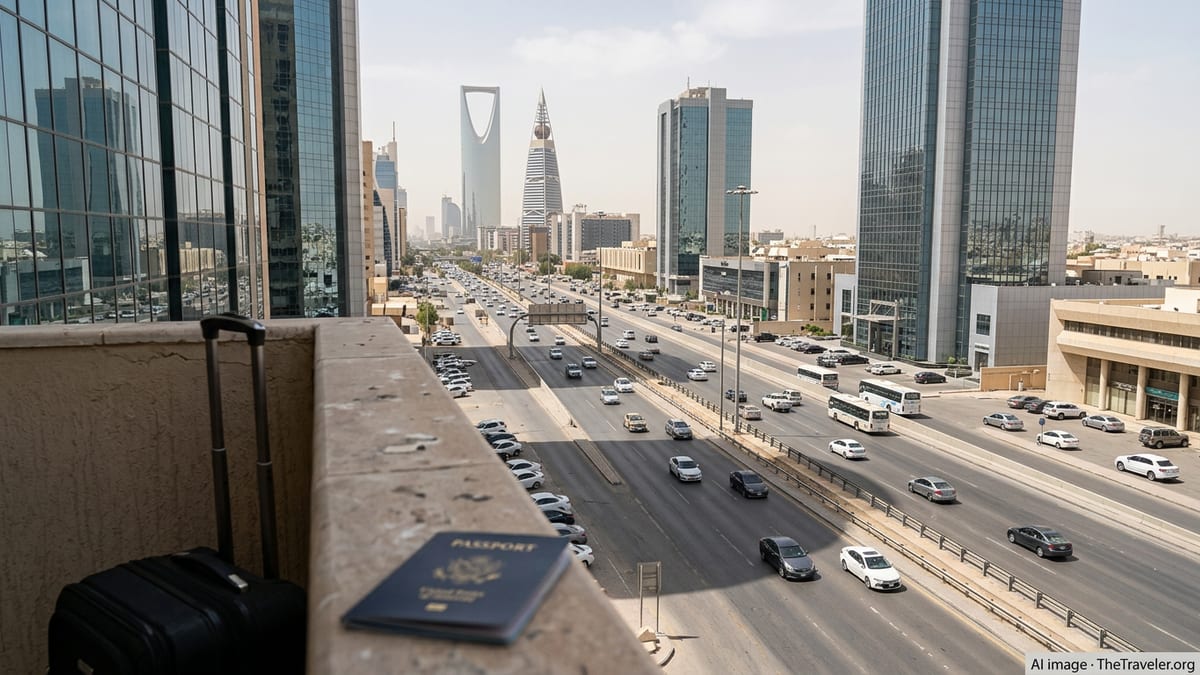
Advisory Raised to ‘Reconsider Travel’ as Risks Mount
The US State Department on Wednesday upgraded its travel advisory for Saudi Arabia to Level 3, “Reconsider Travel,” citing a rising risk of armed conflict, terrorism and potential spillover from ongoing military operations across the region. The move aligns Saudi Arabia with a broader tightening of US guidance for multiple Gulf and Levant states as tensions spike.
The updated advisory follows a sweeping warning issued earlier this week urging US citizens to depart 14 Middle Eastern countries, including Saudi Arabia, “as soon as possible” using available commercial options. Officials say the escalation reflects not only the direct threat of missile and drone activity but also the possibility of sudden airspace closures, disrupted flight schedules and constrained consular support.
At the same time, the US Embassy in Riyadh and consulates in Jeddah and Dhahran have been given authority to allow non-emergency staff and family members to leave the country, underscoring Washington’s concern that the security environment could deteriorate quickly with limited warning.
Embassy messages in recent days have also urged Americans already in the kingdom to maintain a low profile, avoid high-visibility Western venues, and monitor official alerts closely for changes in the situation on the ground.
Regional Conflict Drives Fears of Spillover Into the Kingdom
The tougher stance on Saudi Arabia comes against the backdrop of a fast-moving regional crisis triggered by large-scale US and Israeli strikes on Iran that began late last month. Those operations, which targeted senior Iranian leadership and military assets, have been met with waves of retaliatory missile and drone attacks aimed at Israel and US-linked facilities across the Gulf.
While Saudi Arabia has not been a primary battlefield, its strategic geography and role as a hub for US and allied military assets have put it squarely in the arc of potential escalation. Analysts warn that Iranian-aligned groups could seek to target energy infrastructure, transport corridors or sites associated with Western presence in the kingdom if the conflict widens.
US officials have also pointed to the risk of miscalculation or spillover from attacks directed at neighboring states, as well as the possibility of copycat terrorism or opportunistic acts of violence amid the heightened regional volatility. Even in the absence of direct strikes inside Saudi territory, such dynamics could disrupt civil aviation, overland routes and daily life in key urban centers.
Security alerts issued in recent days highlight how quickly conditions can change: a brief shelter-in-place advisory was ordered and then lifted in parts of the Eastern Province, while commercial carriers have begun adjusting routings and schedules in response to evolving threat assessments and airspace constraints.
What the Warning Means for US Travelers and Residents
For prospective travelers, the new Level 3 advisory is a clear signal to pause or cancel nonessential trips to Saudi Arabia for the time being. Travel experts note that the designation can affect travel insurance coverage, employer risk policies and the availability of corporate approvals for trips tied to business, conferences or large events.
Americans already in Saudi Arabia are not being ordered out en masse but are being urged to reassess the necessity of remaining, line up contingency plans and be prepared to leave quickly if commercial flights become scarce. That includes confirming that passports are valid for at least six months, keeping digital and physical copies of key documents, and ensuring access to critical medications and funds.
Officials advise that those who decide to stay should avoid demonstrations, monitor local media and US government channels, and exercise particular caution around government facilities, military sites, diplomatic areas and Western-branded hotels and malls, which have historically been considered higher-risk locations in periods of regional unrest.
Travel planners are also cautioning that restrictions or sudden changes in aviation routes over parts of the Middle East could result in longer journey times, unexpected diversions or last-minute cancellations, even for travelers transiting Saudi airports without entering the country.
US Citizens Urged to Register and Monitor Official Channels
Alongside the updated advisory, the State Department is amplifying calls for Americans in Saudi Arabia to enroll in its Smart Traveler Enrollment Program, known as STEP, so that embassies and consulates can push targeted security alerts directly via email or text. Officials stress that, in a rapidly evolving crisis, these alerts and embassy social media channels are often the fastest way to receive location-specific warnings and instructions.
US citizens have also been reminded of 24-hour phone lines in Washington for emergency assistance, including help arranging departure via commercial means if regular travel options begin to shut down or become prohibitively expensive. However, authorities emphasize that the government’s ability to coordinate evacuations or chartered flights may be limited, and that individuals should not rely on a potential future rescue operation.
Embassy messages in Riyadh in recent days have underlined standard security steps that become more critical in volatile periods: keeping a low digital and physical profile, being cautious about posts on social media, and avoiding sharing travel itineraries or accommodation details with strangers or unverified contacts.
Officials are also urging Americans to maintain communication plans with family or employers outside the region, including agreed-upon check-in times and backup methods of contact if mobile networks or internet service are disrupted by cyberattacks or infrastructure damage.
Impact on Pilgrimage, Business and Regional Travel
The elevated warning comes as Saudi Arabia continues preparations for a busy calendar of religious travel and large-scale events, raising questions about how the advisory may affect pilgrimage and business flows in the weeks ahead. Travel industry sources say some tour operators are already fielding cancellation requests and contingency inquiries from travelers concerned about transiting the region.
While the US government has not singled out religious travel in its messaging, the broad caution to reconsider nonessential trips and to weigh safety, insurance and logistical factors applies equally to leisure, corporate and pilgrimage visitors. Airlines and travel agencies are reviewing their own risk assessments, and some carriers are signaling they may trim capacity or alter routings if the security picture worsens.
Regional itineraries that link Saudi Arabia with neighboring Gulf and Levant destinations are particularly vulnerable as more countries see their advisories raised and airspace corridors shift. Multi-stop trips that once relied on seamless connections through major hubs in the Gulf may now face increased disruption, longer layovers or route changes with little advance notice.
For now, US officials say the message to travelers is straightforward: if you do not need to be in Saudi Arabia, postpone your trip; if you are there and have safe options to depart, consider taking them before conditions potentially tighten.