

More news on this day
Federal action to immediately restore pay for Transportation Security Administration employees is beginning to ripple through airports across the United States, as the prolonged Department of Homeland Security shutdown pushes the nation’s aviation system to the brink.
Get the latest news straight to your inbox!
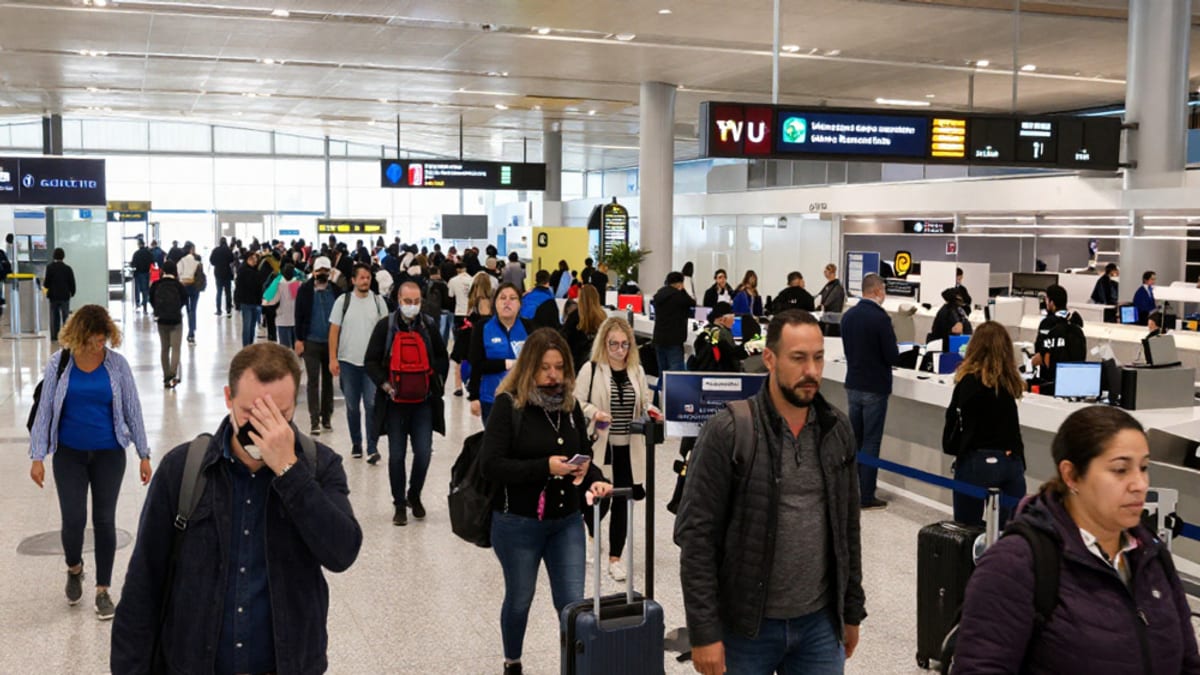
Image by Latest International / Global Travel News, Breaking World Travel News
Emergency Order Seeks to Stabilize Airport Security
Publicly available information shows that a new executive action signed in late March directs the Department of Homeland Security to resume regular paychecks for roughly 50,000 TSA officers who had been working without pay since mid-February. The directive comes after weeks of intensifying strain on airport security operations, with reports of historic wait times and growing concerns about systemic disruption to air travel.
According to published coverage, TSA personnel are expected to begin receiving pay as early as the first days of the coming week, offering some financial relief after multiple missed pay periods. The move is being framed as a targeted step to protect the integrity of aviation security and keep passenger screening lanes open during the ongoing funding lapse for DHS.
The decision to prioritize TSA pay reflects the critical role the agency plays in keeping the national air system functioning, even as much of the broader political dispute over immigration and border policy remains unresolved. Travel industry groups and airport leaders had spent recent weeks warning that without swift federal intervention, the country risked cascading closures of security checkpoints and widespread flight disruptions.
While the restoration of pay does not reopen the rest of DHS or resolve the underlying budget impasse, it marks a significant shift in federal strategy away from using unpaid essential staff as leverage in the funding fight and toward preventing operational breakdown at some of the nation’s busiest transportation hubs.
Weeks of Strain Bring Aviation System to a Breaking Point
The emergency action follows a period of mounting stress at airports as the DHS shutdown, which began on February 14, entered its sixth and seventh weeks. Public reporting indicates that hundreds of TSA officers have resigned since the funding lapse started, while many others have called out from shifts after missing multiple paychecks. Some of the largest hubs, including airports in Houston and other major metropolitan areas, have reported absenteeism far above normal levels.
As staffing eroded, passengers encountered the longest security lines since federal screening began after the September 11 attacks, with waits at some checkpoints stretching beyond four hours. Airport authorities and local officials around the country urged travelers to arrive hours earlier than usual, while airlines ramped up advisories and rebooking options for customers who missed flights because of security bottlenecks.
These operational pressures quickly took on economic dimensions. Travel and hospitality organizations warned that protracted delays and a perception of disorder at airports risked suppressing both business and leisure demand during a key spring travel period. Industry coalitions, representing airports, airlines and tourism interests, issued joint letters calling on Congress and the administration to secure TSA funding and avert what they described as a preventable crisis in the nation’s transportation network.
For TSA employees themselves, publicly available accounts from worker organizations and local assistance groups described severe hardship after weeks without pay. Reports detailed officers turning to food banks, struggling to cover rent and commuting costs, and in some cases sleeping in their cars or at airports in order to remain on duty. Advocacy groups argued that the financial strain on frontline security officers posed its own risk to safety and performance.
ICE Officers Bolster Checkpoints as Lines Slowly Recede
In parallel with the order restoring TSA pay, the federal government has deployed Immigration and Customs Enforcement personnel to help reinforce airport security lines, particularly at severely strained hubs. According to coverage from regional outlets, ICE officers began appearing at checkpoints about a week before the pay directive, in an effort to keep more lanes open and reduce wait times as TSA staffing thinned.
Recent reports indicate that some major airports are now seeing modest improvements in throughput, with security waits shortening from earlier peaks even as passenger volumes remain high. At Baltimore/Washington International, for example, local broadcasters described improving lines as TSA agents prepared for their first paychecks of the shutdown period, while airport officials continued to advise early arrivals.
Federal officials have not provided a uniform schedule for when ICE personnel might withdraw from airports, and some analyses suggest they could remain in place for an extended period. Commentators note that even with pay restored, it may take time to rebuild staffing levels where resignations have already depleted local TSA workforces, and some officers may take additional leave to address financial and family obligations that accumulated during the unpaid period.
Security experts cited in national and regional coverage have raised questions about the long-term feasibility of relying on temporary reassignment of ICE officers, whose core responsibilities lie elsewhere within DHS. Nonetheless, the near-term combination of resumed pay and supplemental staffing is widely viewed as critical to preventing the closure of entire checkpoints or terminals at vulnerable airports.
Travelers Confront Lingering Delays and Ongoing Uncertainty
For passengers, the resumption of TSA pay does not translate into immediate normalcy. Airlines and airport authorities continue to report unpredictable wait times across the country, with some facilities recovering more quickly than others depending on local staffing, layout and flight schedules. Travel media and consumer advisories still recommend arriving well in advance of departure and maintaining flexibility in case of missed flights or rebookings.
Travel service providers and consumer advocates have focused on helping passengers navigate the lingering disruption. News features in recent days have highlighted strategies for rebooking missed departures, working with airlines on fee waivers, and using mobile tools to monitor security wait times in real time. At the same time, there is growing recognition that until the DHS funding dispute is resolved, sporadic spikes in congestion may continue.
Business travel managers and conference organizers are also recalibrating plans, with some companies postponing nonessential trips and shifting meetings online to avoid the risk of staff being stranded by unexpected checkpoint closures or flight cancellations. Tourism organizations, particularly in gateway cities that rely heavily on air arrivals, are tracking booking patterns closely for signs of a downturn tied to traveler frustration and uncertainty.
Despite these challenges, there are early signs that the most acute phase of the crisis may be easing as TSA officers regain financial stability and supplemental staff help keep lines moving. Aviation analysts caution, however, that the system remains fragile, with little buffer if additional workers depart or if the shutdown drags on without a broader budget agreement.
Policy Debate Shifts to Long-Term Protections for Aviation Workers
The emergency restoration of TSA pay has reignited a policy debate over how to insulate critical transportation security functions from future funding lapses. In Washington, lawmakers have revived discussion of measures that would guarantee uninterrupted pay for certain categories of essential federal workers or create automatic funding mechanisms for agencies with direct responsibility for public safety and transportation.
Trade associations representing airports and airlines have endorsed legislative proposals that would extend similar protections across the aviation system, arguing that the costs of a shutdown-induced disruption far exceed the expense of maintaining steady funding for frontline staff. Recent sign-on letters from aviation and travel groups have urged Congress to pursue bills that lock in pay protections for TSA officers and related workforces during any future budget impasse.
Labor organizations and advocacy groups are pressing for broader changes as well, including permanent adjustments to TSA compensation and benefits that they contend would reduce turnover and make the system more resilient when political conflicts arise. Public commentary from these groups links the recent wave of resignations and sick calls directly to long-standing concerns about low pay and high stress among screening personnel.
As the DHS shutdown continues with no comprehensive resolution in sight, the rapid move to restore TSA pay is emerging as a case study in the limits of governing through funding brinkmanship. While the immediate risk of complete chaos at airport checkpoints appears to be receding, the episode has underscored how tightly the functioning of a complex national travel system is bound to the stability of federal appropriations and the financial security of the workers who keep it running.