

More news on this day
Amid record-breaking traveler volumes and growing frustration with long airport lines, US lawmakers and aviation officials are advancing plans to overhaul the way federal travel security fees are collected and spent, seeking to channel billions of dollars into modern screening technology, upgraded terminals, and a smoother passenger experience nationwide.
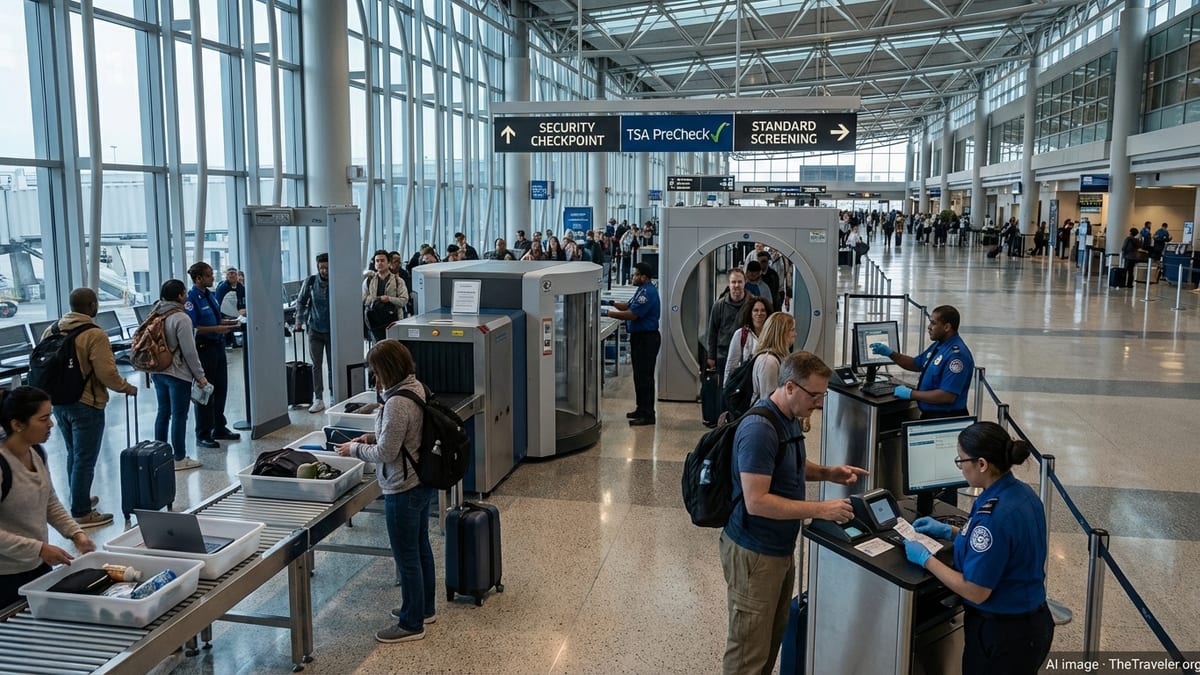
Fee Reform Push Gains Urgency as Travel Surges
The bipartisan drive to reform US travel security fees comes as airports confront an era of unprecedented demand and stressed infrastructure. Daily passenger volumes, which already surpassed pre‑pandemic levels in 2024, are projected to keep climbing through the decade, putting intense pressure on checkpoints built for a different era of air travel. Industry groups warn that without a new approach to federal fees, congestion and customer dissatisfaction will only grow.
At the center of the conversation is the 9/11-era Aviation Passenger Security Fee, sometimes called the September 11 Security Fee, which is added to nearly every commercial airline ticket. For years, a significant slice of this money has been diverted to general deficit reduction rather than reinvested in aviation security and technology. Lawmakers in both parties now argue that this diversion has slowed the deployment of next-generation machines and systems that could both strengthen security and reduce wait times.
Recent transportation budget blueprints from the executive branch have assumed that Congress will eventually end the diversion and allow the Transportation Security Administration, or TSA, to spend more of what travelers already pay in fees. But those assumptions hinge on legislation that has yet to pass, leaving airports, airlines, and passengers caught between aging systems and unfulfilled promises of modernization.
Congress Targets Diversion of Security Fees
Central to the reform effort is a straightforward, politically charged question: should aviation security fees collected from passengers be used solely for aviation security. Since 2014, more than ten billion dollars in Passenger Security Fee revenue has been steered to non-aviation purposes, according to congressional sponsors of several reform bills. Critics say that practice has effectively turned a specialized user fee into a backdoor tax while starving TSA of funds it needs to update screening equipment.
In response, several bipartisan proposals have been introduced over the past two years to lock travel security fees to their original mission. Measures such as the SAFEGUARDS Act in the Senate and related House bills would end the diversion of these revenues and create dedicated funds for checkpoint technology and baggage screening systems. Supporters frame these changes as a way to cut through annual budget fights and establish a predictable funding stream for fast-evolving security needs.
Security experts and former TSA leaders have testified that restoring the full value of the fee to aviation security would significantly accelerate rollouts of new imaging machines, computed tomography scanners, and biometric identity verification tools. One projection presented to lawmakers estimated that ending the diversion could generate around ten billion dollars over a decade, enough to equip checkpoints at virtually every commercial airport in the country with state-of-the-art systems instead of a patchwork of newer and older machines.
Modern Screening Technology at the Heart of the Debate
Technology sits at the core of the push for travel security fee reform. TSA has gradually deployed computed tomography scanners for carry‑on bags and advanced explosive detection systems for checked luggage at select airports, allowing travelers in some lanes to leave electronics and liquids in their bags. However, deployment has been constrained by cost, leaving many airports reliant on earlier‑generation equipment that can be slower and more labor‑intensive to operate.
Similar funding constraints have shaped the rollout of new biometric identity verification tools and credential authentication technology at airport checkpoints. Officials have warned that without a more reliable funding base, these systems might not reach all major airports for more than a decade. Lawmakers backing fee reform argue that passengers are already paying for 21st-century security and deserve the benefits of faster, more accurate screening that these investments can deliver.
Airports and airlines view the technology agenda as directly tied to customer satisfaction. Next-generation scanners and automated lanes can reduce the number of bag checks, speed up the flow of travelers, and free up officers to focus on higher-risk cases rather than routine pat-downs and bag searches. For TSA, the same tools can provide richer data and better threat detection, offering what security officials describe as a rare opportunity to make checkpoints both more secure and less intrusive at the same time.
Airports Seek More Local Control Over Infrastructure Funds
Alongside the debate over federal security fees, US airports are renewing calls to modernize another key funding tool: the Passenger Facility Charge, or PFC, a local fee added to tickets to support terminal and airfield projects. The maximum PFC level has not been raised in a quarter century, even as construction costs and passenger volumes have surged. Airport operators say that stagnation has left them with limited means to expand or redesign facilities to match today’s security and boarding processes.
In recent months, airport trade groups have stepped up lobbying efforts with the Department of Transportation and congressional committees to raise the PFC cap. They argue that updated terminals with wider checkpoints, more queuing space, and better passenger circulation are just as critical to security efficiency as the machines inside them. Without expanded infrastructure, they warn, even the newest scanners will be constrained by cramped footprint and outdated layouts.
Raising the local charge remains controversial with some lawmakers and consumer advocates, who worry that higher fees could make tickets more expensive. Airport leaders counter that, in real terms, the charge has lost significant purchasing power and that travelers are already paying the price through delays, crowding, and limited amenities. Combining reformed federal security fees with a more flexible local funding environment, they say, would allow airports to create checkpoints designed around modern behavior and technology rather than legacy constraints.
TSA Workforce, Pay Reforms, and Passenger Experience
The push to redirect security fees also intersects with an ongoing effort to stabilize and professionalize TSA’s front‑line workforce. In recent years, Congress and the administration have moved to align TSA officer pay with the broader federal civil service, seeking to curb long‑standing issues with turnover and morale. Budget requests for 2025 and 2026 include billions of dollars specifically earmarked for maintaining pay equity and hiring thousands of additional officers to meet projected passenger volumes.
Supporters of fee reform argue that a stable, adequately paid screening workforce is essential to extracting full value from new technology investments. Advanced scanners and identity systems require training, oversight, and human judgment to operate safely and efficiently. With record passenger volumes, TSA leaders have emphasized the importance of keeping average wait times below 30 minutes in standard lanes and 10 minutes in expedited lanes, benchmarks that depend heavily on staffing levels.
Traveler organizations and airport executives have increasingly framed these workforce changes as part of a broader customer-experience transformation at checkpoints. Higher pay and better scheduling, they contend, help reduce burnout and improve interactions between officers and travelers. In an era when security lines often serve as a passenger’s first in‑person contact with a destination city, those interactions can shape perceptions of both the airport and the country’s travel system as a whole.
Trusted Traveler Programs and the Politics of Fees
Any redesign of travel security funding is unfolding against the backdrop of intense public attention to Trusted Traveler programs such as TSA PreCheck and Global Entry. These fee-funded services, which offer expedited security and customs processing to low‑risk travelers, have become deeply embedded in the travel habits of frequent fliers and business travelers. Recent tensions during a federal funding standoff, when officials briefly signaled that PreCheck operations could be curtailed before reversing course, underscored how sensitive these programs have become politically.
PreCheck and similar programs are financed through their own dedicated enrollment fees, but they depend on the same TSA workforce and checkpoint infrastructure as standard screening. When staffing is stretched or technology is outdated, expedited lanes can become bottlenecked, eroding the value perceived by paying members. That dynamic has strengthened calls within the travel industry to protect and reinvest security-related fees across the board, rather than using them as levers in broader budget negotiations.
Policy analysts note that the politics of fee reform are complicated by the fact that any change which keeps more security revenue within TSA reduces funds available for other federal priorities. In an era of tight budgets and partisan divides, finding offsets for billions of dollars in redirected fees presents a substantial hurdle. Yet with aviation a highly visible barometer of national competence, lawmakers face growing pressure from constituents and industry to prioritize smoother, more predictable airport experiences.
Passenger Satisfaction as a National Competitiveness Issue
Beyond security and fiscal policy, advocates for travel security fee reform increasingly frame the issue as a matter of US competitiveness in the global travel market. International visitors arriving at America’s largest gateways often encounter lengthy lines at security and customs, crowded checkpoints, and outdated wayfinding. Tourism officials warn that these first impressions can influence whether visitors return, how they rate their experience, and even where international airlines choose to add capacity.
Recent studies by travel trade groups have linked shorter security wait times and more reliable screening processes with higher passenger satisfaction scores and increased spending in concessions and retail. Modern checkpoints, they argue, can become a point of pride and a differentiator for airports, much as architecturally striking terminals have been in other parts of the world. To achieve that, they say, the United States must pair infrastructure upgrades with fee systems that are transparent, predictable, and clearly connected to visible improvements.
For domestic travelers, the stakes are also growing. With more Americans flying for work and leisure, the cumulative time lost to security congestion is substantial. Business groups stress that every incremental improvement to security throughput can translate into fewer missed meetings, more efficient supply chains for time‑sensitive cargo, and greater willingness to use air travel for short‑haul trips. In this view, aligning travel security fees with technology and service outcomes is not just a convenience but a productivity issue.
What Travelers Can Expect if Reforms Advance
While the legislative path remains uncertain, aviation officials and policy analysts broadly agree on what travelers might see if security fee reforms become law. In the near term, increased investment in checkpoint technology would likely focus on expanding computed tomography scanners and automated lanes to more airports, allowing a larger share of passengers to keep electronics and liquids in their bags and streamlining the flow through security.
Over the medium term, a combination of fee-backed technology and infrastructure projects could reshape the layout of checkpoints entirely. Travelers might encounter wider, more open screening areas with clear signage, more dedicated lanes for families and travelers with special needs, and greater use of touchless identity verification. Enhanced coordination between TSA and airport operators could also enable more flexible lane management, adjusting staffing and equipment in near real time to respond to surges.
For now, advocates say the most important outcome of any reform would be restoring trust that the fees listed on a ticket are being used for their stated purpose. Whether travelers notice new scanners, shorter lines, or friendlier staffing first, the goal of the current push is to ensure that the billions of dollars they pay in security and facility fees translate into a system that feels safer, more predictable, and more respectful of their time.