

More news on this day
US travelers heading to Hong Kong are being urged to reassess their digital privacy plans after new rules expanded police powers to demand passwords for phones and laptops in national security cases, with penalties that can include heavy fines and possible multi-year prison terms for those who refuse or provide misleading information.
Get the latest news straight to your inbox!
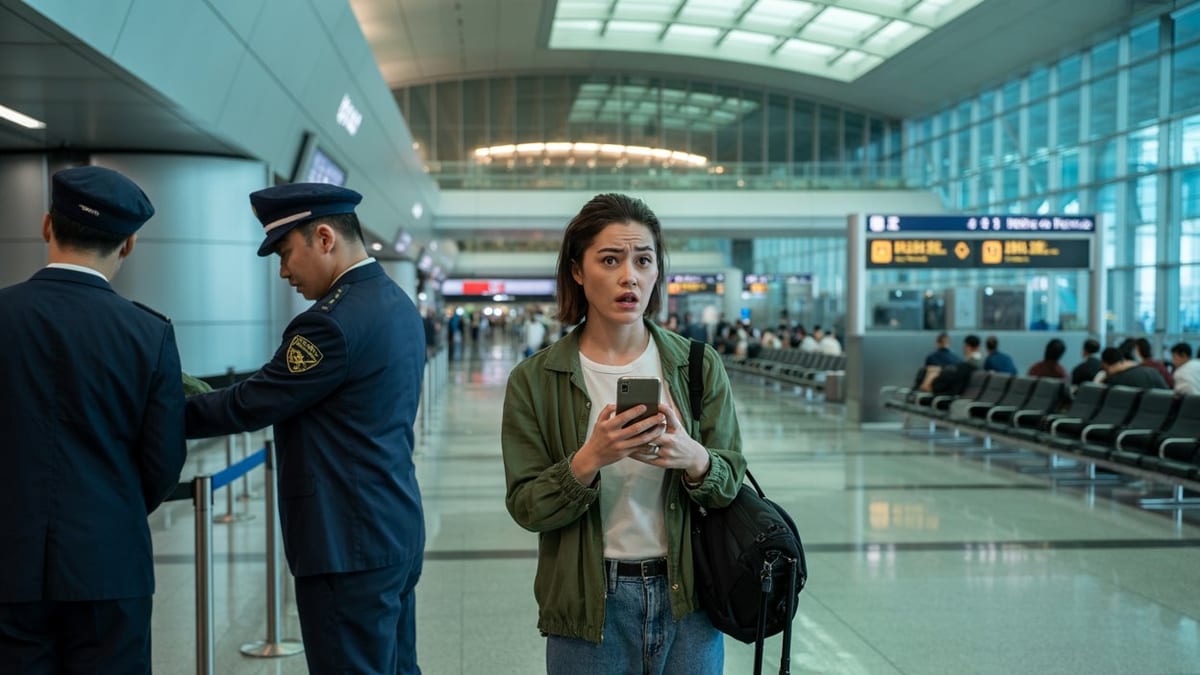
Image by Travel And Tour World
What Has Changed in Hong Kong’s Digital Search Rules
Publicly available information indicates that Hong Kong has revised implementation rules linked to its national security law to give police broader authority to access digital devices. Under the updated framework, individuals suspected of national security offenses can be ordered to provide passwords or other access credentials for phones, tablets and computers.
Reports from international outlets describe a two-tier penalty system. Refusing to provide a password or otherwise assist with decryption can reportedly result in up to one year in jail and a substantial fine. Separately, providing false or misleading information when asked for access details can attract a higher ceiling of up to three years in prison and a significantly larger fine.
The changes appear to close what had previously been a gap in Hong Kong’s legal landscape, where police could seize and search devices but faced legal uncertainty when compelling suspects to unlock them. The new rules are described as an extension of the city’s Beijing-imposed national security regime, which already carries severe penalties for broadly defined offenses such as subversion and collusion with foreign forces.
Crucially for international visitors, these powers are not limited to Hong Kong residents. Published coverage indicates that anyone physically present in the city and subject to a national security investigation, including foreign tourists and business travelers, could face password demands if their device is considered relevant to a case.
Why US Travelers Are Paying Attention Now
The revisions have triggered particular concern among US travelers because they intersect with already heightened sensitivities around digital privacy, cross-border data flows and relations between Washington and Beijing. Hong Kong remains a major transit and business hub in Asia, meaning many US citizens pass through the city even on short layovers.
Travel and technology publications note that the penalties associated with misleading information, including the prospect of up to three years in prison, mark a sharp escalation in risk for visitors who attempt to withhold access or rely on technical workarounds. Actions such as providing a wrong password, triggering a data wipe feature, or denying knowledge of an actively used device could potentially be interpreted as obstruction under the new rules.
US official travel advisories have for some time highlighted the reach of Hong Kong’s national security law, warning that individuals, including non-residents, can be subject to arrest for speech and activities that might be considered protected in the United States. The new password provisions add a powerful digital dimension to those concerns by explicitly targeting encrypted devices and the data they contain.
The timing is also important. The update comes amid a broader global trend of expanding border and security powers over electronic devices, from extended device holds in the United States to enhanced decryption obligations in countries such as Australia and the United Kingdom. In this context, Hong Kong’s latest step is being read as part of a widening pattern rather than an isolated development.
How the Rules Could Affect Your Phone at the Border
For most leisure travelers, the immediate risk of being drawn into a national security investigation remains low. However, legal and privacy analysts caution that the combination of broad offense definitions and far-reaching investigative powers means it can be difficult to predict who might be asked to unlock a device or under what circumstances.
Public reporting suggests that the updated rules can apply to any device believed to contain information relevant to a national security probe, regardless of who owns it. That could include work phones, shared laptops, or devices that primarily store content from social media and cloud accounts. Individuals who are merely connected to a person of interest, such as colleagues, friends or local contacts, could find their devices scrutinized if investigators consider the data potentially useful.
Available summaries of the rules indicate that individuals can be compelled not only to provide passwords but also to assist in decrypting or otherwise making data intelligible. That may extend beyond a simple lock-screen code to include secondary encryption tools, secure messaging apps or hidden storage partitions if investigators become aware of them.
For US travelers who routinely carry large amounts of work product, personal photos, messages and cloud-linked data on a single smartphone, this raises a practical question: how much of their digital life they are willing to expose if stopped. The prospect of substantial fines or imprisonment for non-compliance greatly increases the leverage security agencies can bring to these encounters.
Practical Steps US Travelers Are Urged to Consider
In light of the new environment, many digital rights and cybersecurity commentators are advising travelers to adopt more deliberate data minimization strategies before entering Hong Kong. Rather than relying solely on strong encryption or complex passwords, the emphasis is shifting toward carrying fewer sensitive materials in the first place.
One approach highlighted in privacy-focused coverage is to travel with a secondary device that holds only what is essential for the trip, leaving more sensitive information on systems that remain physically in the United States. Because the Hong Kong rules focus on what is present and accessible on a device at the time of inspection, a slimmer data profile can reduce potential exposure even if a password must be handed over.
Travelers are also encouraged to review default backup and synchronization settings. Many modern phones automatically pull in email archives, messaging histories and cloud drives, significantly expanding the range of content available to anyone who gains full device access. Adjusting these settings prior to departure, and limiting which apps are installed, can help ensure that only necessary information crosses the border.
Legal commentators stress that travelers should not assume they can safely mislead officers about passwords, encrypted volumes or hidden folders. Under the revised Hong Kong provisions, intentional deception is precisely the behavior that can result in some of the harshest penalties. Anyone with lingering concerns is often advised to consult qualified legal counsel before travel to understand how the rules might interact with their specific circumstances.
The Bigger Trend: Digital Privacy at Borders Worldwide
The debate unfolding around Hong Kong’s new password powers is part of a wider global reckoning over how much privacy travelers can expect at international borders. In many jurisdictions, courts have granted immigration and customs officials access authorities that go well beyond what police can do in domestic settings, particularly when it comes to electronic devices.
In the United States, for example, civil liberties groups have documented an increase in so called device searches at airports and land crossings, including cases where travelers’ phones or laptops were taken for extended forensic review. While US law and court decisions differ in important ways from Hong Kong’s national security framework, the practical experience for travelers is converging on a similar reality: crossing a border may entail intensive scrutiny of both physical belongings and digital lives.
Countries such as Australia and the United Kingdom have also adopted measures that can require individuals to assist authorities in accessing encrypted data, sometimes backed by their own criminal penalties. Against this international backdrop, Hong Kong’s latest move is being interpreted as another sign that secure personal devices are increasingly in the crosshairs of national security and law enforcement agendas.
For US travelers, the key takeaway is that digital privacy expectations that might hold at home cannot be assumed to apply abroad. As legal frameworks continue to evolve, understanding the specific rules of each destination, particularly on issues like passwords and encryption, is becoming as essential as checking visa requirements or local health regulations.