

More news on this day
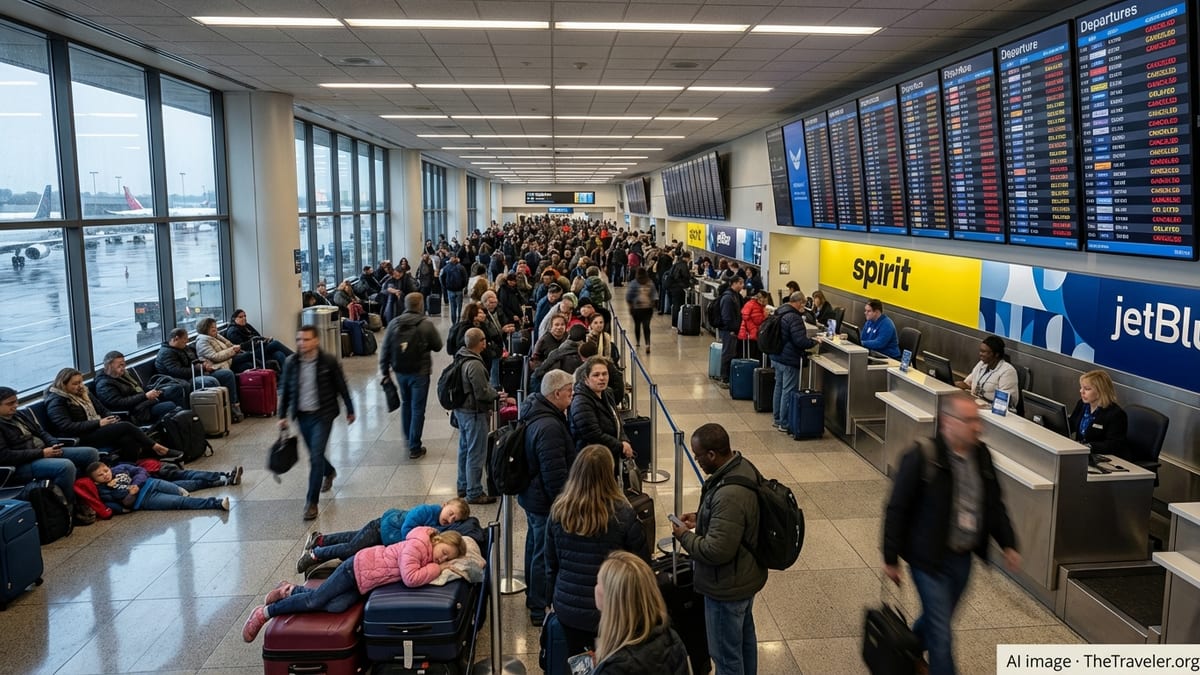
Thousands of U.S. air travelers are again finding themselves stranded or severely delayed as nearly 100 flights are canceled and hundreds more run late across key hubs in New York, California, Texas, and Florida, underscoring how fragile the nation’s air travel system remains in the face of winter weather, tight airline staffing and congested skies.
Fresh Wave of Disruptions From Coast to Coast
The latest day of turmoil comes on the heels of a brutally disruptive winter season for aviation, with a string of storms and operational bottlenecks repeatedly snarling schedules at major hubs. Tracking services report dozens of outright cancellations and several hundred delays affecting flights into and out of the United States, a smaller but still painful echo of the massive multi-day disruptions seen during recent winter systems.
Airports in the Northeast and along both coasts are once again in the spotlight. New York’s John F. Kennedy International and LaGuardia, Los Angeles International, Dallas Fort Worth, Miami International and Orlando International in particular continue to see some of the heaviest pressure as airlines trim schedules, reroute aircraft and juggle crew assignments to recover from earlier weather and air traffic slowdowns.
While the current figures of roughly 99 cancellations and more than 500 delays are modest compared with January’s historic storms, they are landing on a travel system already stretched thin. That means even a comparatively small number of canceled flights can cascade through the day, leaving passengers in New York, California, Texas and Florida facing long lines, missed connections and, in some cases, overnight stays.
For travelers, the headline numbers only tell part of the story. Behind each cancellation is a fully booked aircraft and hundreds of passengers who must now be re-accommodated on later departures, often from already crowded hubs still digging out from earlier disruptions.
Why Cancellations Keep Spiking This Winter
The latest round of disruption is part of a broader pattern that has defined this winter’s flying in the United States. A series of powerful storms, including a late January winter system and a February blizzard that hammered the Northeast, have repeatedly forced airlines to preemptively cancel thousands of flights to keep planes and crews out of dangerous conditions. New York area airports, including Newark and JFK, at times saw some of the highest single-day cancellation counts in the country.
In Texas, winter weather and strong winds in January contributed to mass disruptions at Dallas Fort Worth and other airports, with ripple effects across domestic networks. In Florida, airports in Miami and Fort Lauderdale experienced hundreds of cancellations and delays as passengers tried to travel to and from storm-battered areas further north, illustrating how a storm in one region can snarl air travel across the continent.
Even on calmer days, airlines are still recovering from those earlier hits. Aircraft displaced by earlier storms may not yet be back in their usual rotations, and many carriers are operating tight schedules with limited spare capacity. Under these conditions, a mechanical issue, crew scheduling conflict or localized weather pattern can quickly tip a flight from a short delay into a full cancellation, magnifying the impact on passengers.
Operational complexity is also rising. Airlines are threading their flights through constrained airspace, juggling pilot duty-time limits and coping with air traffic control staffing challenges. When a storm or geopolitical event reduces available routes or airport capacity, there is less slack in the system to absorb the shock, making days like this more likely.
How Hard Are Major States and Hubs Being Hit?
The burden of the latest disruption is not spread evenly. Travelers in New York, California, Texas and Florida are once again among the hardest hit because these states host some of the nation’s busiest and most interconnected hubs. Disruptions at a major gateway often reverberate outward, affecting flights far beyond the immediate region.
New York’s airports, particularly JFK, are critical transatlantic and long-haul gateways. A single canceled departure to Europe or Latin America can strand hundreds of passengers and knock out onward connections for travelers from across the United States. When winter weather, strong crosswinds or runway congestion slow operations there, schedules across multiple airlines can unravel.
California’s coastal hubs, especially Los Angeles and San Francisco, play a similar role for transpacific and domestic traffic. Ground stops or reduced arrival rates caused by low visibility, coastal storms or runway work can quickly lead to long departure queues and mounting delays, which then radiate to connecting flights serving cities across the West and Southwest.
In Texas, Dallas Fort Worth and Houston act as central relays for coast-to-coast and Latin American traffic, so a disruption there can split the country’s air network in two. Florida’s Miami and Orlando airports, meanwhile, are under near-constant pressure from a mix of domestic vacationers and international traffic. When those airports are forced to cut or delay flights, passengers bound for the Caribbean, Central and South America often find themselves with limited options and long rebooking timelines.
What Travelers Can Do Before Heading to the Airport
For passengers planning to fly in the coming days, preparation is crucial. Airlines now frequently cancel or reschedule flights hours before departure in an effort to avoid last-minute chaos, so a boarding pass alone is no guarantee that a flight will operate. Travelers should monitor their flight status directly through their airline’s app or text alerts, rather than relying solely on third-party booking sites or airport displays that can lag behind real-time changes.
Many carriers are issuing travel waivers during periods of recurring disruption, allowing passengers to move their trips to different days or nearby airports without paying change fees or, in some cases, fare differences. These waivers are often limited to specific dates and routes, so passengers affected by cancellations and long delays should check the fine print and act quickly while alternative seats are still available.
Arriving at the airport earlier than usual can also help, particularly for those connecting through major hubs. With security lines and customer service counters stretched by repeated disruptions, extra time can be the difference between making a tight connection and being stranded. Packing essential medications, chargers, a change of clothes and basic toiletries in carry-on bags is another practical hedge against unexpected overnight stays.
Passengers should keep boarding passes, receipts and documentation of delays or cancellations, as these records may be needed later when seeking refunds, vouchers or formal complaints. Taking a moment to note the reason code or explanation given by the airline for a disruption can also be helpful when determining what remedies might be available.
Your Rights When Flights Are Canceled or Delayed
While U.S. rules do not guarantee automatic cash compensation for most domestic delays, passengers do have rights when flights are canceled or significantly changed. If an airline cancels a flight for any reason and a traveler decides not to fly, that passenger is generally entitled to a refund of the unused portion of the ticket, even on nonrefundable fares. This applies whether the disruption stems from weather, mechanical issues or scheduling problems.
Where an airline is responsible for the disruption, such as a mechanical breakdown or crew shortage, carriers often provide meal vouchers, hotel accommodations or alternative transportation to help stranded passengers. The exact benefits vary by airline and circumstance, and are typically outlined in each carrier’s customer service plan and contract of carriage. Weather-related issues, often described as acts of God, are less likely to come with hotel coverage, even if passengers must stay overnight.
Travelers flying to or from international destinations may fall under a different set of protections, depending on the countries involved and the operating airline. Some jurisdictions require compensation when cancellations or long delays are within the airline’s control, adding another layer of complexity for passengers connecting through global hubs.
Given the ongoing pattern of disruptions this winter, consumer advocates recommend that travelers familiarize themselves with their airline’s policies before departure, consider travel insurance that specifically covers cancellations and delays, and use credit cards that offer trip interruption benefits. With the latest wave of cancellations and delays impacting travelers in New York, California, Texas and Florida, understanding these protections has rarely been more important.