


More news on this day
Air travel across the United States faced another day of disruption on Monday as data trackers logged more than 170 flight cancellations and at least 2,500 delays, with busy hubs such as Atlanta and Houston experiencing knock-on effects from weather and congestion programs rippling through the national airspace system.
Get the latest news straight to your inbox!
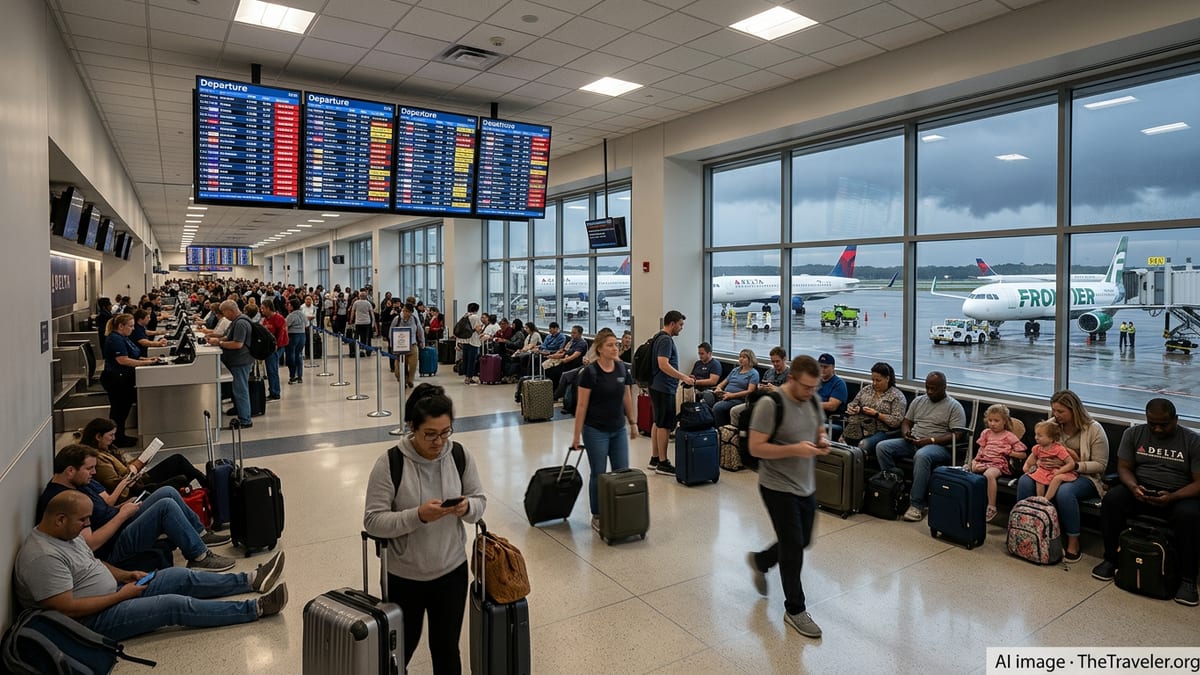
Nationwide Disruption Builds Through the Day
Publicly available aviation statistics show several thousand flights running behind schedule across the United States, with delays within, into, or out of the country climbing into the low thousands by Monday afternoon. One prominent flight tracking platform reported more than 4,000 delays affecting US operations out of a global total exceeding 19,000, along with hundreds of cancellations linked to US routes.
Independent aggregators that compile data from the Federal Aviation Administration (FAA), airport display systems and airline feeds indicate that the number of affected passengers far exceeds the raw count of delayed or cancelled flights. Even short holdups at major hubs can strand full aircraft, forcing missed connections and rebookings that propagate throughout the network.
While some airports maintained largely on-time performance, the sheer scale of the US system means that localized slowdowns can still translate into nationwide disruption. By early afternoon, multiple coastal and Sun Belt airports were operating under formal ground delay programs, contributing to the growing backlog.
Ground Delay Programs Amplify Cascading Delays
FAA program data republished by aviation analytics sites show several key airports under active ground delay measures, particularly in Florida and California. Miami International and San Diego International were among those operating with structured metering of arrivals, with average delays in Miami stretching past five hours and the most heavily affected flights waiting significantly longer to depart or land.
San Diego’s program was attributed to airport volume constraints, while Boston Logan faced a delay program tied to runway construction. These regulated slowdowns do not stop flights altogether, but they space out traffic, reducing capacity and pushing back departure and arrival times well beyond scheduled windows.
Such programs often trigger secondary impacts at other airports. When departures are held at origin points for constrained destinations, aircraft and crews may be out of position for subsequent flights, which can ultimately lead to cancellations on routes that are far from the original weather or infrastructure issue.
Atlanta and Houston Feel Network Pressure
Despite their reputation as some of the most resilient hubs in the country, Atlanta Hartsfield-Jackson and Houston George Bush Intercontinental were not immune to Monday’s turbulence in the system. Real-time status tools that parse FAA feeds listed both airports as operating under “normal” conditions in terms of airspace restrictions, yet flight-level data pointed to a pattern of morning and early afternoon delays.
Historical delay performance charts for Atlanta on Monday showed departure delays averaging from the mid-teens to nearly an hour at certain times of day, particularly in the early morning bank, even though cancellations there remained limited. Arrivals into Atlanta swung between early and significantly late, illustrating how the hub absorbed inbound knock-on effects from other constrained airports.
Houston, meanwhile, registered a mixture of on-time operations and schedule adjustments as carriers modified flight times between the Texas hub and other cities. Flight trackers for individual services on the Atlanta to Houston corridor showed some departures running to plan, while others incorporated revised runway times and gate changes, reflecting a network working to recover as the day progressed.
Travelers Confront Cancellations and Tight Connections
For travelers, the nationwide statistics translated into crowded terminals, long rebooking lines and a heightened risk of missed connections, especially through coastal hubs. Discussion threads on aviation and airline forums highlighted Miami as a particular pain point, with users citing dozens of cancellations and more than one hundred delays at that airport alone as thunderstorms and the ground delay program combined to slow operations.
Even where cancellations remained relatively low in percentage terms, the absolute numbers were enough to disrupt plans for thousands of passengers. At Chicago O’Hare, for example, local airport data showed only a handful of cancellations against more than a thousand operations, yet any single cancellation at a large hub can disrupt hundreds of onward itineraries throughout the domestic network.
Travel planning resources advise that on days marked by multiple ground delay programs and elevated national delay totals, passengers are more likely to avoid severe disruption if they hold nonstop bookings, morning departures and flexible plans. Same-day connections through delay-affected hubs can become particularly risky when storms, runway work and volume controls coincide.
Outlook for the Remainder of the Day
With FAA programs for Miami, San Diego and Boston scheduled to run into the evening hours, data providers expect elevated delay totals to persist through the late-day departure banks. Average delay figures at some airports were already well above an hour for affected flights by mid-afternoon, with worst-case waits stretching to several hours or more.
Weather forecasts for parts of Florida and the East Coast point to continued chances of thunderstorms, suggesting that even as ground delay programs are adjusted, airlines may need to make further tactical schedule changes. Historical performance charts for Atlanta and Houston indicate that both hubs have capacity to recover when weather windows open, but the timing of that recovery will be critical for travelers attempting to complete same-day connections.
Passengers scheduled to fly later on Monday are being encouraged by airline alerts and airport notices to monitor their flight status frequently, allow extra time at the airport and be prepared for gate changes or rolling departure estimates. For those whose flights are among the cancellations, online rebooking tools and mobile applications remain important channels for securing scarce alternative seats as the disrupted travel day continues to unfold.
https://www.flightaware.com/live/cancelled/
https://thefrequentflier.com/flight-deck/faa-delays