

For most visitors to the United Kingdom, a credit card is the easiest and safest way to pay for travel, accommodation, dining and everyday purchases. The UK is a highly card-friendly destination where contactless technology is widespread and cash is often optional. At the same time, foreign transaction fees, exchange rates and unfamiliar payment habits can catch tourists by surprise. Understanding how credit cards work in the UK before you arrive can save you money, stress and time at the till.
The Card Landscape in the UK Today
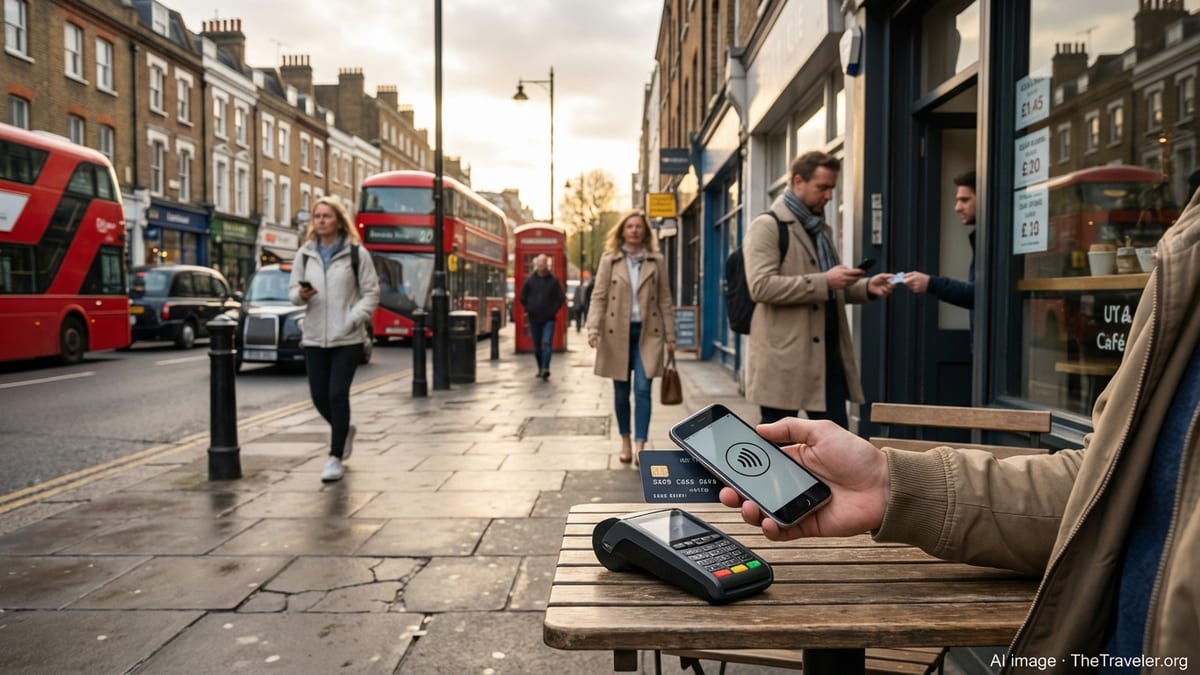
The United Kingdom is one of the most card-centric markets in Europe. Cards are widely accepted in cities, towns and tourist areas, and even small independent cafes and market stalls often take card payments. UK Finance data shows that contactless transactions now account for a large majority of card payments made in shops, reflecting how normal it has become for people to tap rather than hand over cash. Visitors benefit from this infrastructure because it allows them to rely largely on plastic instead of carrying large amounts of local currency.
Visa and Mastercard dominate consumer payments in the UK, and both credit and debit cards are common. For tourists, this means most major international credit cards are likely to work in shops, restaurants, ticket machines and hotels. American Express is also present, particularly in larger chains, higher-end hotels and popular tourist venues, though it is not as universally accepted as Visa or Mastercard. If American Express is your primary card at home, it is wise to bring at least one backup card from a different network for smaller merchants.
Contactless is a defining feature of the UK card environment. Traditionally there has been a cap on how much you can spend per tap without extra verification. From March 2026 that national limit is due to be removed, allowing banks to set their own caps or even allow higher or unlimited contactless transactions, subject to security controls. In practice, most tourists will find that everyday spends on meals, transport and tickets are easily covered by contactless, while very large purchases may sometimes prompt a request for a PIN.
For visitors coming from countries where signatures are still common, the UK’s reliance on chip and PIN and contactless can feel different at first. The standard in shops and restaurants is to insert or tap the card yourself and enter a four-digit PIN when prompted, with signatures used only in limited cases. Mobile wallets such as Apple Pay and Google Pay are also widely accepted, often with higher effective limits because the device provides additional authentication such as biometrics.
How Payments Work: Chip, PIN and Contactless
The UK follows the EMV chip standard, so most in-person payments rely on reading the chip on your card rather than swiping a magnetic stripe. When you make a purchase, you will usually either insert the card into the payment terminal and leave it there during the transaction, or tap it against the contactless reader. For chip and PIN transactions, the machine will ask you to enter the four-digit PIN associated with your card. For contactless, no PIN is required for most low to mid-value purchases, though the terminal may occasionally ask you to insert the card and enter your PIN as a security check after several taps.
If your card does not have a chip but still has a magnetic stripe, many UK merchants are now reluctant to process swipe transactions for security reasons. Some card terminals may not even support swipe at all. Tourists should make sure they travel with at least one chip-enabled card and ideally one that supports contactless. Issuers in North America, Europe, Australia and many parts of Asia now provide chip cards as standard, but it is worth checking before departure.
Contactless usage is extremely high across the UK, and many day-to-day services are designed around tapping a card or phone. This includes convenience stores, pharmacies, pubs, ticket gates on some rail and metro systems, and self-service machines. You simply hold your card or device over the reader until you see a confirmation. The transaction usually takes a second or two, and receipts are issued in the usual way. With the lifting of the national contactless limit from March 2026, you may notice that banks apply their own thresholds, but tourists should rarely encounter problems paying for typical holiday purchases.
Mobile payments are another important part of the landscape. Apple Pay, Google Pay and other wallet services are accepted almost everywhere that accepts contactless cards. Many travellers prefer to load their credit cards into a digital wallet because the phone or watch provides additional authentication. This can be an advantage if you are concerned about losing your physical card while abroad. As a tourist, you can treat your phone-based payment much like a normal contactless card, but you retain the protections and billing cycle of the underlying credit account.
Acceptance: Where Your Card Will Work and Where It Might Not
In major UK cities such as London, Edinburgh, Manchester and Belfast, you can expect credit cards to be accepted in almost all hotels, restaurants, chain stores and tourist attractions. Public transport systems in and around London, and increasingly in other cities, support contactless card payments directly at ticket gates, allowing visitors to tap in and out with a contactless credit or debit card in lieu of buying a separate ticket for many journeys. Taxis, ride-hailing services, museum shops and theatre box offices are also generally card-friendly.
In smaller towns, rural areas and some traditional markets, acceptance may be patchier, especially for certain foreign-issued cards and American Express. Independent bed and breakfasts, small family-run pubs or local artisans at fairs may still prefer cash or bank transfers. Even if they do take cards, connectivity issues or older terminals can sometimes cause problems with foreign cards. Tourists should plan to carry a modest amount of cash as a backup, particularly when traveling to remote regions, scenic villages or national parks where infrastructure can be limited.
Petrol stations, motorway service areas and large supermarkets almost always accept major credit cards, which is convenient for self-driving visitors. However, automated fuel pumps may be more sensitive to foreign cards and may decline certain issuers, especially where they attempt to place a temporary hold in pounds that your issuer cannot pre-authorise correctly. If you encounter difficulties at an automated pump, you can usually pay the cashier inside instead. Likewise, unattended ticket machines at small train stations sometimes have trouble with some foreign cards, in which case the staffed ticket office or online booking platforms can serve as an alternative.
American Express, Discover and some regional card schemes have more limited acceptance than mainstream Visa and Mastercard products. High-end department stores, large restaurant groups and tourist attractions in central London are usually fine with American Express, but corner shops and small cafes may refuse it due to higher processing costs. Tourists who prefer to collect rewards or points on a premium card should still travel with a widely accepted backup, especially when heading outside major tourist neighbourhoods.
Fees, Exchange Rates and Dynamic Currency Conversion
While using a credit card in the UK is convenient, the total cost of each transaction depends heavily on exchange rates and fees set by your home bank. Many issuers charge a foreign transaction fee, often expressed as a small percentage of the purchase amount. If your card has such a fee, every restaurant bill, museum ticket and hotel night in pounds could cost slightly more once converted into your home currency. Some cards, particularly those marketed for travel, waive these fees and can be significantly more economical for frequent international use.
Exchange rates themselves are usually determined by the card networks, such as Visa or Mastercard, based on wholesale market rates plus a small margin. In most cases, allowing your card to process the transaction in the local currency of pounds sterling results in a relatively competitive exchange rate. Problems arise when merchants or ATMs offer a service known as dynamic currency conversion, where they convert the bill into your home currency on the spot and present the total in that currency on the payment terminal. This can look reassuring because you see the exact amount in familiar money, but the exchange rate used may be significantly less favourable than your bank’s rate.
Consumer advocates in the UK and across Europe have repeatedly warned that dynamic currency conversion can add a noticeable hidden premium to your bill. Reports suggest that the uplift compared with letting your own bank do the conversion can be substantial, sometimes approaching or exceeding ten percent in extreme cases. To avoid this, tourists should carefully read the card terminal screen. If you are offered a choice between paying in your home currency or in pounds, choosing pounds usually leads to a better outcome. If the terminal is set by default to your home currency, you can politely ask the staff to process the transaction in pounds instead.
Beyond exchange rates and dynamic conversion, some UK merchants are allowed to add certain fees to card payments, but the rules are restrictive when it comes to consumer cards. Since 2018, businesses are broadly prohibited from adding a separate surcharge simply because a consumer chooses to pay with a typical debit or credit card. Instead, they must build any processing costs into their displayed prices or apply fees that are genuinely unrelated to the payment method, such as a standard booking fee. As a tourist, you should rarely see a separate line on your receipt for paying by standard card, though minimum-spend rules in small shops remain common.
Practical Tips: Getting the Most from Your Card as a Tourist
A bit of preparation before you travel can make your credit card work harder for you once you arrive in the UK. Start by contacting your bank to confirm whether your card charges foreign transaction fees, and if so, how much. If you hold more than one card, prioritise those that waive such fees or offer rewards on overseas spending. While many banks no longer require formal travel notifications, it is worth confirming their policy and ensuring your contact details are up to date in case the fraud team needs to verify a transaction while you are abroad.
When you land in the UK, consider making a small, low-value purchase with your card relatively early in your trip to confirm that everything is functioning as expected. A coffee at the airport or a snack at a nearby shop is enough to test the chip and contactless capabilities. Save your bank’s international phone number in your contacts and, if it is available, install your issuer’s mobile app. Real-time alerts for each purchase can help you track spending and quickly spot any suspicious activity while you are travelling.
Be deliberate about when to use a card versus cash. Credit cards are ideal for hotels, larger restaurant bills, online tickets and car hire deposits because they offer dispute rights and do not immediately withdraw funds from your bank account. For very small purchases in remote areas, coin-operated services or situations where card acceptance is uncertain, a modest amount of cash can still be helpful. Withdrawing cash on a credit card usually triggers fees and interest from the day of the withdrawal, so where possible use a debit card for ATM withdrawals and reserve your credit card for purchases.
Finally, stay organised with receipts and keep an eye on your running total in your home currency. Prices in pounds may feel abstract if you are used to another currency, and the ease of contactless taps can encourage more frequent small purchases. Checking your account summary every few days helps you stick to a budget and quickly address any billing issues with your bank. If you contest a charge, detailed receipts and notes about the date, merchant and location will support your case.
Using Credit Cards for Transport, Accommodation and Everyday Spend
Credit cards play a particularly useful role in paying for transport in the UK. On many urban transport networks, including London’s Underground and buses, tourists can tap a contactless card or mobile wallet at barriers instead of buying paper tickets. The system then calculates the appropriate fares and caps for the day. Visitors should ensure that each traveller uses a separate card or device, as the system treats every card as an individual passenger. For longer-distance rail journeys, card payments are standard at booking offices, ticket machines and online platforms, with most accepting international cards without issue.
Car hire companies and many hotels strongly prefer or require a credit card rather than a debit card to secure reservations and deposits. They typically place a temporary hold on the card for a certain amount to cover potential additional charges, such as fuel, damages or incidentals. This hold reduces your available credit until it is released, so factor it into your available spending limit. When checking out of a hotel or returning a vehicle, always request an itemised bill to review charges before the final payment is processed.
For dining and everyday spending, card payments are straightforward but follow local habits. In many restaurants, the bill is brought to your table and a portable card machine is used so that your card never leaves your sight. You may be asked whether you wish to add a tip before or after tapping or inserting your card, depending on how the terminal is configured. In pubs and casual venues, it is common either to pay for each round as you go or to keep a tab open. If you open a tab, the pub may pre-authorise your card and ask to see it again when you settle the final amount.
In supermarkets and high-street shops, contactless card and mobile payments are the norm, including at self-checkout machines. Larger retailers generally accept a wide range of international cards, while some very small businesses may set a minimum spend for card transactions. Where card acceptance is limited or card machines are temporarily offline, retailers will usually make this clear at the entrance or the till. When in doubt, a polite question before ordering or boarding a service can avoid awkwardness at the point of payment.
Security, Fraud Protection and What To Do If Things Go Wrong
Credit cards come with built-in protections that can be particularly valuable when you are travelling. If your card is lost, stolen or used fraudulently in the UK, you are generally protected as long as you report the problem promptly and have taken reasonable care of your card and PIN. Card networks and banks have sophisticated fraud monitoring systems that may automatically flag unusual transactions, such as high-value purchases or spending in unfamiliar locations. While this can occasionally lead to a declined transaction, it also reduces the risk of sustained misuse if your details fall into the wrong hands.
As a tourist, you can strengthen your security by following a few straightforward habits. Never share your PIN with anyone, and shield the keypad when entering it on a terminal. Avoid letting staff take your card out of sight in restaurants or shops. If a merchant insists on taking the card away, you are entitled to ask for the machine to be brought to you instead, which is now standard practice in many UK venues. Be cautious when using ATMs on the street; choose machines attached to bank branches where possible, and check for any unusual attachments or loose components before inserting your card.
If your card is lost or stolen, contact your bank immediately using the emergency number on their website or app. Ask them to block the card and, if you are travelling for some time, to issue a replacement to a secure location. Make a note of the date and time you reported the loss and obtain a reference for the call or chat where possible. If the card has been used fraudulently, review your recent transactions and highlight any that you do not recognise. Your bank will typically investigate and, where appropriate, refund unauthorised charges in line with their policies.
Disputes over goods and services can also arise when travelling, for example if a hotel charges you for services you did not use or a tour is cancelled without a refund. In these cases, try to resolve the issue directly with the merchant first, keeping records of all correspondence. If that fails, your card issuer may support a chargeback, where a transaction is reversed under the rules of the card network. The process and time limits vary by issuer and country of origin, so you should consult your bank’s guidance. Having clear documentation, such as booking confirmations and emails, improves your chances of a successful outcome.
The Takeaway
For tourists, credit cards offer a simple, secure and widely accepted way to pay across the United Kingdom. From contactless taps on public transport and in cafes to chip and PIN in shops and hotels, the infrastructure is well developed and familiar to anyone used to modern card payments. The gradual removal of rigid national limits on contactless transactions is likely to make tap-and-go even more seamless, while mobile wallets add another layer of convenience and security.
At the same time, the details still matter. Understanding how your own bank handles foreign transaction fees, exchange rates and cash withdrawals can save you meaningful amounts over the course of a trip. Being alert to dynamic currency conversion offers and politely insisting on being charged in pounds helps protect you from inflated exchange margins. Carrying at least one backup card, along with a small reserve of cash for remote areas or technical issues, provides resilience when something goes wrong.
Above all, treating your credit card as both a payment tool and a financial safety net will serve you well. Use it for hotels, larger purchases and bookings that may need to be changed or disputed, and combine it with sensible security habits such as shielding your PIN and monitoring your account. With a little preparation and awareness, you can enjoy the UK’s sights, culture and hospitality while knowing that your payments are working quietly and efficiently in the background.
FAQ
Q1. Are credit cards widely accepted in the UK for tourists?
Yes. In most cities and tourist areas, major credit cards from Visa and Mastercard are widely accepted in hotels, restaurants, shops and on public transport. American Express is accepted in many larger or higher-end venues but is less common in small independent businesses.
Q2. Do I need a chip and PIN card to pay in the UK?
In practice, yes. The UK relies on EMV chip technology and PIN authentication for many in-person transactions. Magnetic stripe payments may be refused or unsupported at some terminals, so you should bring at least one chip-enabled card and know the PIN for each card you plan to use.
Q3. Is contactless payment safe to use as a visitor?
Contactless payments in the UK use the same underlying security as chip transactions and are generally considered safe. Banks also apply monitoring and may require a PIN after a certain number of taps or above certain thresholds, and you are usually protected against unauthorised use if you report a lost or stolen card promptly.
Q4. Should I pay in my home currency or in pounds at the card terminal?
It is usually better to pay in pounds. When a terminal offers to convert the bill into your home currency, the exchange rate often includes an extra margin. Choosing to be charged in pounds normally lets your card network apply a more competitive rate.
Q5. Will UK shops add a fee for paying by credit card?
Most UK retailers are not allowed to add a separate surcharge just because you pay with a typical consumer credit or debit card. Some may set a minimum spend for card payments or add general booking or service fees, but these should apply regardless of how you pay.
Q6. Can I use my credit card for public transport in London?
Yes. On many services in London, including the Underground and buses, you can tap a contactless credit or debit card or a mobile wallet at the gates. The system calculates fares automatically, but each traveller should use a separate card or device to ensure the correct caps are applied.
Q7. What should I do if my card is lost or stolen in the UK?
Contact your bank immediately using its emergency number or mobile app to block the card. Review recent transactions for any unauthorised spending and follow your bank’s instructions to dispute them. If necessary, ask whether a replacement card can be sent to a secure address during your trip.
Q8. Are credit card cash withdrawals at UK ATMs a good idea?
Withdrawing cash on a credit card in the UK is usually expensive, as many issuers charge cash advance fees and start charging interest immediately. If you need cash, it is often cheaper to use a debit card or a card specifically designed for low-cost ATM withdrawals abroad.
Q9. Will my US or non-European credit card work with UK contactless readers?
Many foreign-issued cards with contactless capability work without issue on UK terminals, including those from the United States and other non-European countries. However, acceptance is not guaranteed, especially at some automated machines. Carrying a backup card and being ready to insert the chip and use a PIN provides a useful fallback.
Q10. How can I avoid overspending with contactless payments on holiday?
The simplicity of tapping can make it easy to lose track of spending. Using your bank’s app to check your running total, enabling transaction alerts and setting a daily budget in your home currency are practical ways to stay in control. Keeping receipts or notes for larger purchases also helps you reconcile your account after the trip.