

Turkey is increasingly cash light, and most visitors now rely heavily on foreign credit and debit cards to pay for hotels, meals, transport and shopping. Yet questions about card acceptance, currency conversion, contactless limits and security still cause understandable anxiety for many travelers. With a bit of preparation and local insight, you can use your foreign cards confidently in Turkey while avoiding most common pitfalls.
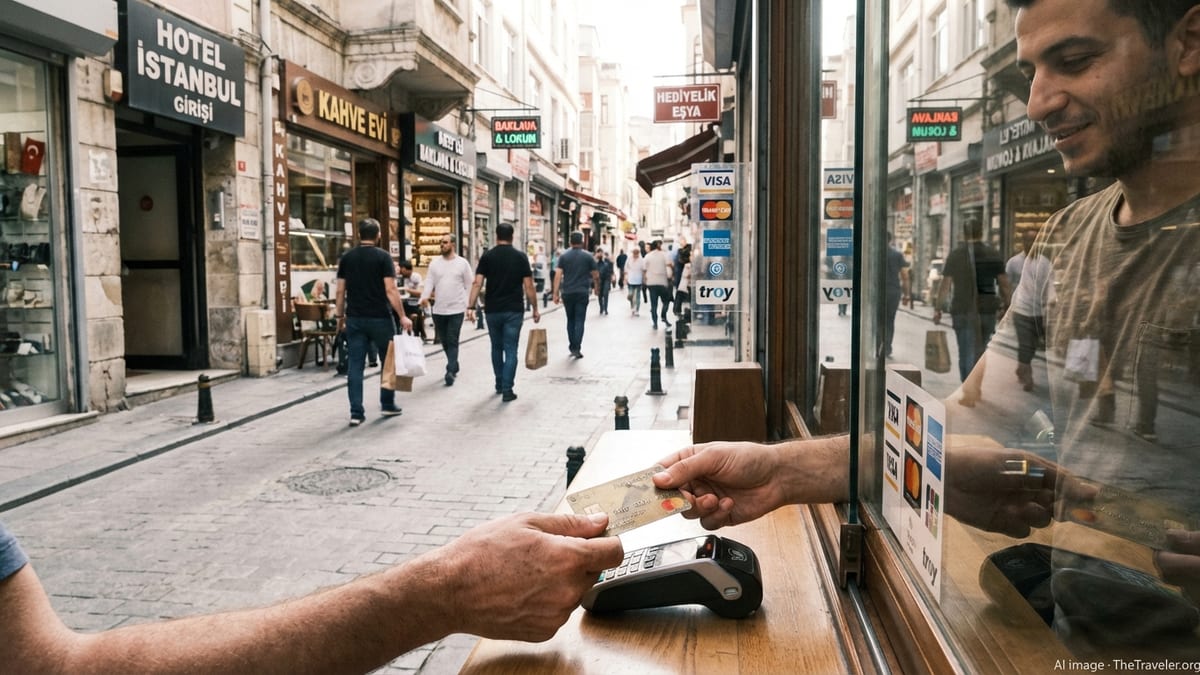
How Widely Are Foreign Cards Accepted in Turkey Today
Foreign credit and debit cards are now accepted at the majority of hotels, major restaurant chains, intercity bus companies, domestic airlines and larger shops in Turkey’s main destinations, including Istanbul, Ankara, Izmir and popular coastal resorts. Visa and Mastercard branded cards are the most widely accepted, followed by some acceptance of American Express in upmarket areas and international hotel chains. Discover and other smaller networks may work in some places but should not be relied upon as primary payment methods.
Card usage has expanded significantly in recent years, with contactless terminals now standard in most urban businesses. Even many small cafes and independent boutiques in tourist districts have card readers, particularly in neighborhoods with high numbers of international visitors such as Sultanahmet, Taksim and Galata in Istanbul. In contrast, travelers headed to more rural regions, less visited Black Sea towns or small village guesthouses should still expect to use more cash.
Foreign cards are also widely accepted for online bookings with Turkish airlines, intercity bus operators, museum passes and some private tour companies. However, a small number of domestic booking platforms are optimized for Turkish cards and may reject foreign numbers, or may require additional verification through 3D Secure that not all travelers have enabled. When online payment does not work with your foreign card, paying on arrival with the same card at a physical desk often succeeds.
Overall, visitors who stick mainly to cities and established tourist routes can comfortably assume that the bulk of their spending can be handled through cards, complementing but not fully replacing cash. Carrying at least one backup card from a different network is wise in case of temporary technical issues with a payment processor or a specific terminal.
Understanding Card Networks, Local Payment Systems and Dynamic Currency Conversion
Most Turkish payment terminals process international cards through global networks of Visa and Mastercard. As long as your bank supports international usage and your card is enabled for travel, transactions should go through in Turkish lira, which is the default and preferred currency in Turkey. Some terminals and ATMs offer a feature known as dynamic currency conversion, which attempts to charge you in your home currency instead of lira. While this may look reassuring, it usually involves a poor exchange rate and extra margin for the processor, making your purchase more expensive.
When a card machine or ATM screen gives you a choice between being charged in your home currency or in Turkish lira, selecting lira almost always leads to a better overall rate from your bank or card issuer. The wording is often confusing, so carefully read each option on the screen. If you are unsure, decline any mention of a fixed exchange rate or “guaranteed rate” and choose the more neutral option that references local currency or no conversion.
Turkish banks and payment companies have developed their own domestic card scheme and digital wallet infrastructure, but these are largely invisible to foreign travelers using international cards. What matters more is that your card supports chip and PIN and, ideally, contactless payments. Magnetic stripe only cards are increasingly unreliable and may be rejected at many modern terminals, especially unattended machines such as some ticket kiosks.
Because of occasional connectivity issues or bank specific controls, a transaction on one terminal might fail even though your card is valid and funded. If this happens, asking the merchant to try another terminal, or trying a different card from another issuer, often resolves the problem. Failed transactions usually do not mean that your card is broadly blocked in Turkey, but you should monitor your banking app to confirm no pending or duplicate charges appear.
Cash Withdrawals, ATMs and Avoiding Unnecessary Fees
ATMs are widely available in Turkish cities, airports, major bus terminals and resort areas, and most accept foreign cards for cash withdrawals. Large banks typically have more reliable machines and clearer instructions in English. ATMs in or near bank branches are usually preferable to isolated machines in tourist areas, partly for security and partly for clearer dispute resolution if a problem arises with a withdrawal. Display languages can be switched to English on most machines early in the transaction flow.
As with card payments, ATMs often promote dynamic currency conversion by offering to charge your account in your home currency at a “locked in” rate. This is usually more expensive than allowing your own bank to handle the conversion. You can typically decline the conversion and request to be charged in Turkish lira, which helps you avoid hidden exchange markups. It is also common for ATMs to display or disclose their own access fee for foreign cards. These fixed surcharges cannot always be avoided but you can reduce their impact by making fewer, slightly larger withdrawals rather than many small ones.
Before travel, check with your bank about international withdrawal fees and whether your card is part of any fee reduced global ATM network. Some banks reimburse third party ATM charges or waive their own foreign transaction fees, which can make a noticeable difference over the course of a longer trip. It is wise to notify your bank of your travel dates so that overseas withdrawals do not trigger fraud alerts or unnecessary card blocks.
If an ATM fails to dispense cash but appears to have debited your account, photograph the machine, keep any printed slip, and contact your bank through secure messaging as soon as practical. Turkish banks are accustomed to handling such disputes, though resolution may take several business days. Avoid repeated attempts at the same problematic machine, and instead move to a different ATM from a major bank in a busier, well lit area.
Contactless Payments, Mobile Wallets and New Trends
Contactless payments have expanded rapidly in Turkey, particularly in big cities and tourist hubs. Most modern terminals in supermarkets, chain restaurants, shopping malls and transportation counters accept tap to pay for both physical cards and compatible phones or smartwatches. Many foreign cards that support contactless at home will function the same way in Turkey, provided your issuing bank has enabled international usage. This includes common mobile wallets that store Visa or Mastercard products.
Some contactless transactions may be capped at a certain limit, above which the terminal will request insertion of the card and a PIN for security reasons. This is more likely for higher value purchases such as electronics, jewelry or hotel stays. If contactless fails or the terminal beeps without processing, do not panic; the merchant will usually request that you insert your card and complete the transaction using chip and PIN instead.
Mobile wallets such as those linked to major smartphone operating systems can work on many Turkish terminals if your physical card is a supported network and has been added to the wallet. The wallet communicates with the terminal in much the same way as a physical contactless card, so acceptance largely mirrors that of the underlying card network. That said, relying exclusively on a phone or smartwatch is not recommended, because you may occasionally encounter older terminals or small businesses that require a physical card or cash.
Public transport systems in some large Turkish cities increasingly accept contactless bank cards directly at turnstiles or ticket validators, especially for visitors who do not have local transport cards. When tapping at these readers, make sure you use only one card or device to avoid “card clash”, and keep the same card for the entire ride to ensure correct fare calculation. Where contactless entry is not available, vending machines and ticket counters often accept regular chip and PIN payments.
Foreign Transaction Fees, Exchange Rates and Budgeting
Even when your foreign card works seamlessly in Turkish shops and ATMs, the true cost of using it depends on fees and exchange rates set by your bank or card issuer. Many general credit cards add a foreign transaction fee for purchases made outside your home country, often a small percentage of each transaction. Over a multi week trip, those percentages can add up, especially for large payments like hotel bills or internal flights.
To keep costs predictable, travelers may choose to use a card that does not charge foreign transaction fees, where available in their home market. Even without such a card, you can still limit extra charges by always paying in Turkish lira at terminals and ATMs and avoiding dynamic currency conversion. This allows your bank to use wholesale foreign exchange rates which are usually closer to market levels than the rates offered by individual merchants.
Because the Turkish lira has experienced periods of volatility, prices in local currency may change between the time you plan your trip and your actual travel dates. When budgeting, consider a margin of safety in your home currency to accommodate exchange rate movement. Checking recent historical exchange rate ranges can provide a rough sense of how much fluctuation to expect, but avoid assuming that past patterns will repeat exactly.
Keeping track of your spending in both lira and your home currency is easier if you regularly review your card issuer’s mobile app. Many apps provide real time or near real time transaction notifications and show the approximate billed amount in your home currency. This makes it easier to spot unusual charges early, adjust daily budgets and confirm that you are being charged in lira without hidden conversion.
Safety, Fraud Prevention and Common Pitfalls to Avoid
Using foreign cards in Turkey is generally safe when you follow standard travel security practices, but taking a few extra precautions will reduce the risk of fraud or card cloning. Always keep your card in sight at restaurants and stores, and if possible pay at a portable terminal brought to your table rather than allowing the card to be taken away. Shield the keypad with your hand when entering your PIN, and avoid loudly confirming card details in crowded places.
Be cautious with card use at night in very touristy party districts where opportunistic scams may target visitors. If you are presented with a paper receipt or electronic slip to sign, verify that the amount is correct before signing. If a merchant claims a transaction failed and requests that you pay again, insist on seeing the machine screen or printed slip before authorizing another charge, and check your banking app shortly afterward to ensure that only one payment has been posted.
Unfamiliar ATMs mounted in convenience stores or at unstaffed locations with minimal branding can present higher risk of skimming devices or other tampering. When possible, use machines that are attached to bank branches or well known financial institutions. If any part of an ATM looks loose, mismatched or suspicious, or if a passerby offers unsolicited assistance, cancel the transaction and leave.
In addition to physical security precautions, configure digital safeguards such as spending alerts, temporary card locks and two factor authentication through your issuing bank. Many institutions allow you to freeze and unfreeze your card instantly from a mobile app if it is misplaced or if you suspect fraud. Recording emergency contact numbers for your bank in both digital and printed form helps you act quickly if a card is lost or stolen while traveling.
Preparing Your Cards Before You Travel to Turkey
Good preparation before departure is one of the most effective ways to ensure that your cards work smoothly once you land in Turkey. Begin by confirming with your bank that your cards are authorized for international use and that no regional blocks prevent transactions from Turkey. Some banks automatically enable worldwide usage, while others request that customers register specific travel dates in advance to minimize false fraud alerts.
Check the expiration dates on your cards and any daily withdrawal or purchase limits that might restrict your ability to pay for larger expenses such as accommodation. If your main card is close to expiration, ask for a replacement well before departure. Bringing at least one backup card from a different bank or network is wise in case your primary card becomes compromised, lost or temporarily locked by automated security systems.
Make sure your chosen cards support chip and PIN and, if possible, contactless payments, as these technologies are pervasive in Turkey. Memorize your PINs and avoid writing them down in easily accessible places. If your card issuer offers a dedicated travel customer service line, note the number separately, since standard contact details on the back of the card may be harder to read or access in a stressful moment.
Finally, think strategically about which expenses you will place on card versus cash. Some small family run pensions, local markets or traditional hammams still prefer or require cash payments, while international chain hotels and larger tour operators expect cards. Having a rough plan, supported by both card and a modest cash reserve, gives you flexibility if a particular terminal or network experiences temporary outages during your stay.
The Takeaway
Using foreign credit and debit cards in Turkey has become far easier and more reliable in recent years, especially in major cities and well trodden tourist regions. Visitors can expect wide acceptance of Visa and Mastercard for hotels, dining, shopping and transportation, with contactless payments increasingly common at everyday businesses.
The key to avoiding issues lies less in the basic functionality of your card and more in how you manage currency conversion, fees and security. Choosing to pay in Turkish lira, declining dynamic currency conversion, and understanding your bank’s foreign transaction policies will keep costs under control. Pairing those financial habits with prudent safety practices and advance preparation significantly reduces the risk of disruption.
By traveling with at least two compatible cards, confirming international access with your bank and maintaining a small cash buffer for offline situations, you can navigate Turkey’s evolving payment landscape confidently. Done right, your cards become a convenient tool rather than a source of worry, allowing you to focus on the experience of exploring the country’s historic sites, vibrant neighborhoods and diverse landscapes.
FAQ
Q1. Can I use my foreign credit card everywhere in Turkey?
Card acceptance is widespread in cities and tourist areas but not universal. Large hotels, restaurants and shops usually take cards, while small local businesses and remote areas may still prefer cash.
Q2. Which card networks work best in Turkey?
Visa and Mastercard are the most consistently accepted networks. American Express works in some upscale locations and international chains, but acceptance is patchier. Other networks can be hit or miss.
Q3. Should I pay in my home currency or in Turkish lira?
It is generally better to pay in Turkish lira and decline any offer to convert to your home currency at the terminal or ATM, as conversion services tend to use poorer exchange rates.
Q4. Are contactless payments widely available in Turkey?
Yes, contactless terminals are common in major cities, shopping centers and many restaurants. However, you may still occasionally need to insert your card and enter a PIN for higher value transactions.
Q5. Can I withdraw cash from ATMs in Turkey with my foreign card?
Most ATMs in cities and tourist areas accept foreign cards, though fees and limits vary. Using machines operated by major banks and choosing to be charged in lira can help reduce costs.
Q6. Will my bank charge foreign transaction fees on purchases in Turkey?
Many banks apply a small percentage fee on overseas transactions. Check your card’s terms before travel, and consider using a card that does not charge such fees if you have one.
Q7. Is it safe to use my card in Turkish shops and restaurants?
Using cards is generally safe when you keep the card in sight, protect your PIN and avoid suspicious terminals. As at home, monitoring your account regularly helps you spot any unusual activity quickly.
Q8. Do I need to tell my bank I am traveling to Turkey?
Informing your bank about your travel dates is recommended, especially if you rarely use your card abroad. This can reduce the risk of transactions being declined as potential fraud.
Q9. Can I use mobile wallets like my phone or smartwatch to pay in Turkey?
If your mobile wallet is linked to a Visa or Mastercard that supports international use, it will often work on Turkish contactless terminals. Still, carry a physical card and some cash as backup.
Q10. What should I do if my card is lost, stolen or blocked in Turkey?
Contact your bank immediately using the emergency number they provide, freeze the card in your app if possible, and rely on a backup card or cash while the issue is resolved.