

Utility costs in Thailand are a significant component of ongoing living expenses for relocating professionals and retirees. Understanding how electricity, water, and other essential services are priced, billed, and managed is crucial for accurately forecasting monthly outlays and avoiding common cost pitfalls that affect new arrivals.
Overview of Utilities Framework in Thailand
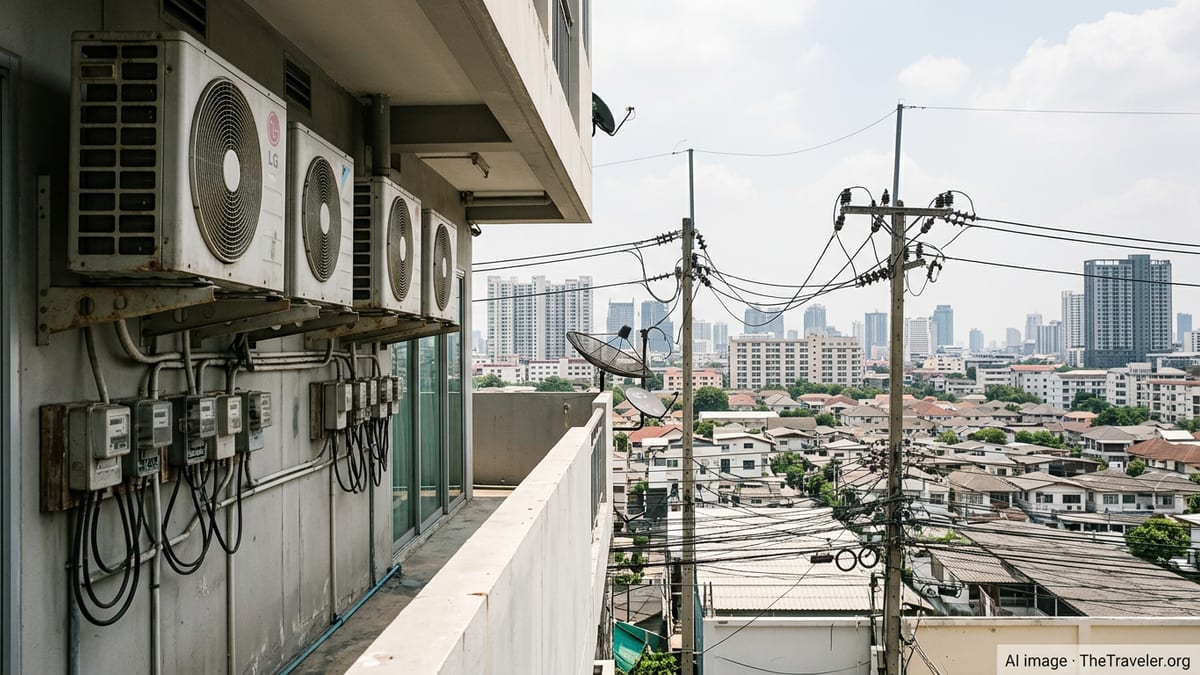
Utility services in Thailand are delivered through a mix of national, metropolitan, and provincial providers. Electricity is generated and transmitted nationally, then distributed primarily by the Metropolitan Electricity Authority in Bangkok and surrounding provinces and by the Provincial Electricity Authority in most other regions. Tariffs are set by a central regulator using a structured formula, which means base rates are broadly consistent nationwide, although actual bills vary with usage and fuel adjustment charges.
Water supply in Bangkok and some surrounding areas is managed by the Metropolitan Waterworks Authority, while the Provincial Waterworks Authority and local municipalities serve most of the rest of the country. Water tariffs are typically lower and more stable than electricity tariffs, but they vary by locality and consumption band. Waste collection, bottled gas for cooking, and broadband internet are provided by a mix of municipal services and private companies, with substantial variation in pricing and service quality between urban and rural areas.
For expats evaluating relocation, electricity almost always represents the largest utility cost driver, particularly in hot urban environments where air conditioning is used extensively. Water, waste, and broadband typically represent smaller but still material components of the monthly budget. The key decision variables influencing total utility spend are dwelling type, building management policies, air conditioning habits, and whether utilities are billed at regulated rates or at a mark-up through landlords.
Because tariffs are periodically adjusted in response to global fuel costs and policy decisions, expats should treat any numerical benchmarks as indicative rather than fixed. However, recent regulatory decisions have focused on moderating household electricity costs, and average residential tariffs have tended to cluster around the mid-single-digit baht per kilowatt-hour range in early 2026.
Residential Electricity Tariffs and Bill Structure
Thailand uses a tiered residential electricity tariff system for most households, with prices per kilowatt-hour increasing across consumption bands. In practice, typical residential tariffs for grid-supplied electricity sit around 4 to 4.5 baht per kilowatt-hour on average, with lower charges for the first block of consumption and higher charges as monthly usage rises. Recent regulatory measures have aimed to ease household burdens, and for the January to April 2026 period the overall average tariff has been reduced to roughly 3.9 baht per kilowatt-hour for standard residential customers.
Every bill is broken into several components: a base energy charge that reflects the tiered price per kilowatt-hour, a fuel adjustment charge that captures changes in generation fuel costs, and value-added tax at 7 percent applied to the subtotal. The fuel adjustment component is reviewed and reset several times per year, which can shift overall tariff levels up or down within a relatively narrow band even when base tariffs remain unchanged. This structure allows the regulator to respond to changes in imported fuel prices, which are significant because a large share of Thailand’s electricity is generated from natural gas.
For expats, the important implication is that two households using the same amount of electricity can see modest differences in their final bill from one four-month period to the next due to fuel adjustments. However, these changes are typically measured in fractions of a baht per kilowatt-hour rather than large swings, so they are unlikely to dramatically alter the overall cost profile of a relocation decision. Prospective movers should factor in some variability around published averages rather than assuming a single fixed price.
New arrivals should also distinguish between official residential tariffs and private re-billing arrangements. Official tariffs are applied when a residence has a direct account with the electricity authority. In contrast, some landlords and serviced apartments re-bill electricity at a flat rate per kilowatt-hour that can be significantly higher than the regulated average, sometimes double or more. This practice is common in short-term rentals and budget apartments and can substantially inflate monthly costs for heavy air conditioning users.
Typical Household Electricity Consumption Scenarios
Average household electricity consumption in Thailand is highly sensitive to climate, dwelling design, and air conditioning usage patterns. In practice, air conditioning represents a large share of residential electricity consumption in urban and coastal regions. Studies of Thai residential energy use indicate that air conditioning alone can account for roughly one quarter or more of household electricity use, with refrigerators, lighting, and cooking appliances making up much of the remainder.
As a planning benchmark, a modest one-bedroom condominium occupied by a single person or couple, with limited air conditioning usage in the evenings and at night, might consume approximately 200 to 350 kilowatt-hours per month. At an effective tariff in the 4 baht per kilowatt-hour range, this implies an electricity bill of roughly 800 to 1,500 baht per month under official residential rates. With heavier air conditioning use, such as running one or two units for most of the day in a work-from-home scenario, consumption can rise into the 400 to 600 kilowatt-hour range, leading to indicative monthly bills around 1,600 to 2,500 baht.
Larger households in detached houses or townhomes, particularly those using multiple air conditioning units across several rooms, often record significantly higher usage. Consumption of 700 to 1,000 kilowatt-hours per month is not unusual for sizeable homes with extensive cooling, which translates into bills in the range of 3,000 to over 4,000 baht under regulated tariffs. In these cases, building envelope quality, shading, and air conditioner efficiency have a major impact on final costs, and upgrading to modern, high-efficiency units can materially reduce consumption.
Expats arriving from countries with higher per capita electricity usage may find Thai consumption patterns lower on average, but the relative cost of electricity compared to local incomes is meaningful for many households. From a relocation budgeting standpoint, planning for a typical condo electricity bill in the low four-figure baht range, with upside risk for heavy cooling or private mark-ups, is prudent for most urban destinations.
Water, Waste, and Ancillary Utilities
Water tariffs in Thailand are generally lower and more predictable than electricity tariffs. Residential water in major cities is commonly billed using increasing-block tariffs with low per-cubic-meter charges for the first band of consumption. In Bangkok, historical data show average residential water tariffs under 10 baht per cubic meter, while more recent provincial presentations indicate starting tariffs for many localities around 4 to 6 baht per cubic meter for standard households. For a typical urban apartment or small house using 10 to 20 cubic meters of water per month, total charges often range from approximately 150 to 300 baht, excluding any building service fees.
Wastewater charges are either embedded in the water bill or collected separately by local authorities, depending on the municipality. In practice, wastewater fees for households are modest compared with electricity and often overlooked in headline cost-of-living calculations. Solid waste collection is usually handled by municipal services with flat monthly fees that vary by district but typically represent a minor line item in the utility budget for expats, often below a few hundred baht per month.
Bottled gas remains common for cooking in many low-rise residences, with refillable gas cylinders supplied by local vendors. Costs fluctuate with global energy prices but usually amount to a few hundred baht per month for moderate use. In newer condominiums, electric stoves and ovens are standard, which shifts cooking energy demand into the electricity bill rather than a separate gas expense. Expats choosing all-electric apartments should factor this into consumption scenarios, especially if they cook frequently at home.
Overall, non-electricity utilities for a typical urban expat household water, wastewater, waste collection, and cooking fuel together tend to sum to a level materially lower than the electricity bill. However, they can add up, and in buildings with added administrative or service charges, the total monthly outlay for these ancillary utilities may approach the electricity cost for low-consumption households.
Internet, Telecom, and Service Reliability Considerations
Broadband internet and mobile data are widely available and competitively priced across much of Thailand, although service options are more limited in remote rural areas. Fixed-line broadband packages in urban centers commonly range from low hundreds to around a thousand baht per month for high-speed connections suitable for remote work. Several major providers offer fibre connections in Bangkok, Chiang Mai, and other large cities, while smaller towns may rely more on VDSL or wireless solutions with lower headline speeds.
Mobile data is heavily used and relatively inexpensive by international standards, with postpaid and prepaid packages commonly including large or unlimited data allowances. For many expats, maintaining both home broadband and a robust mobile data plan offers redundancy, which is valuable for those in remote or hybrid work arrangements. Bundled packages that combine home internet and mobile services can yield modest savings and simplify billing, though terms and coverage should be checked carefully.
In terms of reliability, major urban centers typically experience stable electricity and broadband service, but localized outages do occur, particularly during storms or in areas with older infrastructure. The national grid’s reliance on imported fuel introduces exposure to global energy price volatility, which can influence tariffs over time, but short-term supply reliability is generally high. That said, in some provincial locations, power cuts and voltage fluctuations are more frequent, which can affect sensitive electronics and require surge protection or backup solutions.
Expats who depend on continuous connectivity for work may wish to select buildings with a track record of stable utilities, consider uninterruptible power supplies for key hardware, and verify that mobile coverage is strong from multiple operators at the residence. These measures are more about risk management than cost, but they ensure that utility-related disruptions do not undermine professional obligations.
Landlord Billing Practices and Hidden Utility Mark-ups
A critical distinction for expats is whether utilities, especially electricity, are billed directly by the utility company or indirectly by a landlord or building management. Where tenants are registered directly with the electricity authority and receive official bills, they pay the regulated residential tariffs with standard fuel adjustment and tax. However, in many serviced apartments, smaller condominiums, and short-term rentals, landlords receive the official bill and then re-invoice tenants at a flat per-unit rate, often significantly above the underlying tariff.
Private per-unit electricity rates of 6 to 10 baht per kilowatt-hour are commonly reported in such arrangements, compared with official averages closer to 4 baht. This mark-up can effectively double electricity costs for tenants who use air conditioning heavily. In extreme cases, particularly in short-stay or tourist-oriented properties, the rate can be even higher. While this practice is often legal within the framework of a private rental contract, it is a key cost risk that expats should recognize and negotiate where possible.
To manage this risk, prospective tenants should request explicit written confirmation of how electricity and water will be billed before signing a lease. Ideally, contracts should specify that charges will follow government tariffs based on the official bill, with the tenant paying the utility directly or reimbursing the exact amount shown, rather than a fixed rate per kilowatt-hour set by the landlord. Where landlords insist on a fixed rate, comparing that rate with current average tariffs helps quantify the likely premium.
In addition to mark-ups, some buildings levy administrative fees or minimum monthly utility charges that can add to the total. Expats should ask to see past utility bills for similar units and clarify any building management or common area charges that are not included in base rent. Transparent billing arrangements reduce the risk of disputes and make it easier to track and manage consumption over time.
Energy Efficiency, Seasonality, and Mitigation Strategies
Thailand’s tropical climate means that cooling loads and thus electricity consumption are highly seasonal and location-dependent. In hotter months and in low-lying coastal regions, air conditioning usage can spike, while in cooler northern areas and during milder seasons, reliance on air conditioning may ease, reducing bills. Humidity levels also influence how often residents run air conditioners versus fans, which use significantly less power.
Energy efficiency measures can materially affect bills, particularly for expats who work from home or occupy larger dwellings. Key variables include the energy efficiency rating of air conditioning units, the presence of insulation and double glazing, shading from neighboring buildings or trees, and basic habits such as setting thermostat temperatures a few degrees higher and closing blinds during peak sun hours. Replacing older, inefficient air conditioners with modern inverter models can significantly reduce consumption for the same comfort level over time.
Behavioral strategies also contribute to cost control. These include restricting air conditioning to occupied rooms, using fans to circulate cooled air, switching off water heaters when not in use, and avoiding leaving appliances on standby. Monitoring monthly kilowatt-hour usage and keeping records helps residents identify unusual spikes that may signal faulty equipment, such as malfunctioning compressors or water pumps that run continuously.
For expats planning long-term stays, investing in modest efficiency upgrades and adopting conscious usage patterns can stabilize electricity expenses in the face of tariff adjustments. While rooftop solar is expanding in Thailand, current schemes and economics are more relevant to property owners and large consumers than to typical tenants, so most expat renters will focus on demand-side measures rather than on-site generation.
The Takeaway
Utility costs in Thailand are moderate by global standards but form a meaningful share of monthly expenses for expats, particularly due to electricity use for air conditioning. The regulatory framework produces relatively stable residential tariffs that, as of early 2026, cluster around the high-3 to low-4 baht per kilowatt-hour range for households, with periodic adjustments tied to fuel costs. Water, waste, and broadband charges are generally lower and more predictable but still contribute to the overall utilities budget.
From a relocation planning perspective, electricity is the primary variable to model carefully. Typical urban condo households can expect electricity bills in the low four-figure baht range under official tariffs, with higher costs for larger homes and heavy cooling. The most significant cost risk arises not from tariff volatility but from landlord mark-ups and inefficient equipment. Ensuring transparent billing tied to official rates, checking the condition and efficiency of air conditioning units, and adopting basic energy-saving habits can all substantially influence the final monthly outlay.
Expats who approach utilities as a managed cost center rather than a fixed, opaque charge will be better positioned to control expenses and avoid unpleasant surprises. Clear lease terms, realistic consumption estimates, and modest efficiency investments can together provide a high degree of cost predictability, supporting more confident decisions about where and how to live in Thailand.
FAQ
Q1. What is a realistic monthly electricity bill for an expat in a Thai condo?
For a one-bedroom condo with moderate air conditioning use, a realistic range under official residential tariffs is roughly 800 to 1,500 baht per month, assuming direct billing from the electricity authority and no landlord mark-up.
Q2. How much do landlords typically mark up electricity in Thailand?
In some serviced apartments and short-term rentals, landlords charge flat rates of around 6 to 10 baht per kilowatt-hour, compared with official averages closer to 4 baht. This can increase electricity costs by 50 to 100 percent for tenants who use air conditioning extensively.
Q3. Are electricity prices the same across all regions of Thailand?
Base residential tariffs are centrally regulated and broadly similar nationwide, but the exact effective rate can vary slightly due to distribution authorities and periodic fuel adjustment charges. Overall, differences between regions are modest compared with variations caused by individual consumption patterns.
Q4. How much should I budget for water each month?
For a typical urban apartment or small house, water bills commonly fall in the range of 150 to 300 baht per month, depending on local tariffs and usage volume. Larger households with gardens or heavy laundry usage will pay more, but water usually remains a smaller cost item than electricity.
Q5. Is internet service in Thailand reliable enough for remote work?
In major cities and many large towns, fixed broadband and mobile data are generally reliable and sufficient for remote work, video conferencing, and cloud services. However, service quality can vary by building and neighborhood, so it is advisable to test connectivity at the specific residence and maintain a mobile data backup.
Q6. Do apartments in Thailand usually include utilities in the rent?
Some serviced apartments and short-term rentals bundle utilities into the rent, often at premium rates, while standard long-term leases more commonly charge utilities separately. Expats should clarify in writing whether utilities are included, how they are calculated, and whether charges are based on official bills or fixed per-unit rates.
Q7. How can I reduce my electricity bill without sacrificing comfort?
Cost reduction strategies include using inverter air conditioners set a few degrees higher, limiting cooling to occupied rooms, improving shading with curtains or blinds, using fans to complement air conditioning, turning off water heaters when not needed, and promptly repairing or replacing inefficient appliances.
Q8. Are power outages common in Thailand?
In major urban centers, electricity supply is generally reliable, though brief outages can occur during storms or maintenance. In some provincial or rural areas, outages and voltage fluctuations are more frequent, so surge protection and backup options may be advisable for sensitive equipment.
Q9. Do I need to pay a deposit for electricity and water connections?
Yes, new accounts with electricity and water providers typically require refundable deposits, the amount of which depends on the contracted load or meter size. In many rentals, these deposits are already paid by the property owner, and tenants reimburse utilities through monthly bills rather than opening their own accounts.
Q10. How volatile are Thai electricity tariffs from year to year?
Tariffs are adjusted periodically in response to fuel costs and policy decisions, but changes are usually incremental rather than drastic. Over recent periods, typical residential tariffs have remained within a relatively narrow band around the mid-single-digit baht per kilowatt-hour range, so long-term relocation decisions can be based on these approximate levels with some margin for variation.