

More news on this day
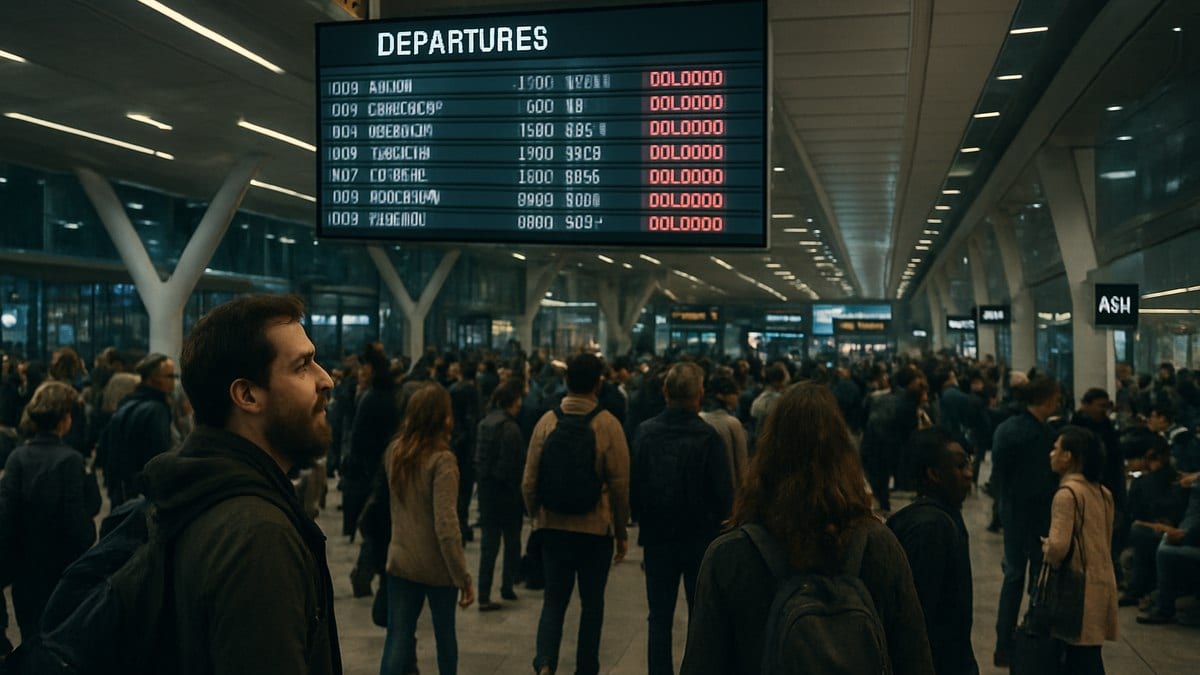
Las Vegas travelers faced a turbulent Saturday on April 11 as more than 250 flights at Harry Reid International Airport were delayed, leaving terminals crowded, schedules in disarray and ripple effects spreading across domestic and international networks.
Get the latest news straight to your inbox!
Heavy Delays Turn a Busy Hub into a Bottleneck
Data compiled from aviation tracking services on April 11 indicates that Harry Reid International Airport logged roughly 251 delayed flights and at least two cancellations, an unusually elevated disruption level for the Las Vegas hub outside major weather or infrastructure events. The slowdown affected both arrivals and departures, with rolling pushbacks and extended gate holds contributing to congestion across key banks of morning and midday flights.
Published coverage notes that hundreds of passengers found themselves waiting in packed departure areas as aircraft arrived late from other cities, forcing airlines to reshuffle rotations and crew assignments. With Las Vegas operating as both an origin and through-point for travelers heading to the West Coast, Midwest and Canada, even modest schedule slippage early in the day translated into multi-hour delays by afternoon.
Publicly available flight statistics for the day show that disruption at Harry Reid formed part of a wider pattern of operational strain across the United States in early April, with several other large airports also reporting elevated delay counts. For passengers in Las Vegas, however, the concentrated volume of late departures created a particularly visible choke point, especially on routes that rely on frequent short-haul links.
Key Routes Affected from Los Angeles to Toronto
According to aviation tracking data cited in current travel-industry reporting, the Las Vegas disruption touched a mix of high-frequency domestic routes and select international services. Flights to major U.S. hubs such as Los Angeles, Denver, Chicago and New York experienced clusters of delays as arriving aircraft from earlier legs reached Las Vegas behind schedule, compressing turnaround times.
Published coverage also indicates knock-on effects for services linking Las Vegas with Canadian destinations, including Toronto, as well as transborder connections that feed into longer-haul itineraries. For travelers with tight connections, even short ground delays in Las Vegas increased the risk of missed onward flights from other hubs later in the day.
Because Harry Reid serves a large volume of point-to-point leisure traffic, delays were especially visible on popular weekend city-pair routes. The impact was not limited to any single carrier. Data compiled from tracking platforms and industry roundups points to schedule disruptions across several major U.S. airlines and low-cost operators, reflecting the shared dependence on Las Vegas as a high-density origin and destination market.
Part of a Broader Wave of U.S. Flight Disruptions
The flight backlog at Harry Reid emerged during a broader spell of operational strain for the U.S. air travel system. A review of national delay statistics for April 10 and 11 shows thousands of late arrivals and departures across major hubs, including Atlanta, Chicago, Denver, Phoenix and Detroit, with hundreds of additional cancellations scattered across the network.
Industry reports attribute this nationwide pattern to a combination of factors, including periodic weather disturbances, air traffic control flow programs, and the cumulative effects of tight airline schedules at the start of the spring travel surge. In this context, the 250-plus delays recorded at Las Vegas appear as one regional manifestation of a wider system under pressure rather than an isolated incident driven by a single local cause.
Publicly accessible Federal Aviation Administration status pages for Harry Reid on the same weekend highlight that the airport operated amid varying traffic management advisories, although detailed cause codes for each individual delay are not made available at a public level. Aviation analysts note that even when local conditions at an airport are stable, upstream issues at other hubs can cascade into significant disruption at downline destinations.
Travelers Confront Long Lines and Tight Connections
For passengers inside the terminals, the statistics translated into hours of uncertainty. Contemporary accounts in travel outlets describe travelers queuing at service counters to rebook missed connections, searching for scarce same-day alternatives and monitoring departure boards that shifted repeatedly as airlines adjusted their operations.
With Las Vegas heavily tied to weekend leisure trips, group travel and time-sensitive events, extended delays carried financial and logistical consequences beyond the airport. Hotel check-in times, show bookings and tour departures were all exposed to last-minute changes as visitors attempted to rearrange their plans. Some travelers faced overnight stays or re-routed itineraries through alternate hubs to reach destinations that would ordinarily be a short nonstop away.
Published coverage also highlights the stress placed on airline staff managing the disruption, from gate agents working rolling boarding times to crews reaching duty-time limits. In several cases, late-arriving aircraft and tight turnaround windows required reallocation of equipment and crews, further complicating efforts to return operations to a normal rhythm before the end of the day.
What This Means for Upcoming Vegas Trips
The April 11 disruption at Harry Reid International arrives just as spring and early summer travel to Las Vegas traditionally intensify, raising questions for travelers with upcoming trips. While the specific mix of contributing factors may differ from one day to another, recent patterns across multiple U.S. airports suggest that weekend periods in particular can be vulnerable to cascading delays when demand is high and schedules are dense.
Travel and aviation analysts observing current trends recommend that passengers traveling through busy hubs build additional margin into their plans, especially when connecting in Las Vegas to longer-haul flights or time-critical events. Publicly available industry data shows that high-frequency leisure routes can recover more quickly once disruptions ease, yet the experience of April 11 illustrates how quickly a seemingly manageable delay volume can grow into systemic congestion at a single airport.
For now, Harry Reid International continues to promote operational tools such as online checkpoint wait-time information and traveler guidance intended to keep passenger flows as smooth as possible even when flights are running behind schedule. As airlines and airports across the country head into a peak travel period, the Las Vegas delay spike stands as an early signal that capacity, staffing and weather-related challenges remain central issues for U.S. air travel in 2026.