

More news on this day
Spring break 2026 is pushing Las Vegas air travel to new extremes, with record passenger volumes at Harry Reid International Airport combining with national disruptions to create scattered but significant delays.
Get the latest news straight to your inbox!
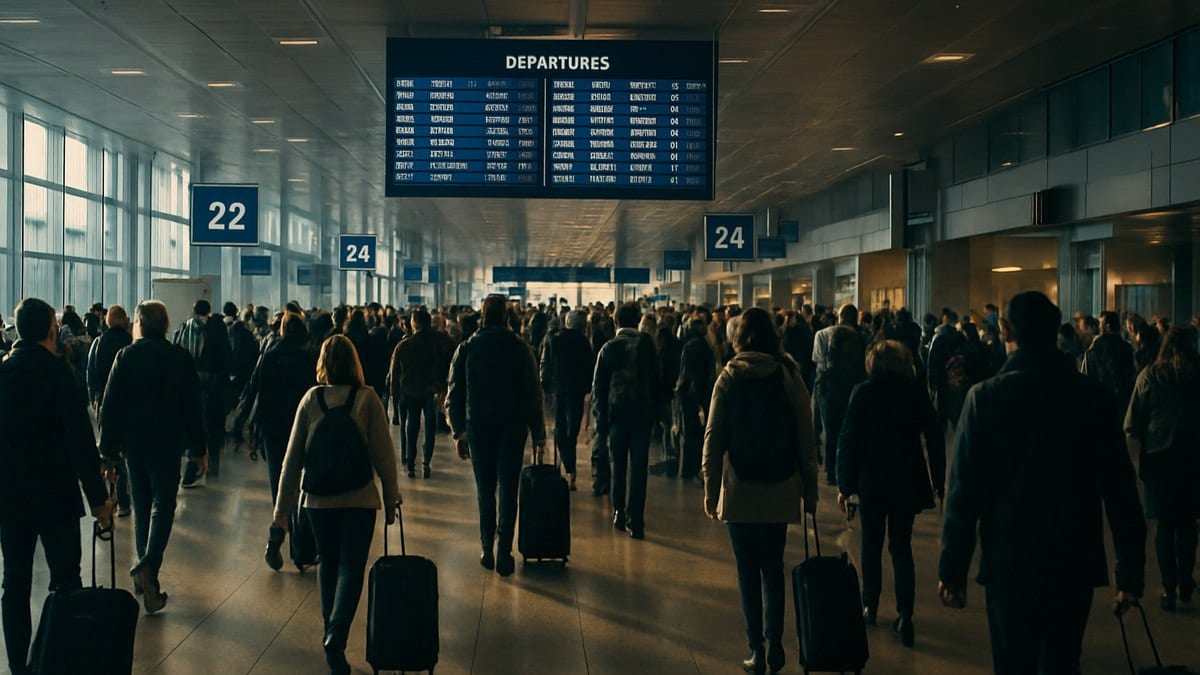
Record traffic collides with a fragile national air system
Passenger volumes at Harry Reid International Airport have surged through March and early April 2026, coinciding with spring break for Southern Nevada schools and visitors arriving from across the United States. Publicly available travel data and local coverage indicate that the airport has experienced some of its busiest screening days on record as families, college students and event travelers funnel through Las Vegas.
Reports indicate that the spike comes at the same time as a partial federal government shutdown and weather-related disruptions across the country. Nationally, storms and strained security staffing have driven thousands of delays and cancellations, with the ripple effects reaching hubs such as Las Vegas when inbound aircraft and crews are held up elsewhere. As a result, even when local operations remain relatively stable, arrivals and departures at Harry Reid International have periodically backed up.
Regional publications and travel outlets have noted that on peak days in March, Las Vegas saw hundreds of delayed flights and dozens of cancellations tied to those broader system pressures. In several cases, aircraft scheduled to depart Harry Reid International were forced to wait on inbound planes from weather-hit or staff-constrained airports, contributing to rolling gate holds and missed connections for spring break travelers.
Airport guidance and airline advisories have emphasized that the combination of national weather events, federal funding uncertainty and elevated leisure demand creates a fragile operating environment. While outright gridlock has largely been avoided in Las Vegas, the probability of cascading delays has remained elevated throughout the core spring break travel window.
Security checkpoints strained but mostly flowing
Despite the broader turmoil in the national aviation system, security checkpoint performance at Harry Reid International has generally remained stronger than at many peer airports. Local coverage and traveler reports suggest that Transportation Security Administration lines in Las Vegas have continued to move at a steadier pace than those at some large hubs where staffing shortages and callouts have been more acute.
Travel-industry reporting notes that TSA officers at Harry Reid International have continued to staff all main checkpoints even while working through the pay uncertainty tied to the federal funding lapse. Although concerns were raised early in the shutdown that higher sick rates could trigger long queues in Las Vegas, available accounts from late March show typical wait times often remaining under an hour, even at peak morning and midday periods.
However, the surge in spring break traffic has still produced notable pressure points. Community forums and traveler anecdotes from late March describe early-morning lines that stretched deep into terminal ticketing halls on some Fridays and long queues for enrollment services such as TSA PreCheck and Clear. For visitors unfamiliar with the layout of Terminal 1 and Terminal 3, the crowded checkpoints have sometimes translated into confusion and tighter margins for boarding.
Security wait-time trackers and crowd-sourced monitoring tools frequently cited by travelers show that conditions can change quickly, with relatively short waits in midafternoon and sudden spikes when large banked departures converge. The uneven pattern has led airport messaging and airline communications to continue urging spring break passengers to arrive well ahead of scheduled departure times.
New tools and guidance for timing the airport run
In response to the intense spring break 2026 travel period, Harry Reid International has expanded the information available to departing passengers. Publicly available airport updates in early April highlight the rollout of integrated TSA wait-time estimates on the airport’s official website, allowing travelers to check security conditions at multiple checkpoints before leaving their hotel or home.
Travel coverage notes that the new feature, introduced in April, is intended to supplement existing guidance that recommends arriving at least two hours before domestic flights and three hours before international departures. For Las Vegas, where many visitors stay within a short drive of the terminals and may underestimate how quickly queues can build, real-time data is being presented as a way to reduce last-minute rushes and missed flights.
Third-party wait-time calculators and aviation data services echo that recommendation by flagging afternoon and early evening blocks as particularly sensitive during holidays, major sporting events and convention weeks. During the March 16 to 20 spring break period for local school districts, those windows frequently aligned with heavy family travel, contributing to busier security lanes, congested curbs and slower baggage drop-off.
Publicly available travel advisories emphasize that passengers should account for both the drive to the airport and potential surges at ticket counters, check-in kiosks and bag drops. For visitors departing directly from the Las Vegas Strip, the perception that the airport is only minutes away has sometimes clashed with reality when traffic, rideshare congestion or unexpected TSA slowdowns occur during spring break peaks.
National disruptions ripple through Las Vegas departures
While on-the-ground operations at Harry Reid International have often remained comparatively stable, the national aviation picture has created recurring waves of disruption for Las Vegas-bound and departing flights. News coverage focusing on the March and early April travel period describes storms across large sections of the country, affecting major connection points and leaving aircraft and crews out of place.
Flight-tracking data cited in regional reporting indicates that on some of the busiest spring break days, Las Vegas recorded more than 200 delayed flights and several dozen cancellations. These disruptions were largely attributed to weather difficulties and security staffing strain at other airports rather than to mechanical issues or local ground delays in Nevada.
Travel outlets also point to the impact of the partial federal government shutdown on the wider system, with security screening resources stretched thin at a number of East Coast and Midwest hubs. In those locations, longer checkpoint lines and increased callouts slowed boarding and departure sequences, which in turn affected the timing of flights heading to or from Las Vegas.
For spring break travelers attempting to return home from Nevada, those upstream disruptions translated into longer-than-expected gate holds, aircraft swaps and unplanned overnight stays. Airlines have continued to encourage customers to monitor flight status closely and to build flexibility into their plans, particularly when connecting through weather-prone or high-volume airports.
What spring break travelers can expect heading into late April
With spring break season gradually tapering into late April 2026, publicly available forecasts suggest that traffic at Harry Reid International will remain elevated, though somewhat below the mid-March peak. Conventions, weekend entertainment events and continuing leisure demand are expected to sustain higher-than-average passenger volumes even as school holidays end.
Airline planners and travel analysts cited in industry coverage anticipate that national system strain may persist for several more weeks as carriers rebalance schedules after the stormy March period and as the federal funding situation surrounding security staff continues to evolve. That outlook points to an environment where localized security operations in Las Vegas may function efficiently but flights remain vulnerable to knock-on delays from other regions.
For visitors planning late-season spring trips to the city, the emerging pattern suggests that arriving early, monitoring security wait-time tools and checking flight status frequently will remain prudent steps. While the worst-case images of multi-hour lines and terminal gridlock have largely been associated with other U.S. gateways, the combination of record crowds and national turbulence has still turned Harry Reid International into a challenging waypoint for many 2026 spring break travelers.