

More news on this day
Spring getaway plans for thousands of travelers were thrown off course on April 11 as more than 250 flight delays at Las Vegas’ Harry Reid International Airport triggered a fresh wave of disruption across the United States air network.
Get the latest news straight to your inbox!
Las Vegas Becomes a National Delay Hotspot
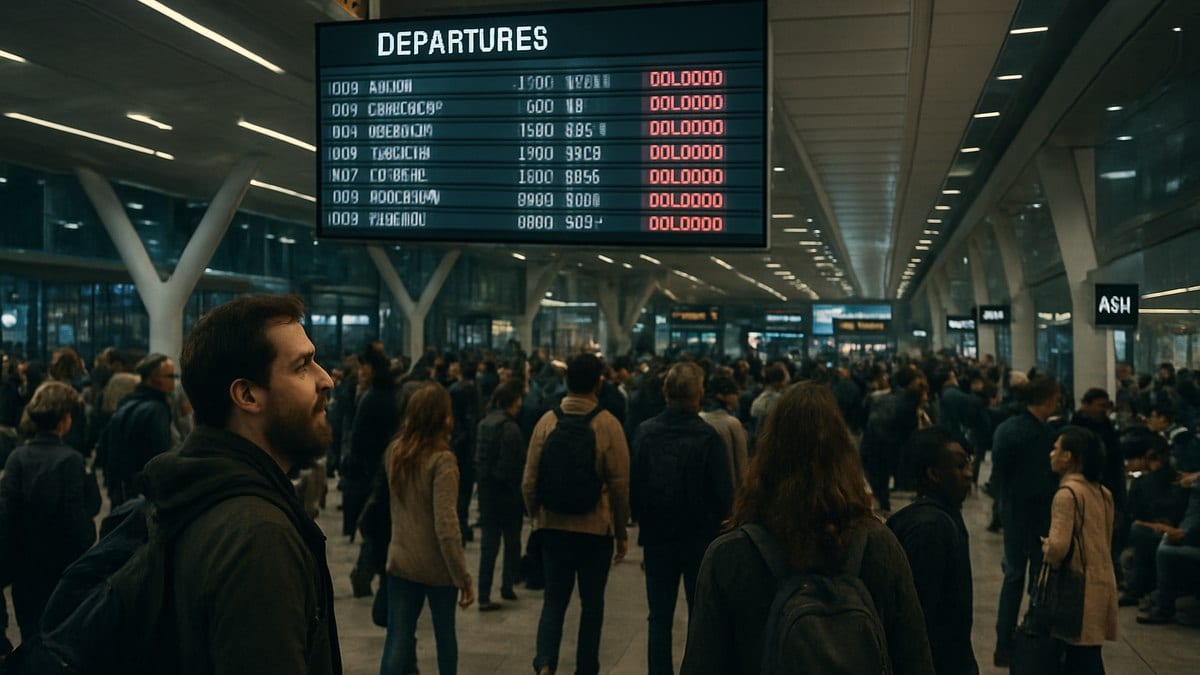
Reports from flight-tracking and travel-industry outlets indicate that Harry Reid International Airport in Las Vegas experienced extensive operational disruption on April 11, with over 250 flights running late and additional services canceled. The delays affected both arrivals and departures, creating long queues at gates and pushing many aircraft well behind schedule.
The problems in Las Vegas formed part of a wider pattern of nationwide disruption over recent days. Data highlighted in consumer and industry coverage points to more than 3,000 delayed flights and over 100 cancellations across key hubs including Las Vegas, Atlanta, Denver, Houston, Phoenix and Washington. Within that broader gridlock, Harry Reid emerged as one of the most heavily affected airports, with knock-on effects that stretched well into the evening schedule.
Travel-focused outlets describe a typical ripple effect: aircraft arriving late into Las Vegas forced subsequent departures to depart behind schedule, while congestion on taxiways and temporary air traffic management initiatives slowed the pace of takeoffs and landings. Many passengers arriving in the city faced missed connections, while others departing Las Vegas encountered gate changes and rolling delay estimates.
Publicly available information from aviation dashboards shows that the delays were concentrated during peak daytime and early evening periods, when leisure travelers, business passengers and convention visitors crowd onto outbound flights. The bunching of delays in those hours added strain on everything from gate availability to baggage handling.
Weather, Air Traffic Measures and Spring Crowds Converge
Published coverage attributes the Las Vegas disruption to a mix of external and local factors rather than a single incident. Weather systems over parts of the western and central United States, including rough conditions over the Rockies and gusty winds flagged in federal aviation advisories for the Las Vegas area in April, contributed to en route slowdowns and spacing requirements between aircraft.
Air traffic management initiatives reportedly played a significant role. When major hubs across the country encounter storms, low clouds or heavy congestion, federal air traffic command centers sometimes order ground delay programs or flow restrictions. These measures can require flights bound for affected airports to depart later than planned, which in turn keeps aircraft and crews out of position. Las Vegas-bound flights caught up in those controls arrived late, while departures from Harry Reid headed to constrained airports also faced extended waits.
At the same time, the disruptions landed during a period of strong demand. Travel-industry data for recent Aprils show Harry Reid handling millions of passengers a month, supported by a schedule dominated by leisure routes to and from major U.S. cities. With spring break trips, conferences and weekend getaways all converging, even modest schedule irregularities can quickly cascade into widespread delays.
Operational analysts note that Las Vegas also functions as a connecting point for some low-cost carriers. When aircraft on those point-to-point networks arrive late from other disrupted hubs, there is often less slack in the timetable to absorb the delay, helping to explain why certain airlines saw clusters of late-running flights on April 11.
Passengers Face Long Waits and Scrambled Plans
For travelers on the ground, the numbers translated into long hours in the terminal and significant changes to travel plans. Accounts compiled in local and national coverage describe passengers waiting at gates as departure times moved back in stages, with some flights pushed by several hours. Others reported missing onward connections or hotel check-in windows as delays accumulated.
With Las Vegas functioning as both a destination and a jumping-off point for other domestic and international routes, the disruption was particularly acute for those relying on tight connections. Some travelers arriving late into Harry Reid were rebooked on later flights or rerouted through other hubs, while those departing the city in the afternoon and evening often found themselves in crowded gate areas as multiple delayed departures overlapped.
Check-in and security operations at Harry Reid have generally been described as comparatively efficient in recent months, and new tools such as published TSA wait times on the airport’s website are designed to give passengers more predictability. On April 11, however, the primary bottlenecks were beyond the checkpoints. The backlog of delayed flights concentrated passengers in gate and concourse areas while pushing back boarding times and stressing access to seating, power outlets and food options.
Some travel advisories circulating online in response to the disruption urged passengers to build in extra connection time for trips involving Las Vegas and other heavily affected hubs, reflecting concern that spring weather and high demand are likely to keep pressure on schedules through the coming weeks.
Wider Strains on the U.S. Air Travel System
The situation in Las Vegas mirrors broader strains in the U.S. aviation system that have surfaced repeatedly in early 2026. Nationwide statistics referenced by air passenger rights organizations and travel-trade publications point to thousands of delays and more than a hundred cancellations on some recent days, with multiple hubs reporting similar patterns of rolling disruption.
Analysts reviewing publicly available data highlight several recurring themes. Weather remains a central factor, with storms, high winds and low ceilings prompting cautious spacing of flights and occasional ground stops. Air traffic control staffing and sector congestion can add further delays, particularly when demand spikes during holiday periods or major events.
Airline scheduling practices also come under scrutiny. Heavily optimized networks, especially among low-cost and leisure-focused carriers serving Las Vegas, can reduce built-in recovery time. When one flight is late, the aircraft and crew needed for the next departure are also delayed, amplifying the impact throughout the day. Reports following the April 11 disruption emphasize that some carriers serving Harry Reid have already been grappling with elevated delay totals at other hubs, making the system more vulnerable when conditions deteriorate.
Consumer advocates note that while severe weather and airspace restrictions are often categorized as outside an airline’s control, passengers still bear the practical consequences in the form of missed events, added hotel nights and rebooked itineraries. The Las Vegas disruption is being cited in this context as another example of how tightly stretched the system has become.
How Travelers Can Navigate Ongoing Disruptions
Given the recent turmoil at Harry Reid International and other major airports, travel experts and passenger-rights organizations are renewing guidance aimed at reducing the risk of severe inconvenience when delays strike. Recommendations circulating in public advisories emphasize booking earlier flights in the day whenever possible, since morning departures are less likely to be affected by the cumulative effects of nationwide delays.
Passengers are also encouraged to monitor their flight status through airline apps and airport information channels, and to enable notifications so that gate changes or revised departure times are received as early as possible. In situations similar to the April 11 disruption, where delays build progressively, real-time updates can help travelers decide whether to adjust ground transport, rebook tight connections or seek alternative routes.
Awareness of passenger rights is another recurring theme. U.S. consumer information portals explain that compensation rules vary depending on whether a delay stems from weather, air traffic control constraints or airline-controlled issues such as maintenance or crew scheduling. While the regulatory framework in the United States is more limited than in some other regions, publicly available guidance outlines what airlines typically provide in terms of meal vouchers, hotel accommodations or rebooking support in various scenarios.
For Las Vegas specifically, recent enhancements such as displaying TSA checkpoint wait times online may help travelers better plan their arrival at the airport. However, the events of April 11 underline that even a relatively smooth security experience cannot fully shield passengers from network-wide challenges. As spring travel continues, those passing through Harry Reid are being advised by many travel commentators to build extra time into itineraries and to prepare for the possibility of further disruption if weather and congestion continue to collide.