

More news on this day
Venezuela is pushing into a new era of connectivity as it reopens commercial airspace and welcomes back American Airlines, a move poised to turbocharge a fragile but rapidly growing tourism industry and reconnect millions of travelers with one of South America’s most complex and compelling destinations.
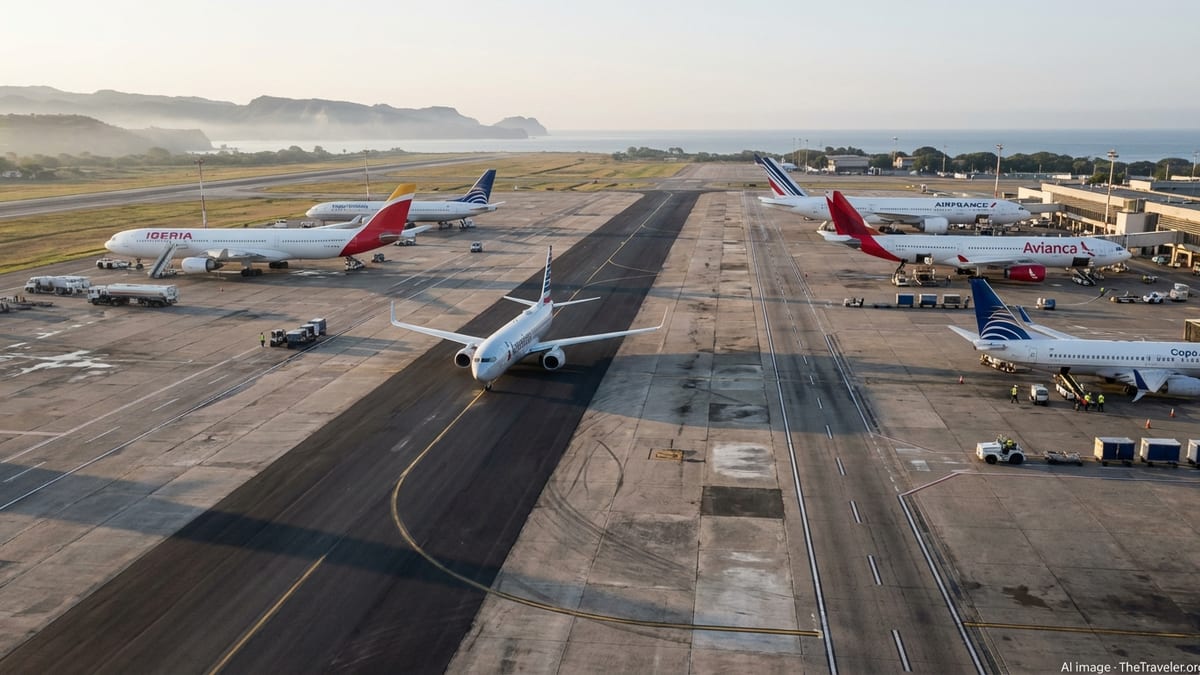
Airspace Reopens After Months of Turbulence
Venezuela’s announcement that its commercial airspace is once again open marks a dramatic turn from the flight disruptions and security warnings that dominated late 2025. Authorities in Caracas confirmed last week that international airlines can resume using Venezuelan skies and reestablish routes to the capital after a series of restrictions tied to military activity and geopolitical tension effectively severed many connections. The decision follows a rollback of U.S. aviation limitations in the wider Caribbean and near Venezuelan territory, which had forced carriers to cancel services or reroute at substantial cost.
For much of the past year, the country’s airspace had become a symbol of broader diplomatic and security uncertainty. Notices from aviation regulators overseas urged extreme caution, citing GPS interference, heightened military operations and the risk of miscalculation in a crowded sky. Airlines responded by trimming already thin schedules or suspending flights entirely, exacerbating Venezuela’s status as one of the region’s most isolated markets. The latest policy shift is now being read within the industry as a signal that the most acute phase of that crisis has passed, even if operational challenges remain.
The reopening is not an overnight reset. Carriers must still work through regulatory approvals, security assessments and operational planning before aircraft can be reliably put back into Venezuelan rotation. Yet the tone from both airline executives and tourism officials has shifted sharply from caution to guarded optimism. Schedules that had been frozen or quietly shelved are being dusted off, and network planners are once again modeling demand to and from Caracas for the first time in months on anything approaching a normal footing.
American Airlines Plots First Direct U.S. Flights Since 2019
At the center of the new optimism is American Airlines, which has unveiled plans to reinstate daily nonstop service between the United States and Venezuela. The carrier, historically the largest U.S. airline in the Venezuelan market, halted operations in 2019 when Washington barred direct commercial flights over safety and security concerns. Its forthcoming return would mark the first U.S. carrier to reconnect the two countries in more than six years, a symbolic and practical milestone for families, businesses and the Venezuelan diaspora.
American’s leadership has framed the move as both a commercial opportunity and a rekindling of a three-decade relationship with Venezuelan travelers. Before the suspension, the airline had built a loyal customer base, linking Caracas to major U.S. hubs and onward to hundreds of destinations. For many Venezuelans with relatives in Florida, Texas and beyond, those routes were a lifeline. Since 2019, travelers have been forced to rely on complex itineraries through third countries, often involving multiple tickets, tight connections and little consumer protection if things went wrong.
The proposed daily service, expected to launch later this year subject to regulatory signoff and security clearances, is designed to restore some of that lost simplicity. A single nonstop flight to a U.S. hub would once again allow passengers to check bags through to final destinations, earn and redeem frequent flyer miles and rely on a single set of airline policies in case of delays or cancellations. Travel agents say pent-up demand is significant, particularly among Venezuelan nationals who have postponed visits home because of the cost and complexity of current routings.
Industry analysts caution that the fine print still matters. American’s timeline depends on aviation regulators in both countries signing off on security protocols, airport readiness and airspace stability. Even after a formal relaunch, early schedules could be vulnerable to geopolitical shifts and operational hiccups. Nevertheless, network planners note that a successful resumption by the largest U.S. carrier would likely pave the way for additional U.S. operators or codeshare arrangements, deepening the transcontinental bridge that has been closed for most of the last decade.
International Carriers Join a Coordinated Comeback
While American Airlines’ move grabs headlines for its political and emotional resonance, it is only one part of a broader reopening of Venezuela’s skies. In recent weeks, several major international airlines have confirmed or resumed routes into Caracas, signaling a vote of confidence in the country’s aviation outlook. European carriers including Air Europa and Iberia, long considered bellwethers for Latin American connectivity, are restoring links from Madrid, while Plus Ultra reinforces additional Spain services that are popular with both leisure travelers and members of the Venezuelan community abroad.
From beyond Europe, Turkish Airlines is rebuilding its network into Caracas, offering long-haul connectivity that reaches deep into the Middle East, Africa and Asia through Istanbul. Regional players such as Avianca are also repositioning Caracas within their South American networks, reconnecting it to key hubs in Colombia and beyond. These resumptions arrive after a period when Venezuela’s international map had been drastically reduced, with many long-haul markets cut off or limited to a handful of frequencies each week.
For airlines, the decision to return is a balance of risk and reward. Venezuela’s macroeconomic and political conditions remain challenging, yet yield potential on these routes can be attractive when competition is limited and demand is driven by a mix of visiting friends and relatives, business travel and tourism. Network planners point to strong load factors on the few flights that continued to operate even during the height of restrictions, arguing that a normalized airspace regime should support a measured expansion of capacity.
The growing roster of returning carriers also has a network effect that benefits passengers. As more airlines serve Caracas, interline agreements and alliance partnerships multiply, allowing travelers to mix and match itineraries while benefiting from through-check-in and coordinated schedules. For a tourism sector eager to lure back operators that package Venezuela with neighboring destinations, these evolving connections are central to building itineraries that make commercial sense.
Tourism Surge Meets New Access to the Country
The timing of the airspace reopening and airline comeback aligns with what Venezuelan officials say is a pronounced surge in international tourism. The government has reported millions of foreign visitors in the most recent travel year, a figure that represents strong double-digit growth compared with prior periods and reflects an aggressive campaign to diversify the economy beyond oil. New tourist corridors, coastal resorts and cultural routes have been promoted to markets in Europe, Russia, the Middle East and neighboring Latin American countries.
Until now, that surge has unfolded despite limited airlift and a patchwork of available routes that often required two or three stops to reach major source markets. Travelers from Europe typically funneled through Madrid, Lisbon or Istanbul. Visitors from North America frequently routed via Panama City, Santo Domingo or Bogotá, adding cost and uncertainty to trips. Tour operators say the reactivation of more nonstop and one-stop options, particularly from the United States, could act as a force multiplier for visitor numbers if security conditions stabilize.
Domestic tourism infrastructure has been slowly expanding to keep pace. Investment has flowed into coastal destinations such as Margarita Island and the Paraguaná Peninsula, as well as into adventure hubs that serve the Gran Sabana and the Orinoco basin. Boutique hotels, community-based tourism projects and renovated city properties in Caracas and other urban centers are targeting travelers seeking authentic local experiences rather than mass-market packages. Greater air connectivity, advocates argue, will help fill these beds and justify continued upgrades in service quality and safety standards.
Local stakeholders stress that a tourism boom must be inclusive to be sustainable. Community groups involved in neighborhood-based gastronomy, music and cultural projects have been integrated into some of the new official “routes,” providing income and visibility but also raising expectations around fair treatment and long-term support. With more foreign visitors likely to arrive, demands for reliable infrastructure, transparent pricing and responsible development are expected to sharpen.
Economic Ripple Effects for a Country in Transition
Beyond the arrivals hall, the restoration of flights carries significant implications for Venezuela’s broader economy. Aviation is a key enabler of trade, investment and labor mobility, and the multi-year drop in connectivity has weighed heavily on sectors from hospitality to import-dependent retail. Each new frequency into Caracas is expected to stimulate ancillary demand in airport services, catering, ground transport and logistics, creating jobs in a country still grappling with high underemployment and a history of mass emigration.
Economists note that renewed links with the United States are particularly important. Direct flights support not only tourism but also business travel tied to energy, finance and technology, as well as the flow of remittances from Venezuelans living abroad. Many of those expatriates have been unable or unwilling to return regularly because of cost and logistical uncertainty. A more predictable flight network could gradually reverse that pattern, boosting spending on everything from hotels and restaurants to domestic travel within the country.
Improved air access also intersects with efforts to reposition Venezuela as a regional transit and cargo hub. The country’s geographic location on the northern edge of South America makes it a natural bridge between the Caribbean, the Amazon Basin and Atlantic shipping lanes. If regulatory conditions stabilize and infrastructure bottlenecks are addressed, some analysts believe Caracas could recapture a slice of the connecting traffic that has flowed through Panama City, Bogotá and São Paulo in recent years.
However, the gains are not guaranteed. Persistent concerns over legal predictability, currency volatility and the overall business climate continue to temper foreign investment interest. Airlines returning to Venezuela are doing so cautiously, often with modest initial schedules and contingency plans in place. The durability of the tourism and aviation upswing will depend heavily on whether the current period of relative openness is matched by concrete improvements in security, governance and macroeconomic management.
Security, Insurance and Advisory Warnings Still in Focus
Despite the upbeat narrative around reopened skies, travel risk specialists emphasize that conditions on the ground remain complex. Many international advisories continue to urge caution or discourage nonessential travel to Venezuela, citing crime, political instability and infrastructure gaps. Insurance providers and professional tour operators have been slow to return, pointing to unresolved questions around liability, medical evacuation and reliable local partners. For now, much of the renewed tourism growth is being driven by independent travelers and diaspora visitors who are more familiar with local realities.
Operationally, airlines will be watching security metrics closely. Past FAA warnings about potential hazards in and around Venezuelan airspace have underscored how quickly conditions can change. Carriers are investing in enhanced route monitoring, crew training and contingency planning in case of renewed restrictions. Some have already built flexibility into schedules and fleet assignments so flights can be adjusted or rerouted with minimal disruption if risk assessments deteriorate.
Airports and ground infrastructure also face scrutiny. Caracas’s main international gateway has endured years of underinvestment, intermittent power issues and limited modernization. Recent efforts to upgrade basic services, install more reliable screening equipment and refresh passenger areas are a start, but carriers and travelers alike will be watching to see how these facilities handle a renewed influx of international traffic. The perception of safety and professionalism at the airport can strongly influence whether first-time visitors feel comfortable returning.
For travelers considering Venezuela as a destination, experts recommend paying close attention to airline notices, route changes and updated travel advisories in the coming months. While the reopening of airspace and the return of marquee carriers reduce logistical barriers, assessing personal risk tolerance remains essential. Flexible tickets, comprehensive travel insurance where available and coordination with trusted local contacts are likely to remain part of the planning checklist for many visitors.
Caracas as a Reconnected Gateway to a Diverse Country
As airlines restore their presence, Caracas is once again emerging as a primary gateway to one of South America’s most geographically diverse nations. From the Caribbean-facing coastline and offshore islands to Andean peaks, dense rainforest and vast plains, Venezuela offers a range of landscapes that have long intrigued travelers but were difficult to reach reliably in recent years. Improved flight options into the capital give tourism operators fresh leverage to sell not only Caracas itself but also multi-stop journeys that fan out across the country.
Within the city, stakeholders are working to polish an image that has often been overshadowed by political headlines. Hoteliers highlight a growing inventory of renovated properties, from international-branded hotels catering to business travelers to independent guesthouses targeting younger visitors. Restaurateurs and cultural entrepreneurs are betting that an influx of foreign guests will energize culinary scenes, music venues and street-level cultural programming that have remained vibrant despite economic strain.
Regional destinations stand to benefit as well. Coastal resorts reachable via short domestic hops from Caracas are positioning themselves as lower-density alternatives to more crowded Caribbean islands, emphasizing nature, local culture and value for money. Adventure tourism operators in the interior report increased inquiries from international clients interested in tepui trekking, birdwatching and river expeditions, experiences that require stable air links into the country as a first step.
For Venezuelans who have lived through years of isolation, the sight of international aircraft returning to Maiquetía’s tarmac carries emotional weight that extends beyond tourism statistics. Each new tailfin represents a partial normalization of daily life and a reconnection with a world many felt had moved on without them. Whether this moment marks the beginning of a sustained boom or a temporary uptick will depend on decisions made far above the runway. For now, though, the reopening of airspace and the scheduled return of American Airlines have given Venezuela’s long-grounded tourism ambitions a powerful new lift.