

More news on this day
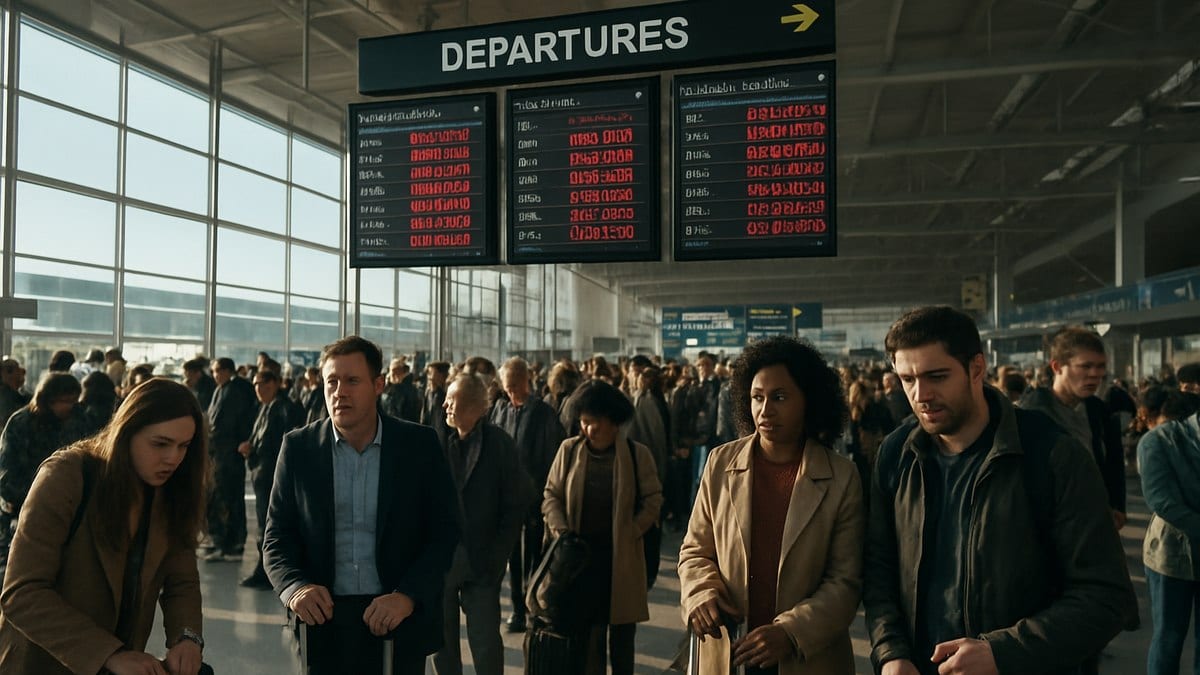
Hundreds of passengers were left in limbo at Vienna International Airport after 81 flights were reported delayed in a fresh wave of disruption that rippled through Europe’s already stretched aviation system.
Get the latest news straight to your inbox!
Heavy Delays Hit Key Central European Hub
The latest disruption unfolded at Vienna International Airport as delays mounted through the day, affecting both arrivals and departures across short and medium haul routes. Publicly available flight tracking data and industry monitoring platforms indicate that 81 services failed to depart or arrive on schedule, with knock on effects for connecting passengers across the continent.
The delays at Vienna came amid a broader pattern of instability in European air travel in early April 2026, with several hubs reporting elevated levels of late running traffic and missed connections. Vienna’s role as a transfer point between Western and Eastern Europe meant that even modest schedule slippage quickly translated into missed onward flights, leaving travelers stranded in terminals and transit areas.
Operational data published in recent punctuality reports show that Vienna typically maintains relatively strong on time performance, which has made the sudden spike in disrupted services particularly disruptive for airlines and passengers used to more predictable schedules. The shift from largely smooth operations to widespread delays over the course of a single day illustrates how quickly conditions at a hub airport can deteriorate once pressure begins to build.
Passenger accounts shared on social platforms and travel forums describe long queues at customer service desks and crowded departure lounges as travelers waited for rerouting, hotel vouchers or revised departure times. Some reported waiting several hours before receiving updated information about their flights, underlining the communication challenges that often accompany large scale disruptions.
Weather, Congestion and Network Knock On Effects
Although detailed causation data for each individual flight has not been published, regional reporting points to a combination of adverse weather in parts of Europe, airspace restrictions linked to ongoing geopolitical tensions, and congestion at other major hubs feeding traffic into Vienna. Similar patterns have been documented at airports in Germany, Spain, the Netherlands and the United Kingdom in recent days, where hundreds of delays and dozens of cancellations have been recorded in a single 24 hour period.
Travel and aviation analysis outlets have highlighted how even a relatively small number of weather related disruptions or air traffic flow restrictions can rapidly cascade when they affect tightly timed hub and spoke networks. When early morning flights are delayed, aircraft and crew are frequently out of position for the rest of the day, creating a rolling backlog that can be difficult to clear before the evening peak.
Vienna’s connectivity to multiple regional and long haul destinations appears to have amplified the impact of delays on passengers. Travelers arriving late from other European or Middle Eastern airports often found that their onward connections from Vienna had already departed, resulting in missed itineraries even where the original delay was shorter than three hours.
Industry observers also point to continuing strain across European air traffic management, where staffing, weather and airspace limitations have combined to reduce flexibility when irregular operations occur. In such an environment, an event that might once have been absorbed with minor schedule adjustments can now lead to widespread delays and a noticeable spike in stranded passengers.
Hundreds Stranded as Rebooking Systems Struggle
Reports from passengers at Vienna during the disruption describe crowded rebooking counters and heavy demand on digital channels as travelers attempted to secure new itineraries. Airlines operating through the airport appeared to prioritize same day rebooking where possible, but limited seat availability on alternative flights left many facing overnight stays or extended layovers.
Some travelers reported being rebooked via alternative hubs in Germany, Italy or the Netherlands, adding additional connections and travel time to journeys that were originally planned as straightforward one stop itineraries through Vienna. Others indicated that they were offered travel on later dates due to a lack of same day options, particularly on popular business routes and long haul connections.
The disruption also affected baggage handling and ground operations. Passengers who missed onward flights after arriving late into Vienna reported difficulties locating checked luggage that had already been routed toward original final destinations. In many cases, bags were separated from their owners as airlines worked to protect mainline schedules and avoid further knock on delays.
Travel consumer advocates note that such scenes are becoming more common as air traffic returns to or exceeds pre pandemic levels while staffing and infrastructure investment lag behind demand. Episodes like the Vienna disruption serve as a reminder that even when cancellations remain relatively limited, a high volume of delays alone can leave large numbers of travelers stranded without clear information or easy alternatives.
Passenger Rights and What Travelers Can Expect
The disruption at Vienna has once again pushed European passenger rights rules into the spotlight. Under Regulation EC 261, travelers departing from an airport in the European Union or arriving on an EU carrier may be entitled to care and assistance during long delays, including meals, refreshments and hotel accommodation where overnight stays become unavoidable.
Compensation in the form of fixed cash payments can apply in certain circumstances, depending on the length of the delay, the distance of the flight and the underlying cause. Advisory services emphasize that if disruption stems from extraordinary circumstances such as severe weather, airspace closures or certain security issues, compensation may not be payable, although airlines are still expected to provide basic care and support.
Consumer guidance suggests that passengers impacted by the Vienna delays should keep boarding passes, booking confirmations and receipts for any essential expenses incurred while stranded, such as meals or accommodation booked independently when airline provided options were unavailable. These documents can be important if travelers later submit claims through airline customer service channels or specialized claims services.
Travel analysts also recommend that passengers use airline apps and official communication channels as early as possible when disruption becomes apparent, rather than waiting in physical queues, since inventory for alternative flights is often allocated on a first come, first served basis. In events where hundreds of passengers are seeking rebooking at the same time, being among the first to request changes can significantly increase the chances of securing a workable alternative.
Broader Questions About Europe’s Readiness for Peak Season
The incident in Vienna is adding to wider concerns about Europe’s readiness for the busy summer travel season. In recent weeks, several major airports have reported elevated levels of delay and cancellation, driven by a mix of weather volatility, airspace constraints and operational challenges. Analysts warn that if such problems are not addressed, travelers could face a repeat of the long queues and last minute schedule changes that characterized some previous peak seasons.
Recent European punctuality data underline how tightly balanced current operations have become, with many airports operating close to capacity during peak hours. In such conditions, even modest disturbances can lead to disproportionate disruption for passengers, particularly at transfer hubs like Vienna where missed connections quickly multiply the number of people affected.
For Austria, the latest episode also carries reputational implications. Vienna International Airport is a key gateway for tourism and business travel, and its reliability is central to the country’s image as a stable, well connected destination. While the airport’s long term punctuality metrics remain comparatively strong, a run of highly visible disruption events risks eroding traveler confidence if they become more frequent.
Travel industry observers note that the Vienna disruption could prompt renewed discussion about investment in resilience measures, including additional staffing buffers, more flexible scheduling and improved real time communication tools. As passengers stranded in the terminals weigh alternative routes and carriers for future trips, the pressure will be on airlines and airports to demonstrate that lessons are being learned from each new wave of delays.