


More news on this day
Travel across parts of Europe faced fresh disruption on 5 July as operational problems at Vienna International Airport led to at least 82 delayed departures and eight cancellations, affecting flights to Brussels, Paris and Helsinki operated by Austrian Airlines, Lauda Europe, Air Baltic and other carriers.
Get the latest news straight to your inbox!
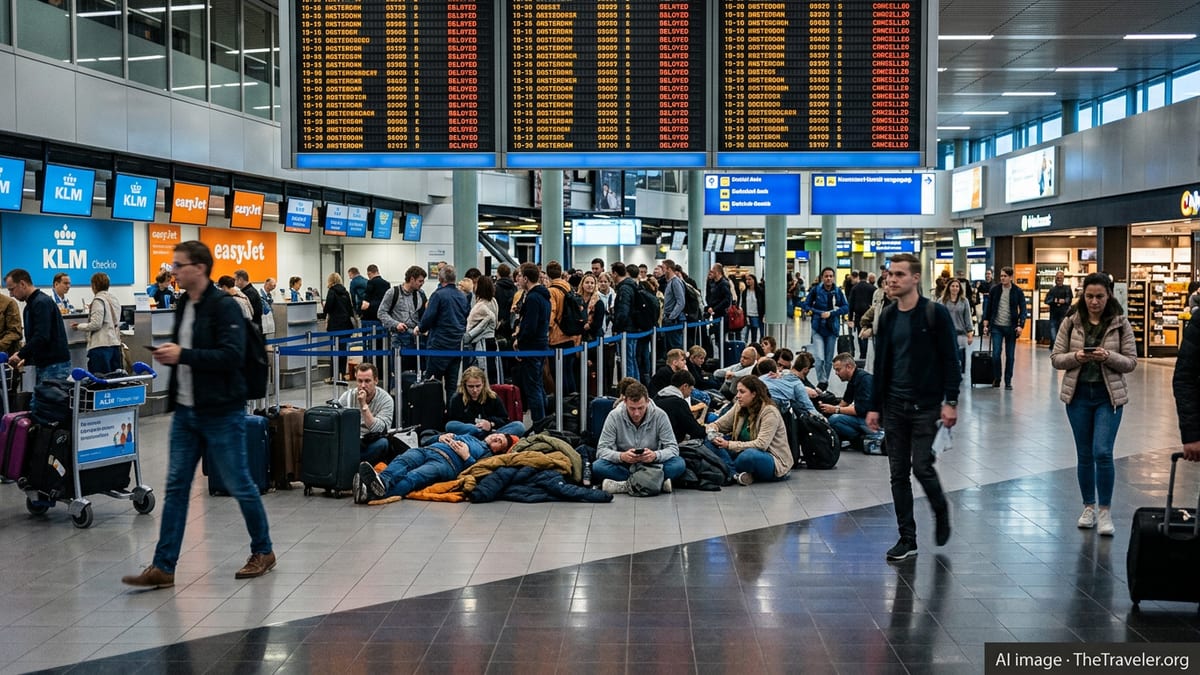
Widespread Delays Centered on Vienna Hub
Publicly available departure boards for Vienna International Airport on 5 July show an elevated number of late-running flights across the morning and early evening peaks, with delays frequently stretching beyond one hour on short and medium haul services. Aggregated data for the day indicate that at least 82 departures suffered significant disruption, alongside eight outright cancellations, creating knock-on effects across the European network.
Vienna International Airport serves as the main hub for Austrian Airlines and a base for several low-cost and leisure carriers. This concentration means that irregular operations at the airport can quickly spread to multiple destinations, especially heavily trafficked routes such as Brussels, Paris and Helsinki. Punctuality statistics published earlier in 2026 already pointed to growing pressure on airport and airline schedules in the region, and the 5 July disruption appears to reflect that broader trend.
Information from independent flight-tracking platforms suggests that the delays were not confined to one carrier or aircraft type, but instead cut across the schedule. Short intra-European flights, which normally help airlines recover from minor delays, instead accumulated additional hold-ups as aircraft and crews cycled through the Vienna hub.
Brussels, Paris and Helsinki Services Among the Hardest Hit
Routes connecting Vienna with the political and commercial centers of Brussels and Paris, along with the Nordic hub of Helsinki, were among the most affected. These city pairs play an important role for both business and leisure travelers, linking European Union institutions, major corporate bases and popular tourism destinations.
Tracking data for Vienna to Paris services on 5 July show departures pushed back from their planned evening slots, with some flights leaving later than scheduled and compressing turnaround times at Paris Charles de Gaulle. Even relatively small departure delays out of Vienna can lead to missed connections for onward long-haul flights, a particular concern for travelers relying on evening banks from Paris to North America and Africa.
Connections involving Brussels and Helsinki also experienced significant disruption. Flights arriving late into Vienna from Brussels curtailed the time available for subsequent departures, while services on the Vienna to Helsinki corridor faced extended delays that stretched into the following day’s rotations. For passengers, that translated into long waits in terminals, rebookings and, in some cases, overnight stays when onward connections could no longer be maintained.
Austrian Airlines, Lauda Europe, Air Baltic and Others Affected
As the principal hub carrier, Austrian Airlines bore much of the visible impact, with its Vienna based network experiencing delays across multiple European routes. Publicly accessible operational performance summaries for the airline in recent weeks already showed a moderate level of schedule pressure, and the events of 5 July added further strain to its on-time record.
Other operators closely linked to Vienna were also caught up in the disruption. Lauda Europe, which runs a range of low-cost services from the airport, faced delays on popular leisure routes as aircraft arriving late from one destination were turned around for another. For travelers heading to or from Mediterranean holiday spots, this meant lost time at resorts or curtailed weekends back home.
Air Baltic, which cooperates with Austrian on several routes, also experienced schedule issues linked to Vienna operations. Flight information for services connecting Vienna with Brussels and Paris under Air Baltic flight numbers indicated cancellations or absence from the day’s roster, reflecting adjustments made to limit the spread of delays across its broader network. These disruptions highlighted the interconnected nature of airline partnerships, where problems at one hub can complicate planning for multiple carriers.
Network Ripple Effects Across Europe
The Vienna disruptions did not occur in isolation. Network performance briefings for Europe in June and early July had already identified Vienna as one of several large airports experiencing elevated air traffic flow management delays, alongside major hubs such as Paris Charles de Gaulle and Brussels. When conditions at these airports deteriorate simultaneously, even modest operational problems can quickly cascade.
According to recent punctuality reports covering European airports, both Brussels and Paris have been operating with on-time performance levels that leave little margin to absorb additional strain. Airlines using Vienna as a connecting point into these markets therefore faced a complex challenge, as late arrivals and departures at one end of the route fed into existing constraints at the other.
Because Brussels, Paris and Helsinki all function as key transfer points in their respective regions, disruption on Vienna based flights can strand travelers far from their intended final destinations. Missed connections can affect itineraries reaching as far as North America, the Middle East and Asia, particularly for passengers booked on through-tickets combining multiple European and intercontinental legs.
What Travelers Can Expect in the Coming Days
Operational data from European air navigation and airport performance bodies suggest that pressure on the continent’s air traffic system is likely to remain elevated during the peak summer period. While Vienna’s 5 July disruption reflects a particularly difficult day, punctuality figures over recent months indicate that further episodes of concentrated delays are possible, especially during busy weekends and holiday peaks.
For travelers planning routes through Vienna, Brussels, Paris or Helsinki in the coming days, publicly available guidance from airlines and airports generally stresses the importance of allowing additional time for connections and checking flight status frequently. Passengers with tight transfers, especially those linking to long-haul services, may be more exposed to missed flights when a hub experiences the type of disruption seen in Vienna on 5 July.
As airlines such as Austrian, Lauda Europe and Air Baltic work to stabilize their schedules following the latest wave of delays and cancellations, further tactical changes to timetables remain possible. Travelers are therefore likely to see a mix of schedule adjustments, equipment changes and, in some cases, short-notice cancellations as operators seek to restore regular operations across their European networks.