

More news on this day
Vietnam Airlines will launch a new nonstop route between Hanoi and Amsterdam on June 16, 2026, significantly enhancing direct air connectivity between Vietnam and the Netherlands and reinforcing the national carrier’s ambitions in the European market.
Get the latest news straight to your inbox!
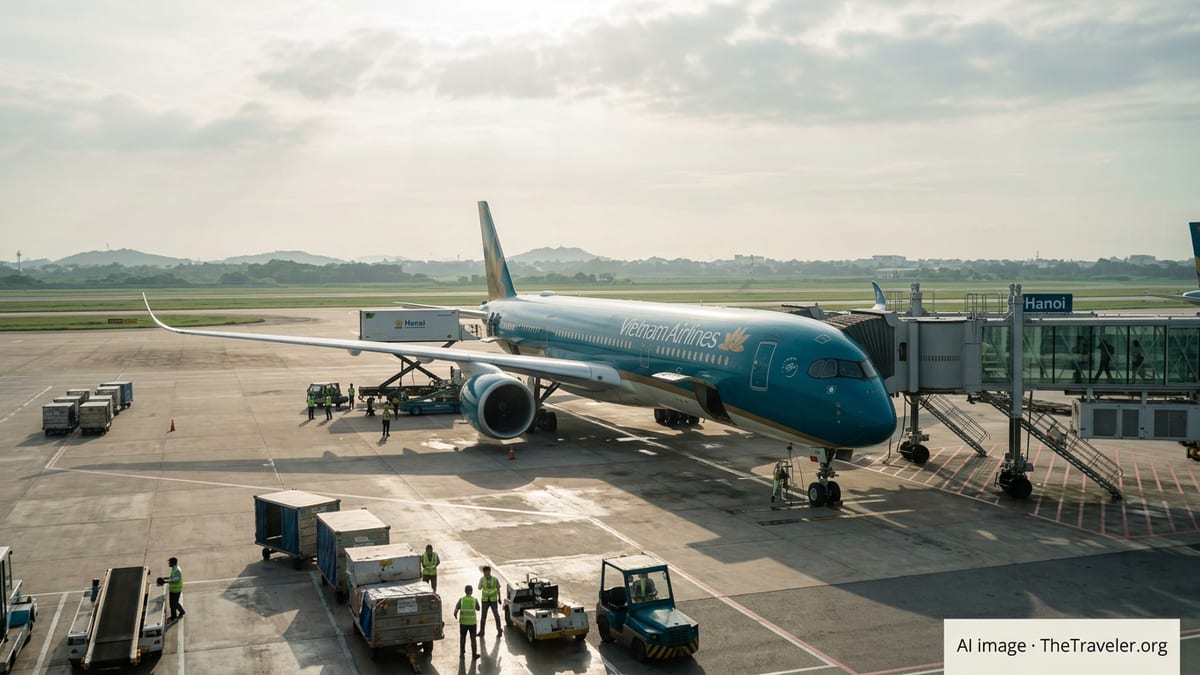
New European Gateway for Vietnam’s Flag Carrier
The upcoming Hanoi–Amsterdam service marks Vietnam Airlines’ latest expansion into Europe, adding the Dutch capital to an existing network that already includes key hubs such as Paris, Frankfurt and London. The new route will operate from Noi Bai International Airport in Hanoi to Amsterdam Schiphol, one of Europe’s busiest and best connected airports.
By opening a direct link between the Vietnamese and Dutch capitals, the airline aims to provide travelers with a faster, more convenient option that avoids time consuming transfers through third country hubs. The flight will also give passengers easier one stop connections from Amsterdam to other destinations across Europe, leveraging the Dutch airport’s extensive onward network.
Industry observers see the move as a logical step in Vietnam Airlines’ long term international growth strategy. In recent years, the carrier has been rebuilding and rebalancing its long haul network, and Amsterdam’s role as both a business and leisure gateway makes it a natural addition to the airline’s European portfolio.
Boost for Tourism, Trade and Education Links
The direct Hanoi–Amsterdam route is expected to stimulate two way tourism between Vietnam and the Netherlands at a time when travel demand to Southeast Asia continues to rise. Dutch leisure travelers are increasingly drawn to Vietnam’s beaches, cultural heritage sites and nature destinations, while Vietnamese tourists have shown growing interest in European city breaks and multi country itineraries.
Beyond tourism, the new flights are set to strengthen trade ties. The Netherlands is already one of Vietnam’s key economic partners in Europe, serving as both an investor and a gateway for Vietnamese goods entering the European Union. A nonstop connection from Hanoi is likely to support business travel for executives, investors and technical specialists shuttling between the two countries.
Education and people to people exchanges may also benefit. Thousands of Vietnamese students and researchers are enrolled at Dutch universities or engaged in joint academic projects. A nonstop link from the Vietnamese capital to Amsterdam could make study abroad, research collaboration and family visits more straightforward and time efficient, reinforcing long term ties between the two societies.
Improved Connectivity for Northern Vietnam
The launch date of June 16, 2026 places the inaugural flight at the start of the busy northern summer travel season in Europe, when demand for long haul leisure travel typically peaks. Travelers from Hanoi and the wider Red River Delta region will gain a new option for reaching Europe without backtracking through Ho Chi Minh City or connecting via regional hubs.
Noi Bai International Airport has been steadily expanding its role as a long haul gateway for northern Vietnam, with a growing list of direct services to Europe and other regions. The Hanoi–Amsterdam route will further diversify choices for passengers in cities such as Hai Phong, Ha Long and Ninh Binh, who can connect via short domestic or ground transfers to access the new international service.
For Vietnam Airlines, the route helps balance its international footprint between north and south. While Ho Chi Minh City remains a major hub, additional long haul services from Hanoi provide operational flexibility and help the carrier tap into distinct regional demand patterns within the country.
Strategic Timing Amid Rising Demand
Launching the Hanoi–Amsterdam route in mid 2026 allows Vietnam Airlines to respond to steadily recovering global travel demand while giving the carrier time to finalize operational details, marketing campaigns and partnerships in the Dutch market. The timing also aligns with a broader trend of airlines rebuilding or adding long haul services between Asia and Europe as passenger confidence returns.
Amsterdam Schiphol’s status as a major European hub is expected to play a central role in the route’s success. The airport offers a dense network of flights across the continent and beyond, giving passengers from Vietnam a wide range of one stop connections. At the same time, European travelers will gain a direct gateway to northern Vietnam, with onward connections inside the country available through Vietnam Airlines’ domestic network.
Travel agents and corporate travel managers are likely to monitor the new service closely as they plan itineraries for 2026 and beyond. If demand proves robust, the route could eventually see increased frequencies, seasonal adjustments or complementary services from other Vietnamese or European carriers.
Positioning Vietnam as a Regional Aviation Hub
The new Hanoi–Amsterdam link underscores Vietnam’s broader ambitions to develop into a regional aviation hub. As international carriers add capacity and local airlines open new routes, the country is positioning its major airports as gateways connecting Southeast Asia with Europe, Northeast Asia and Oceania.
Vietnam Airlines, as the national flag carrier, is central to that effort. Each additional long haul route widens the country’s global reach, supports tourism campaigns and signals confidence in Vietnam’s economic and infrastructural development. By directly linking Hanoi with a major European hub such as Amsterdam, the airline reinforces the perception of Vietnam as an accessible, well connected destination for both leisure and business travelers.
While full operational details of the Hanoi–Amsterdam service, including weekly frequency and exact schedules, are still to be confirmed closer to launch, the announcement of a June 16, 2026 start date already marks a significant milestone. For travelers, businesses and institutions on both sides, the route promises a more seamless bridge between Vietnam and the Netherlands and adds fresh momentum to the expanding corridor between Southeast Asia and Europe.