

More news on this day
Vietnam’s aviation sector is entering one of its most turbulent periods since the pandemic as carriers move to cut flights and pare back routes in response to a worsening jet fuel squeeze and a sharp spike in operating costs.
Get the latest news straight to your inbox!
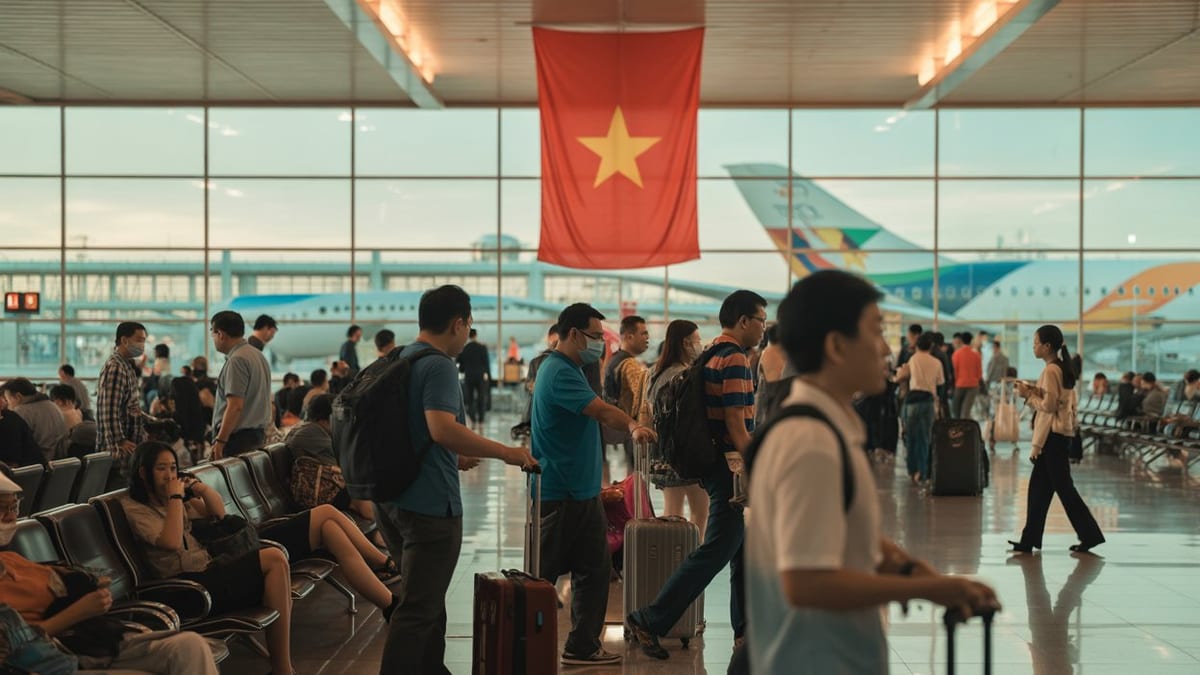
Image by Global Travel Alerts, Advisories, International Travel Alerts
Fuel Shock Pushes Carriers Into Emergency Mode
Publicly available market data show international jet fuel benchmark prices more than doubling from early-year levels, with Singapore Jet A1 assessments surging well beyond 200 dollars per barrel in early March. The spike has been driven by renewed geopolitical tension in the Middle East and concerns over supply interruptions along key shipping lanes, pushing fuel to the top of airlines’ cost worries almost overnight.
In Vietnam, industry analyses indicate that fuel accounts for roughly one third or more of airlines’ total operating expenses in normal times. With current price jumps, local assessments suggest monthly operating costs at major carriers could be rising by 50 to 60 percent compared with pre-crisis levels, leaving little room to absorb the shock under existing regulated fare caps on many domestic routes.
According to published coverage, the Civil Aviation Authority of Vietnam has warned that tight fuel supply at domestic airports is compounding the price surge, creating a dual challenge of higher costs and constrained availability. The authority has formally proposed a package of relief measures modelled on pandemic-era support, including tax and fee reductions and permission for temporary fuel surcharges on domestic tickets.
Reports also highlight that the government had already moved earlier to lift the ceiling on some domestic airfares to reflect rising structural costs. The latest fuel shock, however, appears to have outpaced those adjustments, forcing airlines to look beyond pricing tools and into deeper capacity cuts across their networks.
Vietnam Airlines Leads Wave of Capacity Reductions
The most immediate sign of strain is coming from the national flag carrier. According to recent statements cited in regional news coverage, Vietnam Airlines plans to cancel 23 flights per week across several domestic routes from early next month, explicitly linked to the emerging jet fuel shortage and the need to conserve limited supplies.
The reductions are expected to hit some of the country’s busiest corridors, including services connecting Hanoi and Ho Chi Minh City with secondary cities such as Da Nang and Nha Trang. While the planned cuts represent only a small percentage of total weekly operations, analysts note that they arrive just ahead of the late April and early May holiday period, when demand typically surges and spare capacity is scarce.
Publicly available information from the Civil Aviation Authority indicates that regulators have instructed Vietnam Airlines and its peers to publish schedule changes as early as possible and prioritize key trunk routes where alternative ground transport is limited. At the same time, the authority has urged carriers to redesign flight plans to minimize fuel burn, including through more efficient aircraft deployment and schedule consolidation.
Travel industry observers say the latest cuts follow an already demanding period of recovery in which Vietnam Airlines increased fuel consumption significantly as international traffic bounced back. Financial disclosures show the carrier’s fuel use in 2024 climbed well above 2023 levels, underscoring how exposed the airline now is to any sudden shock in Jet A1 prices.
Low-Cost and Private Airlines Tighten Networks
Vietnam’s private and low-cost airlines are also being pulled into the turbulence. Budget carrier Vietjet, which has grown rapidly on both domestic and regional routes, is widely expected to review flight frequencies and seasonal capacity in the months ahead as fuel bills escalate. Company disclosures and analyst reports show that Vietjet has invested heavily in fuel-saving initiatives and selective use of sustainable aviation fuel, but these long-term measures cannot fully offset the scale of the current price spike.
Bamboo Airways, already in the midst of a deep restructuring, has substantially scaled back its operations over the past year, concentrating on a small core of domestic routes and suspending most scheduled international services. Public filings and local media coverage describe a slimmed-down fleet and a focus on financial stabilization, leaving the carrier with limited flexibility to add capacity at a time when the wider network is under pressure.
Smaller players such as Sun Air and regional charter operators are reported to be reassessing their schedules as well, particularly on fuel-intensive leisure and island routes. Industry commentary suggests these carriers are likely to ground less efficient aircraft, consolidate lightly booked services and push more aggressively into charter or ad hoc operations where fuel costs can be priced into bespoke contracts.
Across the market, analysts point out that the current situation is accelerating trends already visible since late 2023, when high fuel prices and lingering post-pandemic debt pushed Vietnamese airlines to focus on yield management and route profitability rather than pure volume growth.
International Routes Face Cancellations and Higher Fares
The impact is not confined to domestic travel. Regional aviation monitoring and travel industry forums indicate that Vietnam-linked international services are starting to see targeted cancellations and capacity trims as airlines prioritize routes with stronger yields and more secure fuel arrangements.
Korean and other Northeast Asian carriers serving Vietnam have reportedly adjusted their schedules due to higher fuel uplift costs at Vietnamese airports, with some operators temporarily suspending or reducing flights to coastal destinations popular with tourists. At the same time, Vietnam-based airlines are reported to be scaling back marginal international routes, particularly those requiring long sectors or operating into airports where fuel logistics are complex.
Travel agencies in key source markets cite a noticeable uptick in rebookings and itinerary changes for passengers traveling through Vietnamese hubs. Some long-haul travelers are being rerouted via alternative regional gateways as carriers seek to concentrate scarce fuel supplies on core networks and alliance-connected flights.
On the pricing side, published fare data already show higher average ticket prices on a number of Vietnam-related international routes compared with the same period a year earlier. While part of this reflects strong post-pandemic demand, analysts note that supplemental fuel surcharges and tighter capacity are now playing a growing role in fare movements.
What Travelers Should Expect in the Coming Weeks
For passengers planning trips to, from or within Vietnam in the near term, the evolving fuel crisis translates into a higher risk of schedule changes and a reduced choice of departure times. Travel advisors recommend that passengers monitor their bookings closely, particularly on flights scheduled from April onward, when airlines are expected to implement broader capacity adjustments for both domestic and international services.
Consumer watchdogs and travel law specialists note that Vietnamese regulations and airline policies typically provide options such as rebooking, rerouting or refunds when flights are significantly rescheduled or cancelled. However, the practical experience can vary depending on the carrier, booking channel and fare type, making early communication and documentation important for travelers seeking remedies.
Industry commentary suggests that airlines will try to shield peak holiday periods and primary business routes from the most severe cuts, but shoulder-season flights, late-evening departures and lightly booked services are more likely to disappear from timetables. Travelers connecting between domestic and international legs on separate tickets are seen as particularly vulnerable to disruption if one segment is altered.
Looking ahead, analysts say the trajectory of global oil prices and any easing of supply constraints at Vietnamese airports will determine how long the current disruption lasts. If fuel prices remain elevated into the second half of 2026, Vietnam’s carriers may be forced into further structural changes, including deeper fleet rationalization and more aggressive pursuit of fuel-efficient aircraft and alternative fuels. For now, the message for travelers is clear: Vietnam remains open for business, but flying there is entering a more volatile and capacity-constrained phase.