

More news on this day
Vietnam is in the midst of a powerful tourism surge, with visitors from China, South Korea and the United States pushing arrivals beyond pre-pandemic highs and turning the country into one of Asia’s fastest-growing travel markets.
Get the latest news straight to your inbox!
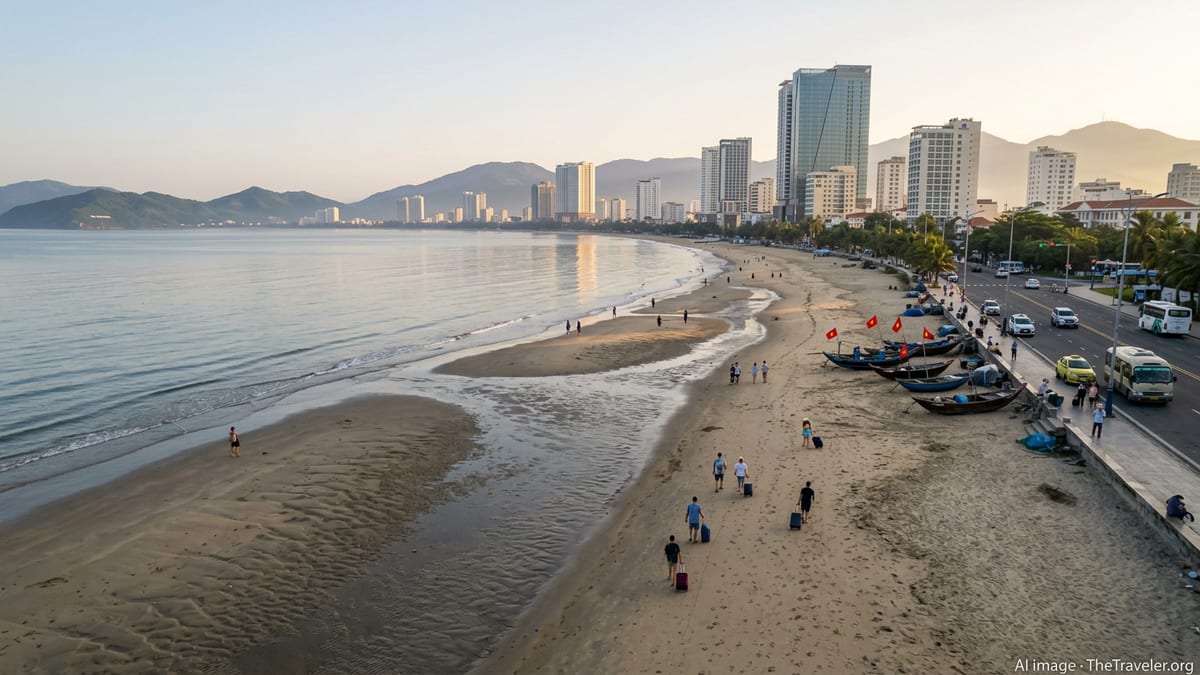
Arrivals Surge Past Pre‑Pandemic Levels
Publicly available tourism data for 2024 and 2025 indicates that Vietnam has firmly moved beyond recovery and into a new phase of expansion. International arrivals in 2024 reached around 17.5 million, according to aggregated government and industry summaries, a jump of nearly 40 percent from 2023 and higher than the 2019 peak. Early 2025 updates point to continued double-digit growth as airlines add capacity and visa rules are eased for key markets.
China, South Korea and the United States have emerged as the central pillars of this boom. Economic analysis of Vietnam’s 2024 visitor mix shows that these three markets together accounted for nearly half of all international arrivals, underscoring how critical they have become for the tourism economy. South Korea and China deliver large volumes of short-haul travelers, while the United States is increasingly important for higher-spending long-haul visitors.
Research covering the first half of 2024 highlighted how quickly volumes rebounded. South Korea remained the top source market through mid-2024, followed closely by China, with the United States ranked among the next largest contributors alongside Taiwan and Japan. Reports for late 2024 and early 2025 show Chinese arrivals accelerating as group travel fully resumes, while US traffic benefits from increased nonstop and one-stop connectivity via major Asian hubs.
The tourism upswing is also reshaping Vietnam’s broader service economy. Macroeconomic assessments for 2024 estimate that travel and tourism generated revenues equivalent to about 6.6 percent of national GDP, with forecasts suggesting this share could edge above 7 percent in 2025 if current trends continue. That puts tourism alongside manufacturing and exports as a key driver of Vietnam’s growth narrative.
China, South Korea and the US Set the Pace
Behind the headline numbers, the composition of Vietnam’s visitor base is shifting in ways that favor sustained growth. South Korean travelers, already familiar with destinations such as Da Nang, Nha Trang and Phu Quoc, are returning in large numbers for beach holidays, golf and short city breaks. Package tours, charter flights and low cost fares keep the market price competitive, while rising incomes in South Korea support demand for higher-end resorts.
China, historically Vietnam’s largest single source market, is once again asserting its weight. Industry reports show Chinese arrivals rising sharply in 2024 and into 2025 as outbound travel from China normalizes and more group tours are restored. Northern gateways such as Ha Long, Hai Phong and border provinces are seeing heavy flows, while major coastal destinations are competing to capture a bigger share of the Chinese package-tour segment.
The United States, although smaller in volume than the top Asian markets, is playing an outsized role in revenue. Long-haul US visitors typically stay longer and spend more per trip, particularly in urban centers like Ho Chi Minh City and Hanoi, as well as in high-end coastal resorts. Vietnam’s upgraded tourism branding, improved air links and growing reputation for food, culture and value for money are helping the country stand out against regional competitors for American travelers.
Analysts note that having three strong pillars in China, South Korea and the United States provides Vietnam with a degree of resilience. If demand from one market softens, growth from the others can help offset the impact, while emerging markets across Southeast Asia and Europe add further diversification.
Vietnam Airlines Rides the Wave to Record Results
Vietnam’s flag carrier is one of the clearest corporate winners from the tourism revival. Public financial disclosures and local business coverage show that Vietnam Airlines returned to solid profitability in 2024, with consolidated revenue climbing to around 113 to 114 trillion Vietnamese dong as international travel roared back. The momentum carried into 2025, when the airline reported record consolidated revenue of roughly 121 trillion dong and profit after tax of more than 7.7 trillion dong.
Industry reporting links much of this turnaround to surging inbound demand from North Asia and North America. Vietnam Airlines has focused its widebody capacity on trunk routes connecting Hanoi and Ho Chi Minh City to Seoul, Busan, major Chinese cities and key US gateways served directly or via partners. Higher load factors, improving yields and lower fuel costs have further strengthened the balance sheet.
Operational updates indicate that the carrier continues to add frequencies on high-demand routes tied to Chinese and South Korean leisure traffic, especially during peak holiday seasons. Investments in onboard connectivity, biometric check in and digital upgrades aim to position Vietnam Airlines more competitively against regional rivals that are also targeting the same tourism flows.
With Vietnam’s tourism authorities pursuing more open visa policies and marketing campaigns in East Asia and North America, analysts expect the flag carrier to remain a primary beneficiary. The combination of rising arrivals, a growing domestic middle class and increased transfer traffic through Vietnamese hubs is giving Vietnam Airlines a more prominent role in regional aviation than before the pandemic.
VietJet Capitalizes on Price Sensitive Leisure Demand
Low cost carrier VietJet is capturing another slice of the boom by focusing on budget-conscious travelers from China, South Korea and the wider region. Publicly reported traffic and earnings data for 2024 describe a sharp increase in international passenger numbers as VietJet restores and expands its point-to-point network linking secondary cities in China and Korea with Vietnam’s coastal resorts.
The airline’s strategy emphasizes dense seating configurations, quick turnarounds and aggressive fare promotions, which appeal to group tours, young travelers and migrant workers combining business with leisure trips. This model has allowed VietJet to ramp up capacity faster than many full service rivals on short haul routes that are central to Vietnam’s tourism surge.
Reports from aviation analysts note that VietJet has also been active in launching new routes and seasonal services tailored to emerging destinations within Vietnam. Direct flights to lesser known beach towns and cultural centers are helping disperse tourism beyond the most crowded hubs, while still feeding hotel and resort partners that rely on steady inflows of international guests.
As competition intensifies, price pressure remains a risk for low cost operators. However, VietJet’s ability to stimulate new demand with low fares, combined with Vietnam’s improving airport infrastructure, positions the airline to continue capturing a significant share of inbound tourism from Asia’s giant outbound markets.
Marriott Expands as Hotel Investment Pours In
On the ground, global hotel groups are racing to secure a foothold in Vietnam’s fast growing hospitality market, and Marriott International is among the most active. Trade and business media report that Marriott signed five new properties in Vietnam in 2024 alone, adding nearly 1,900 rooms to its development pipeline. By late 2024, the company’s pipeline in the country had reached more than 50 properties and over 16,000 rooms.
New and upcoming Marriott branded hotels span a wide range of segments, from luxury flags in gateway cities to midscale and extended stay products in secondary destinations. Openings and announced projects include high profile names in Ho Chi Minh City and Hanoi, as well as beach and resort locations along the central and southern coasts. Planned additions such as JW Marriott Cam Ranh Resort & Spa and Bac Ninh Marriott Hotel illustrate the company’s push into both established holiday hotspots and emerging urban markets.
Industry commentary suggests that Marriott’s strategy reflects confidence in Vietnam’s long term tourism fundamentals. A young population, growing middle class, rising air connectivity and government efforts to streamline visas make the country attractive for global hotel investors. The strong presence of travelers from China, South Korea and the United States, who are familiar with international brands and loyalty programs, further supports the business case for large scale expansion.
Marriott is not alone in betting heavily on Vietnam. Other multinational and regional chains have announced new projects or conversions across key cities and resort zones, signaling an increasingly competitive landscape. For Vietnam, this influx of investment is bringing more diversified accommodation options, higher service standards and additional jobs, reinforcing tourism’s role as a core engine of economic growth.