

More news on this day
Vietnam’s tourism industry is entering 2026 on a strong footing, with official data showing around 4.7 million international arrivals by February and a clear shift toward sustainable, community-focused travel experiences.
Get the latest news straight to your inbox!
Recovery Momentum Builds After Record-Breaking 2025
Recent statistics from Vietnam’s tourism authorities indicate that the country welcomed just under 4.7 million international visitors in the first two months of 2026, underscoring a solid continuation of the recovery that accelerated in 2024 and 2025. The early 2026 figures follow a record 21.17 million international arrivals in 2025, which surpassed pre-pandemic levels and set a new benchmark for the sector.
The steady flow of visitors at the start of 2026 suggests that Vietnam is maintaining its appeal in key markets across Asia, Europe, Oceania, and the Americas. Arrivals are being supported by a combination of relaxed visa rules, expanded air connectivity, and targeted promotion of new destinations beyond the country’s traditional coastal and heritage hubs.
Travel industry reports describe Vietnam as one of Southeast Asia’s standout performers in terms of both pace and scale of post-pandemic tourism recovery. The early 2026 performance, building on consecutive years of double-digit growth, is seen as a sign that demand is broad-based rather than driven solely by a post-crisis rebound effect.
Analysts note that international tourism is also helping to reinforce Vietnam’s broader economic recovery, supporting employment in hospitality, transport, and retail while encouraging new investment in infrastructure in second-tier cities and rural regions.
Visa Reforms and Air Links Support Visitor Growth
Policy adjustments introduced over the past two years continue to play a central role in sustaining tourism growth in 2026. Publicly available information shows that Vietnam has expanded its e-visa system to additional border gates, lengthened permitted stays for several markets, and simplified digital application procedures, reducing friction for first-time and repeat visitors.
At the same time, international airlines and Vietnamese carriers have been adding capacity on routes from key source markets such as South Korea, China, India, Australia, and Europe. Industry data highlight a growing number of direct and one-stop connections to cities including Da Nang, Nha Trang, Phu Quoc, and Hai Phong, in addition to the traditional gateways of Hanoi and Ho Chi Minh City.
Tourism market commentary indicates that the combination of more flexible entry rules and improved connectivity is enabling a more even spread of visitors across the country and across seasons. This is particularly important for emerging destinations that previously suffered from limited access or heavy reliance on domestic travelers.
Travel companies active in Vietnam report that these regulatory and transport changes are allowing tour operators to design more diverse itineraries, extend trips into less visited provinces, and package specialized experiences such as golf tourism, wellness retreats, wedding travel, and heritage rail journeys.
Rising Demand for Sustainable and Community-Based Travel
Alongside headline visitor numbers, 2026 is also bringing increased attention to how tourists explore Vietnam. Industry surveys and destination marketing reports point to a notable rise in demand for sustainable travel, including low-impact experiences, locally owned accommodation, and authentic cultural encounters.
Several Vietnamese destinations have been recognized in recent award listings and guidebook features for their commitment to responsible tourism. Examples highlighted in 2025 and early 2026 coverage include traditional villages that have limited visitor capacity, introduced waste-reduction measures, and developed community-led homestays, as well as national parks that have tightened controls on trekking and cave exploration.
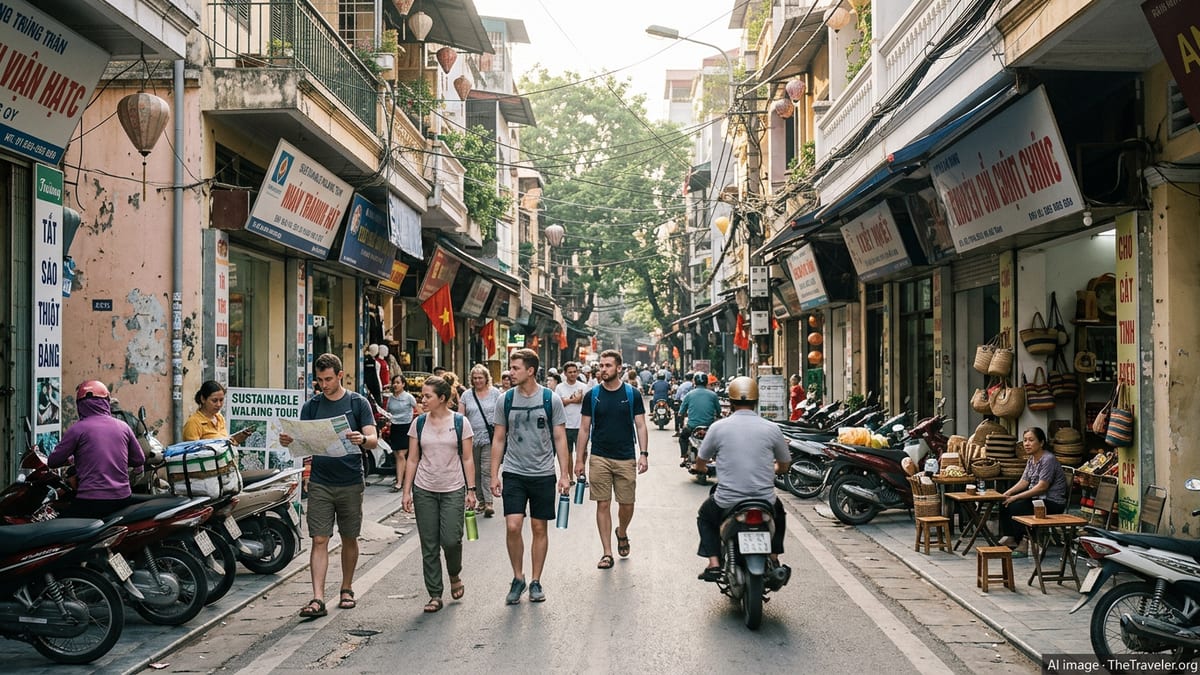
Urban centers such as Ho Chi Minh City and Hanoi are also adapting, with experiential tours that focus on heritage neighborhoods, riverfront regeneration, and traditional craft districts. Local authorities and tourism businesses are promoting itineraries that encourage visitors to stay longer and spend more in neighborhoods where tourism revenue can help preserve historic architecture and intangible cultural heritage.
There is growing interest in rail-based travel and slower overland journeys that reduce the reliance on short domestic flights. Coverage of new luxury and experiential train services running the length of the country suggests that these products are attracting environmentally conscious travelers who value both comfort and a lower carbon footprint.
Green Investments and Standards Shape the Next Phase
As visitor numbers rise, Vietnam’s tourism strategy is increasingly emphasizing environmental protection and quality standards. Public documents and conference presentations in late 2025 and early 2026 outline plans to expand green certification schemes for hotels and tour operators, encourage energy efficiency in accommodation, and promote waste management initiatives in popular destinations.
Some provinces have begun to integrate tourism into broader climate and land-use plans, seeking to manage pressures on beaches, forests, and cultural heritage sites. Measures include stricter building regulations along vulnerable coastlines, limits on visitor flows in ecologically sensitive areas, and incentives for businesses that adopt renewable energy or invest in conservation programs.
Industry observers note that international travelers are responding positively to visible sustainability measures such as reduced single-use plastics, clear trail signage in protected areas, and transparent information about how tourism revenues support local communities. These efforts are seen as essential for avoiding overtourism and maintaining Vietnam’s reputation as a destination with rich natural and cultural assets.
Travel agencies and online platforms are also updating product descriptions and filtering tools to highlight eco-certified stays and community-based tours, indicating that sustainability is increasingly a factor in how trips are researched and booked, not only in how they are experienced on the ground.
Opportunities and Pressures for Local Communities
The strong start to 2026, with roughly 4.7 million international visitors recorded by February, is creating both opportunities and challenges at the local level. In many destinations, tourism has become a critical source of income for small businesses, from family-run guesthouses and street food vendors to guides and artisans.
Reports from tourism-focused research groups emphasize that inclusive growth will depend on ensuring that local communities are meaningfully involved in planning and benefit-sharing. This includes training programs, support for micro and small enterprises, and measures that help residents preserve traditional livelihoods even as visitor numbers climb.
At the same time, the influx of tourists is putting pressure on infrastructure, housing, and public services in some hotspots. Stakeholder consultations and planning documents highlight concerns related to congestion, waste, and water use, especially during peak holiday periods and major events.
How Vietnam manages these pressures in 2026 and beyond is expected to influence the long-term sustainability of its tourism recovery. With international arrivals already on track for another strong year and traveler interest in responsible tourism rising, the sector faces a pivotal moment to align growth with environmental stewardship and community well-being.