

More news on this day
Vietnam is preparing to break ground on a high-speed rail link between Hanoi and Quang Ninh that is expected to redefine how visitors reach Ha Long Bay, cutting journey times, easing road congestion and anchoring a broader push to modernize the country’s transport network.
Get the latest news straight to your inbox!
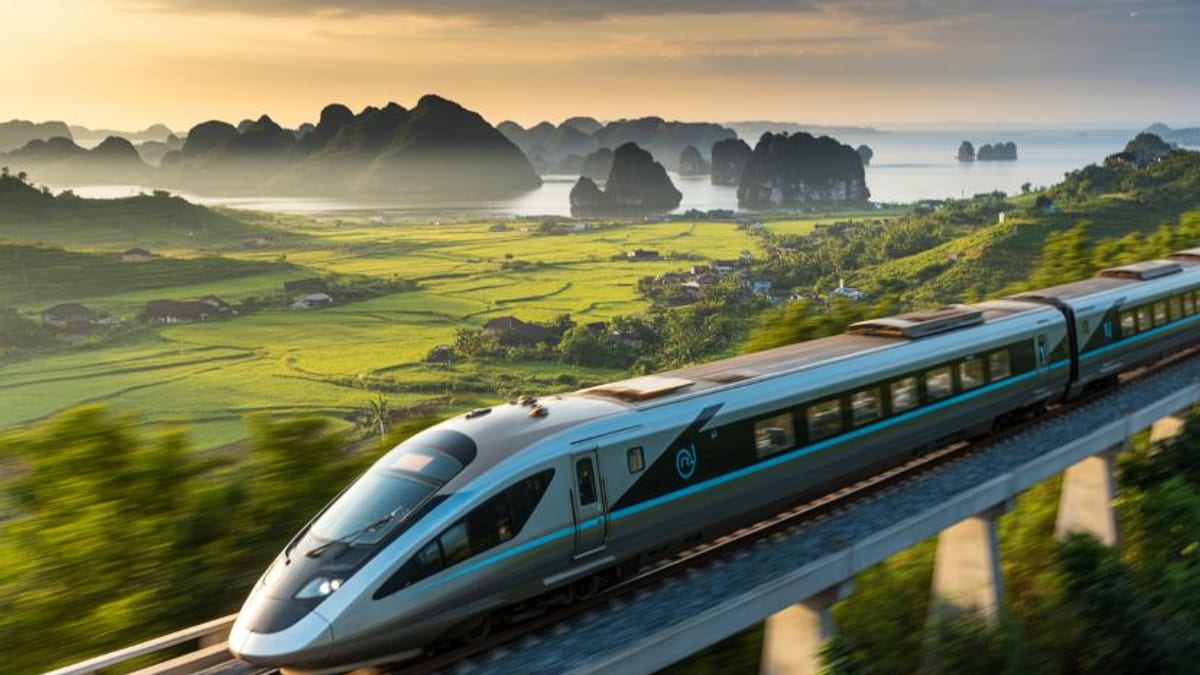
Image by Travel and Tour World – Tourism, Airline, Destination, MICE, Gobal Travel Market, Hotel news that you will find only over here.
A 350 kph Rail Corridor From Capital To Coast
According to publicly available planning documents and domestic media coverage, the Hanoi–Quang Ninh high-speed railway has been added to Vietnam’s national railway network plan and is moving from vision to execution. The double-track, electrified line is designed to run approximately 120 kilometers from the National Exhibition and Convention Centre area in western Hanoi to the Ha Long urban fringe in Quang Ninh Province.
Reports indicate that the route will use standard-gauge 1,435-millimeter track with a maximum design speed of up to 350 kilometers per hour. Five principal stations are planned, including stops near historic Co Loa, in Bac Ninh’s expanding urban belt, and at the Ha Long Xanh new township, where a depot and maintenance hub will be located. The project’s total investment has been estimated in local press at more than 130 trillion dong, with an implementation timeline that targets testing by around 2027 and commercial operation in early 2028.
The line is being advanced by VinSpeed High-Speed Railway Investment and Development, a member of the Vingroup conglomerate, under a model that combines private capital with the state’s long-term infrastructure strategy. VinSpeed has announced a broader portfolio of high-speed rail proposals in Vietnam, but the Hanoi–Quang Ninh corridor is widely viewed as the most immediately transformational for tourism because it connects the political and cultural capital directly with the country’s flagship coastal destination.
In late 2025, VinSpeed and Siemens Mobility signed a strategic cooperation agreement covering technology transfer and turnkey delivery for several high-speed sections, including the Hanoi–Quang Ninh link. Publicly released material on that agreement suggests that Vietnam aims to import proven high-speed rail technology while building up local capabilities in construction, operations and maintenance.
From Slow Roads To Swift Access For Ha Long Bay
Today, most travelers from Hanoi to Ha Long Bay rely on a combination of expressways, shuttle buses and private transfers. The Haiphong–Ha Long–Van Don–Mong Cai expressway has already shortened road journeys, but typical door-to-door travel from central Hanoi to the cruise piers still ranges from two and a half to four hours depending on traffic and pick-up arrangements.
The existing railway connection between Hanoi and Ha Long is an older meter-gauge line that primarily serves freight and limited passenger services at low speeds. Government and provincial statements have described this legacy route as outdated and ill-suited to modern tourism demand, citing long travel times and a lack of high-quality passenger facilities.
By contrast, a purpose-built high-speed passenger line is expected to cut the core rail journey to well under an hour between Hanoi and the Ha Long area. Even when transfers from city centers and stations are included, total travel time could fall below two hours for many visitors. For tour operators offering overnight cruises and day trips on Ha Long Bay, such a reduction would allow more flexible departure times from the capital and make short stays more attractive.
Industry analyses of Vietnam’s construction and transport sectors have highlighted the Hanoi–Quang Ninh railway as a project with strong spillover effects for tourism, hospitality and logistics. Shorter travel times are forecast to increase visitor numbers not only to Ha Long Bay but also to nearby destinations such as Bai Tu Long Bay and Van Don, where new resorts and tourism zones are being planned.
New Tourism Hubs Along The Line
Planning materials show that the high-speed railway is intended to do more than simply move passengers from point A to point B. The choice of station locations reflects a strategy to stimulate new urban and tourism hubs in a corridor that stretches from Hanoi’s outskirts through Bac Ninh and Hai Phong to Ha Long.
Proposed stations such as Co Loa would give visitors easier access to heritage sites and craft villages in the Red River Delta, potentially encouraging combined cultural and coastal itineraries. Further east, stops in Bac Ninh and Hai Phong provinces intersect with existing industrial zones and new residential projects, integrating the tourism economy with broader regional development.
At the coastal end, the Ha Long Xanh station and depot area is planned adjacent to a large-scale urban and resort development anchored by Vingroup. Public information on that project describes a mixed-use complex of residences, hotels, entertainment facilities and green spaces, effectively creating a new gateway city for Ha Long Bay cruises and excursions.
Quang Ninh authorities have framed the railway as part of a shift toward high-value, sustainable tourism, with an emphasis on longer stays and higher per-visitor spending. By clustering hotels, services and transport links around high-speed rail stations, planners aim to reduce pressure on older urban cores while improving environmental management of the bay and surrounding landscapes.
Integration With Vietnam’s Wider Rail Vision
The Hanoi–Quang Ninh high-speed line is emerging in parallel with Vietnam’s wider ambition to build a North–South high-speed railway and cross-border links to China, Laos and Cambodia. In late 2024, the National Assembly approved the investment policy for the North–South corridor, and subsequent government decisions revised the national railway network plan to prioritize a handful of strategic routes.
Within that framework, the Hanoi–Quang Ninh project has been identified as an early high-speed section that can be delivered relatively quickly, serving both domestic mobility needs and international tourism. Planning documents and sector reports describe it as a key piece of a northern rail backbone that will eventually connect Hanoi to Lao Cai on the Chinese border and to deep-water ports along the Gulf of Tonkin.
Improved rail access to Ha Long Bay is expected to complement, rather than replace, existing expressways and airport links. Van Don International Airport, already marketed as an alternative gateway to the UNESCO-listed bay, could see more coordinated scheduling with high-speed trains in the longer term, especially for connecting domestic flights.
Transport analysts argue that combining high-speed rail with expressways and airports will help diversify access routes, reduce bottlenecks on any single mode and make the region more resilient to weather disruptions. For visitors, the practical outcome would be more choice in how to get to Ha Long Bay, with rail likely to appeal to travelers seeking predictable travel times and a lower-carbon option.
What Travelers Should Expect In The Coming Years
For now, the Hanoi–Quang Ninh high-speed railway remains under construction preparation, with ground-breaking scheduled and a build-out period of roughly two years. Travelers planning trips in 2026 can expect to continue using established road links and shuttle services between Hanoi and Ha Long Bay, while watching for updates on construction progress.
As the project advances, more detailed information on station layouts, ticketing systems and service patterns is likely to be released. Based on experience from other high-speed networks in Asia, observers anticipate a mix of express and semi-fast services, onboard Wi-Fi and modern seating, along with integrated ticketing that may eventually link metro lines in Hanoi to long-distance high-speed trains.
Tourism businesses are already positioning for the shift. Cruise operators, hotel groups and travel agencies have begun referencing the future rail link in marketing materials, signaling expectations of rising visitor numbers from Hanoi and, by extension, from international flights connecting through the capital. Travel planners suggest that the line could make it easier to slot Ha Long Bay into tight itineraries that also include destinations such as Ninh Binh, Sapa or Hue.
While exact fares and service frequencies have not yet been finalized, published commentary in local business media suggests that Vietnam is aiming for pricing that balances accessibility for domestic travelers with the need to recoup large upfront investments. For international visitors, any premium over current bus services may be offset by the time savings and comfort of a dedicated high-speed rail journey through one of Southeast Asia’s most dynamic tourism corridors.