

More news on this day
Vietnam’s post-pandemic tourism boom is triggering an unprecedented wave of luxury hotel investment in Hanoi and Ho Chi Minh City, as global hospitality giants move quickly to lock in prime sites and capture surging demand from international travelers and a growing domestic middle class.
Get the latest news straight to your inbox!
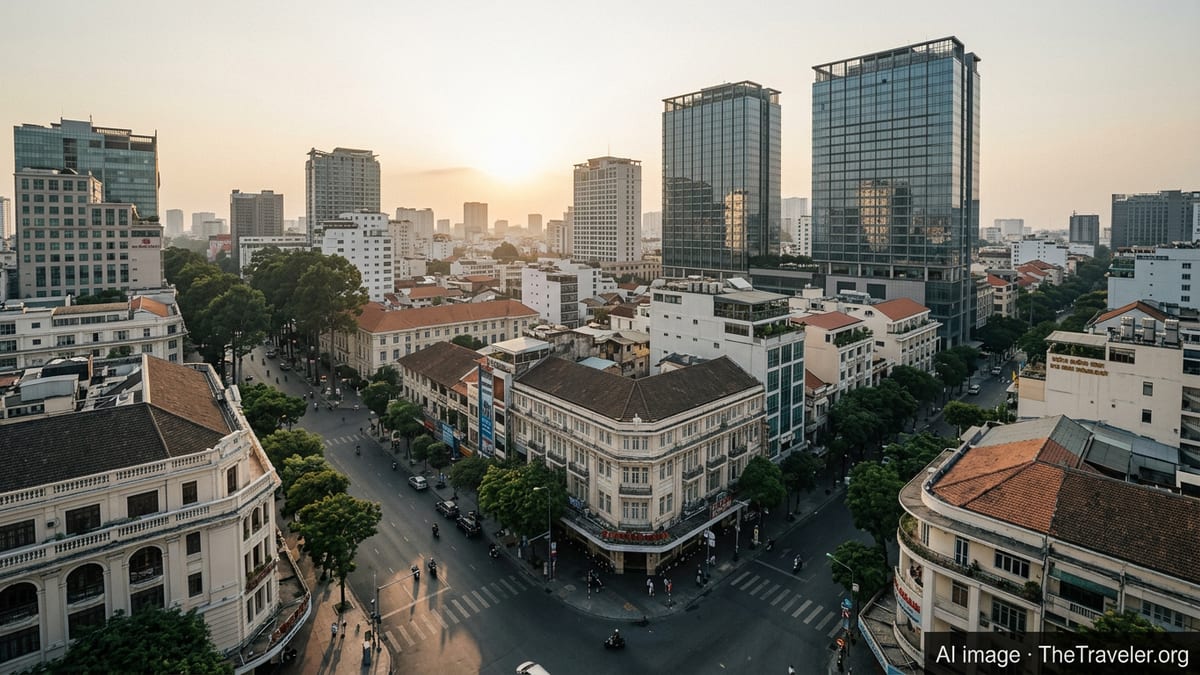
Tourism Rebound Sets the Stage for High-End Expansion
Vietnam has emerged as one of Asia’s strongest tourism recovery stories, with international arrivals surpassing pre-pandemic levels and setting new records. Public data from national statistics and industry reports show that the country welcomed around 17.5 to 17.6 million international visitors in 2024, before climbing again in 2025 to an estimated 21.2 million, overtaking its 2019 peak. The rapid rebound is shifting Vietnam from a value-focused destination toward a more mixed profile that includes high-yield luxury travel.
Recent coverage from regional business outlets indicates that Vietnam is targeting further growth in 2026, supported by relaxed visa rules, new direct air links and coordinated tourism promotion campaigns. Hanoi and Ho Chi Minh City are at the heart of this strategy, benefiting from both leisure and corporate travel, as well as the rise of short-break city trips among affluent visitors from South Korea, mainland China and other regional markets.
Domestic tourism has also expanded sharply, adding a layer of resilience for hotel performance in the main cities. As more Vietnamese travelers seek premium experiences at home, international brands are recalibrating their positioning to serve both inbound guests and a sophisticated local clientele, from high-end dining to branded residences and members’ clubs.
Hanoi Emerges as a Magnet for Luxury Brands
In the capital, new data from property consultancies such as Savills and Knight Frank points to a clear up-market shift in the hotel pipeline. A Savills report on Hanoi’s hotel sector projected roughly 3,000 additional rooms entering the market between 2025 and 2026, with about three quarters of this new supply in the five-star category. Knight Frank’s more recent research notes that by the end of 2025 alone, Hanoi’s five-star market is expected to gain around 500 rooms from three new luxury projects, reinforcing the city’s premium profile.
This surge is being led by a who’s who of international operators. Published project announcements show brands such as Fairmont preparing to open a flagship luxury property in Hanoi’s historic core, while global groups including Marriott, Hilton, Accor and IHG expand their portfolios through management deals with domestic developers. New hotels are increasingly concentrated around the Old Quarter, Hoan Kiem Lake and emerging business districts, where demand from both corporate and leisure travelers has been strong.
Market commentary from consultancies highlights that occupancy and average daily rates in Hanoi’s top-tier segment have rebounded faster than in many Vietnamese beach destinations, where oversupply has become a concern. Urban luxury properties are benefiting from year-round business travel, government-related events, MICE demand and a growing pipeline of cultural and sports activities that bring visitors into the city.
Ho Chi Minh City Ramps Up Its Premium Hotel Pipeline
Ho Chi Minh City, Vietnam’s commercial powerhouse, is experiencing its own luxury hotel acceleration, albeit from a more diversified base that includes a large stock of upscale and midscale rooms. According to a recent report cited by local media, the number of four and five star rooms in the city is expected to reach about 23,000 by 2026, with forecast occupancy in the high seventies to low eighties in percentage terms as international arrivals continue to climb.
International coverage of the hotel sector notes that major chains are repositioning existing assets and adding new flags in central Ho Chi Minh City. Well-known properties in District 1 have undergone rebranding to align with global luxury labels, while new-build projects are rising near key transport corridors, including areas with improved connectivity following the launch of the city’s first metro line. Mixed-use developments that combine offices, retail and hotels are increasingly designed with a five-star component to capture corporate demand.
Industry reporting also points to large-scale tourism and real estate ventures on the city’s periphery as part of a longer-term bet on high-end travel. A notable example is the Can Gio coastal project south of Ho Chi Minh City, where presentation materials from major developers reference luxury hotels, marinas and entertainment zones aimed at both international visitors and wealthy domestic tourists. Global hotel groups are positioning themselves to manage portions of these integrated destinations as they move from planning to construction.
Global Brands Jostle for Position in a Crowded Field
The intensity of competition among global hotel companies in Vietnam has increased markedly over the past two years. Sector-focused outlets such as Travel And Tour World and various hospitality intelligence platforms describe Vietnam as one of the most active development markets in Southeast Asia for groups including Marriott, Hilton, Accor, IHG, Hyatt and others. Pipelines disclosed in corporate and partner announcements show clusters of upcoming properties in Hanoi and Ho Chi Minh City across luxury, lifestyle and upper-upscale segments.
Recent project news highlights joint ventures between international operators and Vietnamese developers to add multiple branded hotels in and around the two main cities. One such collaboration involves Marriott expanding its presence with a series of properties in Hanoi, Ho Chi Minh City and coastal districts linked to the southern metropolis. Hilton has publicized its intention to significantly grow its Vietnam footprint, with brands ranging from its flagship luxury lines to upper-upscale and lifestyle concepts aimed at younger travelers.
Analysts note that the entry of additional players, such as Fairmont and other luxury-focused brands under large global umbrellas, is likely to sharpen competition for high-spending guests and key corporate accounts. At the same time, domestic hospitality groups are investing in renovations and soft-branding arrangements to remain relevant, often leveraging distribution and loyalty platforms from foreign partners while preserving local ownership.
Opportunities and Emerging Risks for Vietnam’s Hospitality Market
While the development pipeline in Hanoi and Ho Chi Minh City reflects confidence in long-term tourism growth, industry research also flags potential risks. Some real estate consultancies have warned that Vietnam’s coastal regions face the prospect of beachfront hotel oversupply, and caution that a similar imbalance could occur in city centers if economic conditions soften or if new supply outpaces demand. For now, however, published data suggests that luxury hotels in the two major cities are operating from a position of strength, with improving occupancy and pricing power.
Policy support remains a crucial factor. Publicly available information shows that Vietnam’s government has extended e-visa eligibility, added more international border gates for electronic entry and promoted multi-destination itineraries that funnel visitors through Hanoi and Ho Chi Minh City. These measures, combined with strong air connectivity and growing interest from regional carriers, underpin investor confidence that urban hotels will continue to attract a stable flow of international and domestic guests.
Market observers also point to the importance of product differentiation as the urban luxury landscape becomes more crowded. New hotels are increasingly emphasizing Vietnamese design, culinary experiences and neighborhood integration to stand out from regional competitors. As global brands race to dominate Hanoi and Ho Chi Minh City’s exploding hospitality market, the most successful properties are expected to be those that couple international standards with a clear sense of place, appealing to travelers who want both comfort and authenticity in one of Asia’s fastest-rising tourism destinations.