

More news on this day
Viking Libra, billed as the world’s first hydrogen-powered cruise ship capable of operating with zero emissions, is preparing to enter service in late 2026, promising a new blend of low-impact technology and upscale cruising across the Mediterranean and Northern Europe.
Get the latest news straight to your inbox!
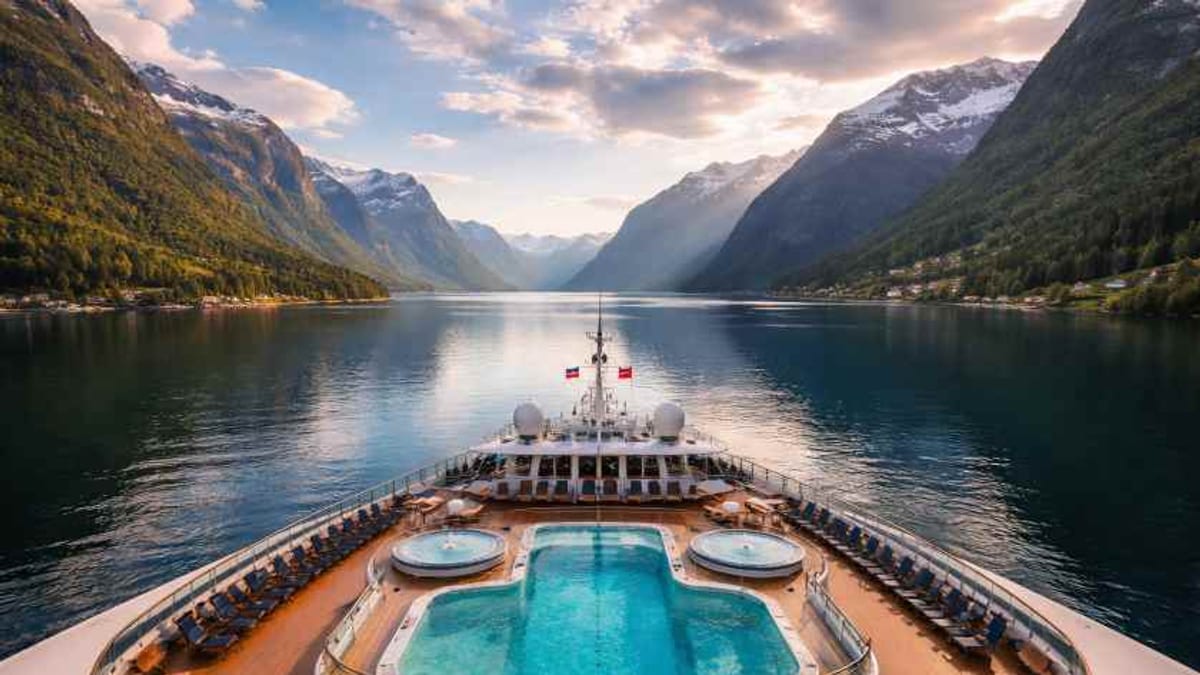
Image by International Cruise News: Latest Cruise Line & Cruise Ship News
A New Flagship For Climate-Conscious Cruising
Recent company announcements and industry reports indicate that Viking Libra reached a major construction milestone in March 2026 with its float-out at Fincantieri’s Ancona shipyard in Italy. The event marked the first time the vessel touched water and signaled the start of final outfitting ahead of delivery, which is currently scheduled for November 2026.
Viking positions the 54,300-gross-ton ship as a keystone in its broader decarbonization strategy, aligning with cruise-sector commitments to reduce greenhouse gas emissions while maintaining premium onboard standards. Publicly available information shows that Viking Libra will join the line’s ocean fleet as a small, destination-focused ship carrying around 998 guests, in keeping with Viking’s emphasis on quieter, port-intensive itineraries.
Industry coverage notes that Viking Libra will be followed by at least one sister ship equipped with similar technology, extending the hydrogen concept into a small series rather than a one-off prototype. Taken together, these developments suggest that Mediterranean and Northern European cruise routes could become early test beds for large-scale hydrogen-powered passenger operations.
Travel analysts point out that Viking Libra’s timing places it among a wave of next-generation vessels scheduled for 2026 and 2027, as cruise brands across Europe and North America roll out new ships built around alternative fuels including hydrogen, methanol and advanced shore-power connectivity.
How Hydrogen Fuel Cells Enable Zero-Emission Operation
Technical papers and shipyard disclosures describe Viking Libra as a hybrid vessel that combines traditional marine systems with a dedicated hydrogen fuel cell installation. Liquid hydrogen stored in special cryogenic tanks will feed polymer electrolyte membrane fuel cells, generating electricity with water vapor as the primary byproduct.
The fuel cell plant is designed to deliver several megawatts of power, allowing the ship to operate in selected modes without direct emissions at the point of use. This zero-emission capability is particularly relevant for sensitive coastal and urban areas, where tightening regulations are encouraging ships to minimize air pollution and underwater noise near port communities and protected marine zones.
Fincantieri and its technology partners have indicated in public documentation that the hydrogen system is integrated into the overall power architecture rather than replacing conventional engines outright. This approach allows Viking Libra to draw on multiple energy sources, switching into emission-free operation where infrastructure and fuel availability allow, while maintaining range and schedule reliability across longer itineraries.
Maritime engineering coverage notes that components of the hydrogen installation, including fuel cells and storage, are being validated on shore-based test beds in Italy before full-scale deployment at sea. Observers say this staged approach could help derisk the technology for future vessels if Viking Libra’s performance meets expectations once in service.
Inaugural Mediterranean Season Targets Culture-Rich Ports
Booking information and itinerary previews show that Viking Libra is scheduled to debut in the eastern Mediterranean shortly after delivery, with initial sailings built around Greece and nearby regions. Early schedules highlight Athens as a key embarkation port, positioning the ship close to major air gateways and classic archaeological destinations.
The lineup of ports is expected to include a mix of marquee names and smaller harbors, with calls in places such as the Cyclades, Crete and the coast of Turkey frequently mentioned in trade coverage. These itineraries are being presented as an opportunity to pair quieter, small-ship cruising with visits to UNESCO-listed sites, historic city centers and island landscapes during a relatively uncrowded late-autumn and winter season.
Viking’s existing Mediterranean program is characterized by overnight or extended stays that allow guests to explore ashore beyond standard excursion hours. Industry observers anticipate a similar pattern for Viking Libra, where the ship’s smaller size and advanced maneuvering systems are expected to ease access to tighter berths and inner harbors compared with much larger contemporary cruise vessels.
Seasonal scheduling points to Viking Libra remaining in the Mediterranean through the end of 2026, taking advantage of milder weather in southern Europe while traditional mass-market fleets shift more heavily toward the Caribbean and other warm-water destinations.
Repositioning To Northern Europe For 2027
After its inaugural Mediterranean program, Viking Libra is slated to reposition to Northern Europe in early 2027, according to cruise deployment summaries and planning documents. This shift will bring the hydrogen-enabled ship to a region where environmental regulations are among the most advanced in the world and passenger interest in lower-impact travel is particularly strong.
Indicative schedules point to routes that trace the coasts of the United Kingdom, Ireland and Scandinavia, with potential extensions into the Baltic Sea. Port calls in cities such as London-area gateways, Bergen or Copenhagen would fit with Viking’s existing network and give the line opportunities to showcase the ship’s emissions profile in areas that already enforce strict rules on harbor air quality and noise.
Specialist cruise publications suggest that Northern Europe’s combination of compact sailing distances and dense port infrastructure may be well suited to a vessel that can selectively switch into hydrogen-powered, zero-emission modes. Shorter legs between ports could maximize the use of fuel cells in fjords, archipelagos and urban waterways where local authorities are pressing for cleaner visiting ships.
The deployment also aligns with broader efforts by Nordic and North Sea nations to scale up green hydrogen production and bunkering facilities. While industry analysts caution that infrastructure development remains uneven, the presence of a high-profile ship like Viking Libra could help spur investment and regulatory frameworks around alternative marine fuels.
What Zero-Emission Luxury Means For Travelers
For guests considering a 2026 or 2027 cruise, Viking Libra represents a notable change in how environmental performance is built into the core of the onboard experience rather than offered as an optional add-on. Marketing materials and fleet-wide standards point to familiar Viking hallmarks, including all-balcony accommodations, contemporary Scandinavian design, and inclusive pricing that covers essentials such as dining and Wi-Fi.
Travel planners describe the vessel as a test case for whether a segment of the ocean cruise market is willing to prioritize cleaner technology when choosing itineraries. With fare structures still expected to sit in the premium range, the ship is targeting travelers who are looking for cultural depth, smaller passenger numbers and a visible sustainability narrative.
Cruise market commentators note that demand for Europe sailings in 2026 is already strong across several brands, with many lines reporting high booking levels on longer-haul trips. In that context, Viking Libra’s hydrogen story could become a differentiator for travelers weighing similar routes on conventionally powered ships, particularly in destinations where local communities are vocal about the environmental footprint of visiting vessels.
As the countdown to delivery continues, observers will be watching how quickly Viking can translate its technical ambitions into daily operations at sea. For Mediterranean island ports and Northern European fjords alike, Viking Libra’s debut is being framed as a closely watched trial of whether large-scale, zero-emission cruising can move from concept to commercial reality.