

More news on this day
Virgin Holidays is facing mounting criticism from UK travellers after reports emerged that some customers were asked to pay for additional hotel nights out of their own pocket when the escalating conflict in the Middle East led to widespread flight disruption.
Get the latest news straight to your inbox!
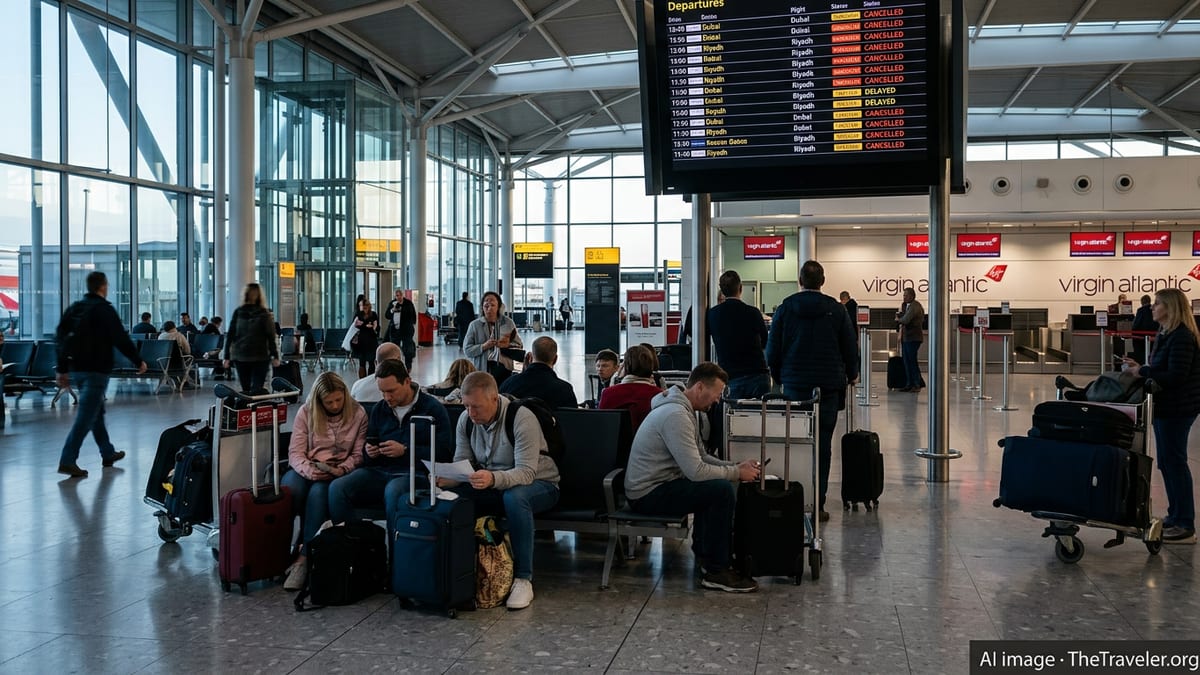
Holidaymakers Stranded As Routes Through Middle East Close
Escalating conflict involving Iran and regional powers has triggered major disruption across key Middle Eastern air corridors, closing or restricting access to several hubs used by UK travellers. Aviation data cited in recent industry coverage indicates tens of thousands of flights to and from the region have been cancelled or rerouted since late February, affecting journeys between Europe, Asia and popular Indian Ocean destinations.
Virgin Atlantic has temporarily suspended services between London and major Middle Eastern cities, including Dubai and Riyadh, after what the airline has described in public statements as extensive safety assessments. With airspace restricted and alternative routings limited, some passengers on Virgin Holidays packages have found themselves unable to travel as planned, or stranded overseas awaiting replacement flights.
The disruption has coincided with a busy late‑winter travel period for British holidaymakers, particularly those returning from long‑haul beach breaks and stopover trips routed via Gulf hubs. As airlines scramble to replan schedules and secure new flying permissions, hotel stays and ground arrangements at resorts and transit points have become a flashpoint for frustration.
Complaints Over Requests To Pay For Extra Hotel Nights
Among the most contentious reports are accounts from Virgin Holidays customers who say they were told they would need to cover the cost of extra hotel nights themselves after their return flights were cancelled or delayed because of the conflict. Travellers have described being moved from original properties to alternative accommodation or being advised to extend existing stays while awaiting revised flights, with the additional nights initially charged to their own cards.
Social media posts and comments on consumer forums suggest that some affected holidaymakers expected their package provider to absorb or directly settle hotel bills arising from the disruption, particularly when they had booked flight and accommodation together through Virgin Holidays. Instead, several say they were advised to keep receipts and pursue claims later through travel insurance or other routes, prompting concern about immediate affordability.
Consumer advocates quoted in wider media coverage argue that such situations can place significant financial strain on travellers who may already be incurring extra costs for meals, local transport and rebooked onward connections. With nightly rates at resort destinations often substantially higher than at home, an enforced stay of several days can quickly add up to thousands of pounds.
Virgin Holidays Points To Force Majeure And Package Rules
Publicly available booking conditions for Virgin Atlantic Holidays emphasise that events such as war, civil unrest and sudden airspace restrictions are treated as force majeure, meaning the company is not liable for all knock‑on costs arising from such extraordinary circumstances. The small print notes that in situations judged necessary to protect customer safety, significant changes to itineraries may occur without the usual levels of compensation.
In practice, this framework appears to underpin cases where customers are asked to temporarily fund their own accommodation while travel plans are rearranged. Industry observers note that tour operators and airlines typically prioritise securing replacement flights and basic care arrangements during major operational crises, but that responsibilities can differ depending on whether a traveller has booked a regulated package holiday or separate elements.
Virgin Atlantic’s separate passenger information documents state that, when flights are cancelled or significantly delayed on itineraries covered by UK and EU regulations, the airline will normally provide meals and hotel accommodation that is reasonable in relation to the waiting time. However, those commitments are framed around flight operations and may not always extend to additional resort stays at premium destinations or to trips that fall outside the scope of specific air passenger rules.
What UK Law And Regulators Say About Passenger Care
Guidance from the UK Civil Aviation Authority and consumer organisations indicates that, when a flight covered by UK or EU law is cancelled and a traveller chooses to wait for an alternative, the airline must provide care including meals and hotel accommodation proportionate to the delay, regardless of the underlying cause. This right to care applies even where disruption is caused by extraordinary circumstances such as war, although separate cash compensation is not usually payable in such scenarios.
For those who have booked a package holiday that includes flights and accommodation, the UK Package Travel Regulations offer additional protections. If a significant part of the holiday cannot be provided as agreed, organisers are generally expected to offer suitable alternatives at no extra cost or provide refunds for unused elements. How this interacts with extended stays caused by airspace closures or conflict‑related cancellations can be complex and may depend on whether the extra nights are considered part of the original package or an entirely new arrangement.
Travel experts quoted in recent analyses have highlighted that many standard travel insurance policies exclude disruption linked directly to war or acts of terrorism, leaving some stranded travellers to rely primarily on airline and package organiser duties. Those advisers urge customers to review policy wording closely and to keep detailed records of any additional expenses in case partial reimbursement is possible at a later stage.
Growing Pressure For Clearer Policies And Better Communication
The experiences of Virgin Holidays customers caught up in the current Middle East disruption have reignited broader debate about how fairly passengers are treated when global events upend carefully planned trips. Campaigners argue that while airlines and tour operators cannot control geopolitical crises, they can ensure clearer, more transparent communication about who pays for what when journeys are derailed.
Reports suggest that some of the anger directed at Virgin Holidays stems less from the initial disruption and more from perceived confusion over entitlements and expectations. Travellers recount receiving differing messages from hotel staff, airline representatives and holiday company support channels about whether extra nights would be covered, refunded later or left entirely to the individual to absorb.
Industry commentators say the scale and speed of the current conflict‑driven disruption mean policies that worked in previous, smaller incidents are now being tested to breaking point. With routes through the Middle East vital for UK connections to Asia, Africa and the Indian Ocean, operators such as Virgin Holidays are likely to face continued scrutiny over how they handle stranded guests, particularly if the conflict and associated airspace restrictions extend further into the year.
For now, consumer advice remains focused on practical steps: travellers are urged to stay in close contact with their airline or tour operator, to confirm in writing what costs will be covered before agreeing to extra nights, and to retain all documentation in case future claims are possible. As complaints mount, pressure is likely to grow on major brands including Virgin Holidays to refine their crisis playbooks and reassure customers that, when flights are grounded by conflict, they will not be left alone to shoulder every unexpected hotel bill.