

Virgin Voyages has quickly become one of the most distinctive cruise lines in the Mediterranean, combining adults only fun with late night port calls, strong culinary credentials and a relaxed, design led onboard experience. With homeports in Barcelona and Piraeus (Athens), and a changing lineup of itineraries across Spain, France, Italy, Greece and the Adriatic, their Med routes offer a compact way to see classic coastal highlights while still enjoying time at sea. Here is what travelers can expect from Virgin Voyages Mediterranean routes now and over the next couple of seasons.
The Ships and the Seasonal Mediterranean Focus
Virgin Voyages currently bases its Mediterranean program around two key homeports: Barcelona in Spain and Piraeus, the port for Athens in Greece. Scarlet Lady and Resilient Lady have both operated in the region in recent seasons, with schedules that typically run from late spring through early autumn before the ships reposition to the Caribbean or other regions for winter. Exact deployments can shift year to year as the line tweaks itineraries and reacts to geopolitical conditions, so travelers should expect details to evolve while the core Western and Eastern Mediterranean focus remains consistent.
Resilient Lady has become strongly associated with Eastern Mediterranean and Aegean sailings, especially seven to eleven night routes from Piraeus exploring the Greek islands, Turkey and parts of the Adriatic such as Croatia and Montenegro. These sailings often feature the Greek Island Glow and similar itineraries that highlight iconic islands like Santorini and Mykonos, plus coastal favorites including Dubrovnik and Kotor. Scarlet Lady, by contrast, has specialized in Western Mediterranean itineraries from Barcelona, visiting Spain’s mainland and islands along with the French Riviera and select Italian ports.
Virgin tends to schedule weekly seven night departures on its core Mediterranean routes, occasionally adding longer ten or eleven night sailings that connect Western and Eastern segments or serve as repositioning voyages between Barcelona and Athens. Because the line aims for an upbeat, social atmosphere with adults only sailings, the Med season is designed around warm weather months when outdoor decks, beach clubs and late nightlife ashore are at their best. Travelers planning far ahead should keep in mind that specific ship names on a given route may change, even if the basic port pattern stays similar.
Key Mediterranean Routes and Typical Itineraries
Most Virgin Voyages Mediterranean routes fall into three broad families: Western Mediterranean from Barcelona, Eastern Mediterranean and Greek islands from Athens, and hybrid itineraries that stitch the two regions together. Western Med cruises often include Barcelona as both embarkation and disembarkation port, with calls in Mallorca or Ibiza, and stops along the French coast such as Marseille, Toulon, Cannes or Nice (Villefranche). Select itineraries add Italian ports like Civitavecchia for Rome, coastal Tuscany, or southern Italian gateways close to the Amalfi Coast or Sicily.
Eastern Mediterranean itineraries concentrate on the Aegean and nearby waters. Greek Island Glow style routes typically visit marquee Greek islands such as Santorini, Rhodes and Mykonos along with a Turkish port such as Bodrum. Other itineraries stretch northward into the Adriatic, pairing Greek stops with Dubrovnik or Split on Croatia’s Dalmatian Coast, Corfu in the Ionian Sea and Kotor in Montenegro. In some seasons, Virgin has layered in longer itineraries of up to eleven nights that include overnight calls in major regional hubs like Istanbul or Alexandria, giving passengers more time to explore complex cities.
Adding variety, certain seasons have seen ten night Western Med sailings that connect Barcelona with Athens, calling at ports like Cannes, Civitavecchia, Salerno for the Amalfi area, Palma de Mallorca and eastern Mediterranean gateways such as Chania in Crete and Mykonos. These longer journeys tend to attract repeat Virgin guests who want a deeper mix of cultures and more sea days between marquee ports. The exact mix of routes is reviewed regularly by the line, so travelers can expect new combinations and occasional special themed voyages to appear on future schedules.
Homeports: Barcelona and Athens as Your Launchpads
Barcelona serves as Virgin Voyages’ Western Mediterranean anchor, offering a convenient starting point for many travelers from North America and Europe. The city’s major international airport, established cruise port infrastructure and wealth of pre and post cruise hotels and attractions make it easy to pair a week at sea with extra time on land. Many Virgin cruisers choose to arrive at least one night early to explore the Gothic Quarter, modernist architecture and beachfront neighborhoods or simply to guard against flight delays.
Piraeus, the port for Athens, is the Eastern Mediterranean counterpart. While the port itself is primarily functional, it lies within easy reach of Athens’ historic center, including the Acropolis and Plaka. Virgin itineraries from Piraeus are often built around Greek islands, which makes Athens an ideal place to begin or end a voyage that balances ancient history with beach time and nightlife. Because summer temperatures can be extremely hot, many travelers opt to tour the Acropolis early in the morning or late in the afternoon, then enjoy cooler evenings back on the ship.
Both homeports are embedded in busy urban regions with extensive public transportation, taxis and private transfer options. Virgin’s adult only demographic means guests are typically independent travelers comfortable arranging their own pre and post cruise logistics, and the line’s Med program reflects that. The routes are ideal for those who want to stitch together city breaks in Barcelona or Athens with island hopping or Riviera days, all within a one to two week window.
Ports of Call: What to Expect Ashore
Virgin Voyages emphasizes ports that combine strong visual appeal with lively local scenes and late night potential. Spanish islands like Ibiza and Mallorca offer beaches, waterfront restaurants and, in Ibiza’s case, a globally recognized nightlife culture. French Riviera ports such as Cannes, Nice (Villefranche) or Marseille provide access to old town lanes, seaside promenades, markets and day trips into nearby hill towns or coastal stretches. Italian calls often include gateways to Rome, the Amalfi Coast or Tuscan coastal regions, where passengers can choose between guided excursions and more flexible independent exploration.
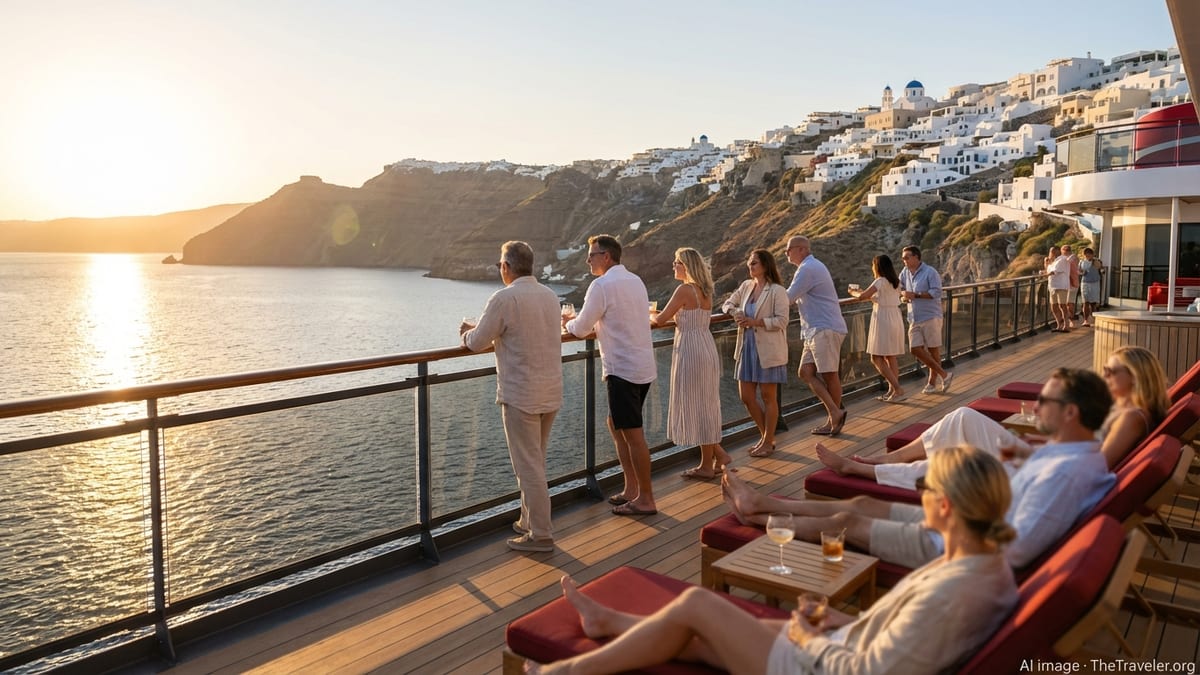
In the Eastern Mediterranean, Greek islands remain the star attraction. Santorini draws visitors with its caldera views, white washed villages and sunset vistas, though travelers should expect crowds and steep streets. Mykonos pairs Cycladic charm with beach clubs and bars that stay open well into the night, matching Virgin’s preference for late departures or overnight stays. In the Adriatic, Dubrovnik’s walled old town and Kotor’s fjord like bay offer some of the most dramatic harbor arrivals in the region, while Corfu mixes pastel Venetian architecture with lush interior landscapes and resort strips.
Port days are typically long, with early morning dockings and late evening or near midnight departures on many itineraries. This pattern allows more flexibility than the classic nine to five cruise call: passengers can explore in cooler morning hours, return to the ship for lunch or a rest, then head back ashore for dinner or nightlife in port. However, such schedule density means there are relatively few traditional sea days on some routes, which is an important consideration for travelers who prefer long, unstructured days at sea over a new port nearly every morning.
Onboard Experience on a Mediterranean Sailing
Virgin Voyages operates as an adults only line, which significantly shapes the onboard atmosphere on Mediterranean routes. There are no children’s clubs or family programs; instead, the onboard environment caters to couples, groups of friends and solo adults who value a mix of relaxation, socializing and nightlife. Design is contemporary and informal, with outdoor spaces and terraces taking full advantage of Med weather, and cabins featuring touches like hammocks on Sea Terrace balconies that align with the slower pace of a summer evening at sea.
Dining is one of Virgin’s strongest selling points. Rather than a single main dining room and buffet, the ships feature a collection of specialty style restaurants, all included in the fare. Mediterranean sailings make particular use of venues that echo regional flavors, offering mezze, seafood, Italian dishes and plant forward menus. Because port days are long, many guests eat some meals ashore and turn to the ship’s restaurants for late dinners or post midnight snacks, so service hours and casual options are structured accordingly.
Entertainment leans toward immersive shows, cabaret style performances, deck parties and pop up events rather than traditional cruise revues. In the Med, where many evenings involve being docked in scenic harbors, the social life often flows between ship and shore: passengers may head into town for a late drink and then return for a nightcap on deck or at one of the indoor bars. Wellness is also a major thread, with fitness classes, yoga and a large spa offering thermal suites and treatments that pair well with port intensive itineraries where legs and feet see a lot of use on cobblestone streets.
Why Virgin’s Med Routes Feel Different from Traditional Cruises
Several elements make Virgin Voyages’ Mediterranean program feel distinct from more conventional cruise offerings. The adults only policy eliminates family focused programming, pool games and children’s facilities, resulting in a calmer pool deck by day and a more club like vibe by night. Dress codes are relaxed, with no requirement for formal nights, aligning more closely with a boutique hotel at sea than a traditional cruise ship. This approach resonates especially well in the Med, where most guests spend long days exploring and prefer easygoing evenings.
Another key difference is the emphasis on extended stays and occasional overnights in port. Rather than departing at sunset, many Virgin itineraries linger until late at night, particularly in party forward destinations like Ibiza or Mykonos, or culturally rich cities where lingering over dinner ashore is part of the experience. This extended access allows travelers to see destinations in different lights, from daytime sightseeing to evening promenades and waterfront dining, without worrying about missing the ship’s all aboard time in the late afternoon.
The onboard product also deemphasizes add ons like drink packages and specialty restaurant surcharges that are common on other lines. While alcoholic beverages and some premium experiences are still chargeable, Wi-Fi, gratuities and many fitness classes are typically included in the base fare. That structure can make budgeting for a Mediterranean cruise more predictable, particularly for travelers who value connectivity and do not want to keep track of a long list of small daily fees while also managing spending ashore.
Planning, Seasons and Practical Tips
For most travelers, the best time to sail Virgin Voyages in the Mediterranean is between late May and early October, when ships are scheduled in the region and weather is generally warm and dry. High summer months such as July and August bring the hottest temperatures, busiest crowds and highest prices, especially in marquee ports like Santorini and Dubrovnik. Shoulder seasons in late spring and early autumn often offer a more comfortable balance of warm sea temperatures, fewer crowds and lower fares, although some seasonal businesses ashore may have shorter hours.
Because Virgin’s Med itineraries are relatively port intensive, it is wise to plan for a slower onboard rhythm. Booking a balcony or Sea Terrace cabin can pay off when there are fewer full sea days, giving you private outdoor space to enjoy sail outs and sunset views without needing to claim a lounger on the main deck. Comfortable walking shoes, light layers, sun protection and a modest outfit suitable for churches and historic sites are essential, as are portable phone chargers for long days ashore. Travelers should also account for the heat by scheduling more strenuous sightseeing early in the morning and leaving afternoons for beach time or shipboard relaxation.
From a booking perspective, demand for Mediterranean sailings can cluster around school holidays in key source markets, even though the ships are adults only. Those with flexible schedules may find better value on departures outside peak dates. It is also important to monitor itinerary updates, as Virgin has shown a willingness to adjust routes in response to regional security or operational concerns. Booking through a knowledgeable travel advisor or staying in close touch with Virgin’s own communications can help ensure that any changes are understood well in advance.
The Takeaway
Virgin Voyages’ Mediterranean routes offer a contemporary, adults only twist on classic European cruising, with homeports in Barcelona and Athens, long port days and a focus on food, design and nightlife. Travelers can expect itineraries that balance must see highlights in Spain, France, Italy, Greece and the Adriatic with a social onboard atmosphere and a strong wellness and culinary backbone. While specific ship deployments and port combinations evolve from season to season, the overall experience consistently centers on late stays in port, flexible dining and a relaxed approach to dress and daily routines.
For cruisers who want the convenience of unpacking once while sampling iconic Mediterranean destinations, but who are less interested in formality and family focused amenities, Virgin’s Med program is an appealing fit. The routes are especially well suited to adults who enjoy both daytime exploration and late night energy, whether that means a quiet cocktail on deck overlooking Cannes or dancing until dawn in Mykonos. With thoughtful planning around season, cabin choice and pacing, a Virgin Voyages Mediterranean sailing can deliver a dense yet rewarding snapshot of the region in a single journey.
FAQ
Q1. Which Virgin Voyages ships sail in the Mediterranean?
Virgin has rotated Scarlet Lady and Resilient Lady through the Mediterranean season, typically basing one ship in Barcelona and another in Piraeus, though specific assignments can change year to year.
Q2. When is the best time of year to book a Virgin Voyages Mediterranean cruise?
The core season generally runs from late spring to early autumn, with June through September offering the warmest weather and shoulder months like May and October providing slightly cooler temperatures and somewhat lighter crowds.
Q3. Are Virgin Voyages Mediterranean cruises really adults only?
Yes, Virgin Voyages is an adults only line and requires guests to be at least 18 years old, so there are no children’s programs or family oriented spaces on board.
Q4. How many sea days should I expect on a typical Mediterranean itinerary?
Many Virgin Med routes are port intensive, with a different port almost every day and relatively few full sea days, so travelers who prefer long days at sea should read itineraries carefully before booking.
Q5. Do Virgin Voyages Mediterranean routes include overnight or late night stays in port?
Yes, a signature feature of these itineraries is extended time ashore, including late night departures and occasional overnights in places such as Mykonos or Ibiza, allowing guests to experience local nightlife.
Q6. What is included in the fare on a Virgin Voyages Med cruise?
Fares typically include Wi-Fi, gratuities, access to multiple included restaurants instead of a single main dining room, fitness classes and most entertainment, while alcoholic drinks and some premium services cost extra.
Q7. Which homeports are used for Virgin Voyages Mediterranean routes?
Barcelona in Spain and Piraeus for Athens in Greece are the main homeports, serving as embarkation and disembarkation points and convenient gateways for pre and post cruise city stays.
Q8. What should I pack for a Virgin Voyages Mediterranean sailing?
Light layers, comfortable walking shoes, sun protection, swimwear, and a modest outfit for churches or historic sites are all useful, while formal wear is not required due to the ship’s relaxed dress code.
Q9. Are excursions required, or can I explore ports independently?
Excursions are optional; many ports are easy to explore independently using local transport or on foot, though guided tours can be helpful for time pressed travelers or more complex destinations.
Q10. How far in advance should I book a Virgin Voyages Mediterranean cruise?
Booking several months to a year ahead is sensible for peak summer departures, while shoulder season sailings may offer more flexibility, but all itineraries remain subject to change as the line refines its schedules.