

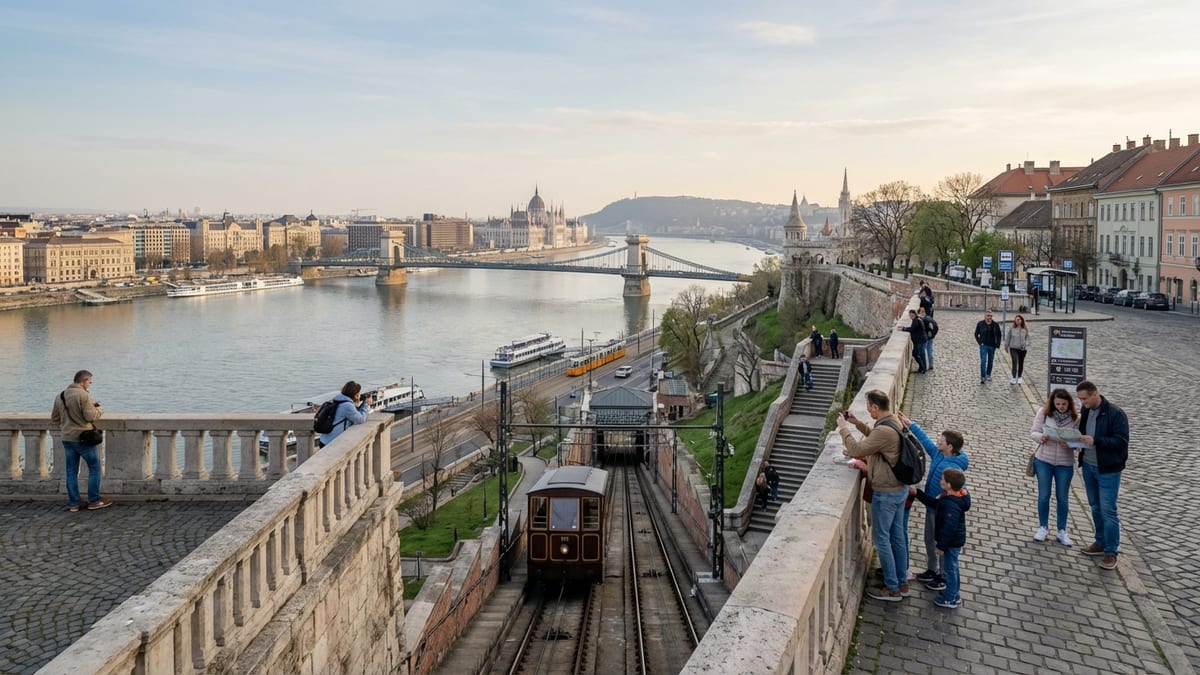
Perched high above the Danube with commanding views over Budapest, Buda Castle is one of Central Europe’s most atmospheric historic districts. The area is surprisingly compact, but first-time visitors often underestimate the climb, misunderstand ticketing for the funicular, or get confused by how public transport weaves around Castle Hill. With a bit of advance planning, you can choose the right way up and down, avoid long lines, and enjoy the best walking routes without feeling rushed.
Understanding Buda Castle and Castle Hill
“Buda Castle” describes both the Royal Palace complex itself and the broader Castle Hill district that surrounds it. At the southern end of the plateau sits the Royal Palace, home to the Hungarian National Gallery, the Budapest History Museum, and the National Széchényi Library. To the north you find the cobbled streets of the residential quarter, Matthias Church, and Fisherman’s Bastion with its famous panoramas over the Parliament building and the river.
The castle courtyards and outdoor areas are open around the clock, every day of the year. You can stroll along the terraces at sunrise, wander after dark, or photograph the city lights late into the evening without worrying about closing times. What does have fixed hours are the indoor institutions. As of 2025 and early 2026, most museums typically open from 10:00 to 18:00, with last entry about half an hour before closing, and many of them close on Mondays.
Geographically, Castle Hill is not very large, but it is steep. On one side, the hill drops sharply toward the Danube and Clark Ádám Square. On the other, it slopes more gently toward the residential streets of Buda. This topography is what makes choosing your approach so important. You can glide up in the funicular, wind your way on lovely stairways, or reach the top by bus with almost no uphill walking at all.
Think of Buda Castle not as a single “sight” to tick off, but as an elevated historic neighborhood. The way you travel up and down forms part of the experience, so it is worth deciding in advance whether you want romance and views, maximum convenience, or the most budget-friendly route.
Riding the Buda Castle Funicular
The Buda Castle Funicular is the most iconic way to reach the Royal Palace. Opened in the 19th century and reconstructed after World War II, its short, steep track connects Clark Ádám Square, near the foot of the Chain Bridge, with the palace terrace above. The ride takes less than two minutes, but the experience is quintessentially Budapest, with views over the Danube unfolding as you ascend.
The funicular operates daily, generally from 08:00 to 22:00. During this window, cars run every five to ten minutes, responding to passenger demand, so schedules are approximate rather than precise. Tickets can be purchased at the lower station in Clark Ádám Square or at the upper station on the palace terrace. As of early 2026, expect to pay a premium price compared with regular public transport. Recent information from the city’s transport company puts adult return fares around 6,500 forints and children’s tickets around 2,500 forints, with free travel for very young children. Payment is by bank card at the station; standard city transport passes and discounts do not apply.
Demand can be intense, especially from late morning through mid-afternoon and during peak summer months, when tour groups and river cruise passengers arrive in waves. Queues often snake across Clark Ádám Square, turning what should be a quick ride into a long wait. To minimize delays, aim for early morning, later evening, or a weekday visit outside school holiday periods. The funicular occasionally closes for maintenance, typically on certain Mondays or for short multi-day periods in spring or autumn. Before you rely on it, check the latest maintenance dates on the official Budapest transport information channels or ask at your hotel.
For many travelers, the funicular is worth doing once, especially if it is your first time in Budapest or you are traveling with children who will relish the novelty. However, budget-conscious visitors should weigh the cost against a simple bus ride or a short but scenic walk. A sensible compromise is to ride the funicular up when your legs are fresh and walk down as dusk falls, stopping for photos of the Chain Bridge and Parliament along the way.
Best Walking Routes Up and Down Castle Hill
Walking to Buda Castle is more than just a way to save money. It can be one of the highlights of your visit, with quiet staircases, leafy paths, and ever-changing views that the funicular cannot match. The climb is steep in places, but most reasonably fit travelers will manage it without difficulty, especially if they take their time and stop at viewpoints.
The classic walking approach begins from Clark Ádám Square, at the Buda end of the Chain Bridge. Instead of standing in the funicular queue, look for the pedestrian paths that flank the tracks on both sides. Winding stairs and zigzagging ramps lead uphill, crossing under the funicular and occasionally offering framed views of the Danube between the trees. This climb typically takes 10 to 15 minutes at a moderate pace. It deposits you near the upper funicular station on the palace terrace, with the Royal Palace to your right and panoramic city views straight ahead.
Another excellent route starts closer to the Elisabeth Bridge and the riverside walk. From the Buda side of the bridge, you can follow paths that climb gradually along the hillside, eventually joining the upper promenade that runs behind the palace toward Fisherman’s Bastion. This route is slightly longer but often quieter, with more greenery and fewer crowds than the funicular side of the hill.
Once you are on the plateau, do not rush. One beautiful stroll links the southern palace terraces with the northern reaches of the district: walk from the Royal Palace courtyard along the ramparts toward the Tóth Árpád Promenade, then continue past Vienna Gate and on to Matthias Church and Fisherman’s Bastion. Much of this walk is essentially flat, making it a relaxed way to enjoy the cityscape. For the descent, consider walking from Fisherman’s Bastion down to the riverside through the winding residential streets, emerging near Batthyány Square or the Margaret Bridge area, both with easy metro and tram connections.
Using Public Transport to Reach Buda Castle
Budapest’s public transport system provides efficient access to Castle Hill, and for many visitors buses are the most practical choice. They are especially helpful if you prefer to avoid steep climbs, are visiting in hot weather, or are short on time between other sights in Pest and Buda.
The workhorse route for visitors is the castle district bus that runs from central Pest across the Chain Bridge and up to the area near Matthias Church. Depending on current route numbers and minor changes over time, this service is typically labeled with a “16” or a closely related designation, and it stops near Deák Ferenc Square on the Pest side before crossing to Buda. From its final stop near the church, the heart of the Castle District, Fisherman’s Bastion, and the palace complex are all within comfortable walking distance.
To use the bus, you can purchase single tickets, day passes, or travel cards at metro stations, ticket machines, and some newsstands, then validate them when you board. Budapest also supports contactless payment systems for many travelers, allowing you to tap a bank card at validators where available. A Budapest Card or Budapest Card Plus, if you hold one, generally covers standard public transport services in the city, including the castle buses, making them an economical choice if you plan to ride multiple times in a day.
For those arriving by metro, Batthyány Square on the red line is a convenient base. From there, you can either climb up through the residential lanes, catch a local bus into the Castle District, or enjoy a medium-length uphill walk that gradually brings you to Matthias Church from the west side. Trams along the Danube also provide quick connections to the riverbanks below Castle Hill, from which you can begin a climb or switch to a bus as needed.
Planning Around Opening Hours, Tickets and Crowds
Successful visits to Buda Castle hinge on understanding the difference between freely accessible outdoor spaces and ticketed indoor attractions. The good news is that you pay nothing to explore the courtyards, ramparts, and terraces that provide the famous views. You can walk from the Royal Palace to Fisherman’s Bastion any time of day without an entrance fee, with only occasional exceptions during major festivals when parts of the courts are fenced off for ticketed events.
Indoor sights, however, have specific opening hours and ticket structures. Typical hours for the Hungarian National Gallery and the Budapest History Museum are from around 10:00 to 18:00, Tuesday to Sunday, with closures on Mondays. The National Széchényi Library keeps slightly different hours, usually from Tuesday to Saturday, and is closed on Sundays and Mondays. Matthias Church, the Labyrinth of Buda Castle, and the Hospital in the Rock each maintain their own timetables, often opening around mid-morning and closing late afternoon or early evening. Timings can shift slightly by season, and religious services or special events sometimes restrict access to the church.
Ticket pricing is generally modest by Western European standards. Museum entrance fees typically fall in the low thousands of forints for adults, with reduced tariffs for students and seniors. Some institutions offer combination tickets or occasional free-admission days for specific residents, particularly European Union citizens. If you are visiting multiple museums in one day, consider whether a combination pass, where available, will save you money, especially if you add on a visit to the Labyrinth or the Hospital in the Rock.
To manage crowds, think in terms of time blocks. Morning from opening until about 11:00 sees thinner crowds in most museums and on the palace terraces, though coach tours do begin to appear. Late afternoon and early evening bring a fresh wave of visitors seeking sunset views, but if you remain after dark, numbers drop sharply again. The most congested hours on the funicular and in front of Fisherman’s Bastion tend to be between roughly 11:00 and 16:00, particularly in July and August. If your schedule allows, start indoors when they open, take a mid-day break in the quieter residential streets, then circle back to the bastion and palace terraces after the main daytime tour groups have left.
Accessibility, Weather and Seasonal Considerations
Castle Hill’s age and layout present challenges for visitors with limited mobility, but planning can minimize difficulties. The surface of many streets and squares is cobbled, and some paths include stairs or steep slopes. If you are concerned about mobility, favor the bus route that drops you near Matthias Church or the upper funicular station, both of which reduce the amount of climbing required. Once you are on the plateau, much of the area is fairly level, though certain viewpoints and bastion sections involve steps.
The funicular itself can be useful for those who find steep slopes difficult, but it is not integrated into the standard public transport ticketing system and can be expensive if used repeatedly. When considering your options, note that benches are scattered throughout the district, especially along promenades and squares, offering regular rest points. In wet or icy weather, some stone surfaces become slippery, and handrails are not always available, so shoes with good grip are strongly recommended.
Weather shapes the feel of Castle Hill across the year. In summer, the open courtyards and stone terraces heat up quickly under strong sun. Mornings and late evenings are considerably more comfortable, and midday visitors should bring sun protection and water. In winter, the district can be enchanting under snow, with soft light and fewer tourists, but wind on the exposed terraces makes it feel much colder than in the lower streets. Shoulder seasons such as April, May, September, and October often offer the best balance of pleasant temperatures and moderate crowds.
Special events and national holidays also affect access. On certain dates, such as the August 20 national holiday, the castle area hosts large-scale celebrations, concerts, or fireworks, bringing with them security zones, detours, and crowd-control measures. While these events can be memorable, they are not ideal for a quiet first exploration of the district. Ahead of your trip, check whether your planned visit coincides with major Hungarian holidays and decide whether you want to embrace the festivities or schedule your castle day for a calmer time.
Sample Itineraries and Practical Tips
If you have a full day to devote to Buda Castle, you can comfortably combine outdoor walks, indoor museums, and time for cafés or restaurants in the Castle District. Start around opening time at the Hungarian National Gallery or Budapest History Museum, spending two to three hours between them. From there, walk through the palace courtyards toward the northern edge of the plateau, perhaps following a portion of the Tóth Árpád Promenade, and find lunch at one of the small eateries in the residential quarter.
In the afternoon, head toward Matthias Church and Fisherman’s Bastion, exploring the side streets as you go. If you wish to visit the church interior, check its schedule in advance to avoid closures for religious services or weddings. When you reach the bastion, linger along the arcades for varied angles of the Danube and the Parliament building. If you still have energy and curiosity, consider a late-afternoon tour of the Hospital in the Rock or the Labyrinth for a change of pace below ground, then re-emerge in time for golden hour.
With only half a day, concentrate on the views and the atmosphere rather than trying to see every museum. A good abbreviated plan is to ride up by bus or funicular, tour the palace terraces and one museum of your choice, then wander to Fisherman’s Bastion and the northern district before walking down to the riverside as the sun sets. Alternatively, if you are staying on the Buda side, you might approach from the west: climb slowly through the residential streets, approach Matthias Church from behind, then work your way south toward the palace and descend by funicular at night when the city is illuminated.
Practicalities make a big difference to your comfort. Wear comfortable walking shoes suitable for cobblestones and stairs. Carry a light layer even in summer, as evenings on the hill can be breezy. Restrooms are available inside museums, some restaurants, and at a few designated points near main sights, but they can be sparse along the ramparts, so take opportunities when you find them. Finally, remember that card payments are widely accepted in the district, but having a small amount of local currency in cash can be useful for minor purchases or occasional machines that do not accept foreign cards.
The Takeaway
Buda Castle is one of those places where the journey shapes the memory as much as the destination. Deciding whether to glide up in the historic funicular, tackle the steps from the river, or ride a bus directly into the medieval streets will influence how you experience the hill as a whole. None of the options is wrong; each simply emphasizes a different side of Budapest, from romantic nostalgia to everyday urban life.
By understanding current funicular hours and prices, being aware of maintenance days, and recognizing that museum schedules differ from the 24-hour access to the courtyards, you can sidestep common frustrations. Choosing the right walking route, aligning your visit with favorable times of day, and thinking carefully about accessibility and weather will help you enjoy the best of Castle Hill without feeling rushed or overwhelmed.
Above all, leave room in your schedule simply to wander. The most rewarding moments on Castle Hill often come between the famous sights: an empty stretch of rampart at dusk, a quiet side street lined with colorful townhouses, or a sudden gap between buildings where the Danube flashes into view. If you plan your logistics well, you will have the freedom to slow down and let those moments unfold.
FAQ
Q1. Do I need a ticket to visit Buda Castle?
No ticket is required to walk around the castle courtyards, terraces, and streets. Access to the outdoor areas is free, and you only pay if you enter museums or special attractions such as the Hungarian National Gallery, Budapest History Museum, Matthias Church interior, the Labyrinth, or the Hospital in the Rock.
Q2. What are the current operating hours of the Buda Castle Funicular?
As of early 2026, the Buda Castle Funicular usually runs every day from 08:00 to 22:00, with cars departing every five to ten minutes according to demand. Maintenance closures are scheduled on some Mondays and occasionally for several days in spring or autumn, so you should check the latest information locally just before your visit.
Q3. How much does the funicular cost and are public transport passes valid on it?
Recent information suggests a return ticket for adults costs in the mid-thousands of forints, with reduced prices for children and free travel for very young kids. Public transport passes, travel cards, and most standard discounts are not valid on the funicular, which is priced more like a tourist attraction than a regular city service.
Q4. What is the easiest walking route up to Buda Castle from the river?
The most straightforward climb begins from Clark Ádám Square at the Buda end of the Chain Bridge. Instead of boarding the funicular, follow the signposted paths and stairways that zigzag up beside the tracks. The walk takes about 10 to 15 minutes and brings you directly to the palace terrace and upper funicular station.
Q5. Which bus should I take to reach the Castle District without much walking?
The main castle bus, commonly labeled with a “16” or similar number, runs from central Pest near Deák Ferenc Square across the Chain Bridge to the Castle District. It stops close to Matthias Church, from where it is a short and relatively level walk to Fisherman’s Bastion and the surrounding streets.
Q6. When is the best time of day to visit Buda Castle for views and fewer crowds?
Early morning and later evening are usually the most pleasant. Visiting soon after sunrise or in the first hour after museum opening gives you quieter courtyards and softer light. Late afternoon through sunset offers dramatic views of the city, and if you stay after dark, many day-trippers will already have left, leaving the ramparts comparatively peaceful.
Q7. Are the museums and attractions on Castle Hill open on Mondays?
Many of the major museums, including the Hungarian National Gallery and often the Budapest History Museum, traditionally close on Mondays. Other attractions such as the Labyrinth, Hospital in the Rock, and the funicular usually operate, and the outdoor areas are accessible all day. Always check the specific institution’s schedule in advance, especially if your visit falls on a Monday or public holiday.
Q8. Is Buda Castle suitable for visitors with limited mobility?
The district features cobblestones, slopes, and occasional stairways, which can pose challenges, but it is still manageable for many visitors with limited mobility if approached thoughtfully. Taking the bus or funicular to the top, avoiding the steepest staircases, and focusing on the relatively flat stretches near Matthias Church, the palace courtyards, and selected promenades can make a visit feasible and enjoyable.
Q9. Do I need to book tickets in advance for any Castle Hill attractions?
For most standard museum visits, tickets can be bought on the day at the entrance. However, special guided tours, combined funicular and river cruise packages, or popular underground attractions in peak season may require or strongly benefit from advance reservation. If you are visiting during summer or on major holidays and have specific tours in mind, booking ahead is advisable.
Q10. Can I visit Buda Castle at night and is it safe?
Yes, you can explore the outdoor areas of Buda Castle at any hour, and many visitors intentionally go after dark to enjoy the illuminated skyline. The district is generally considered safe, with a regular presence of security and other visitors, though you should take normal city precautions, keep valuables secure, and stick to well-lit paths, especially if you are unfamiliar with the area.