

More news on this day
Hundreds of travelers were stranded at Cleveland Hopkins International Airport on March 17 as a wave of delays and cancellations rippled through the US air network, disrupting Delta, Frontier, PSA, and Endeavor flights to major hubs including New York, Chicago, and Detroit.
Get the latest news straight to your inbox!
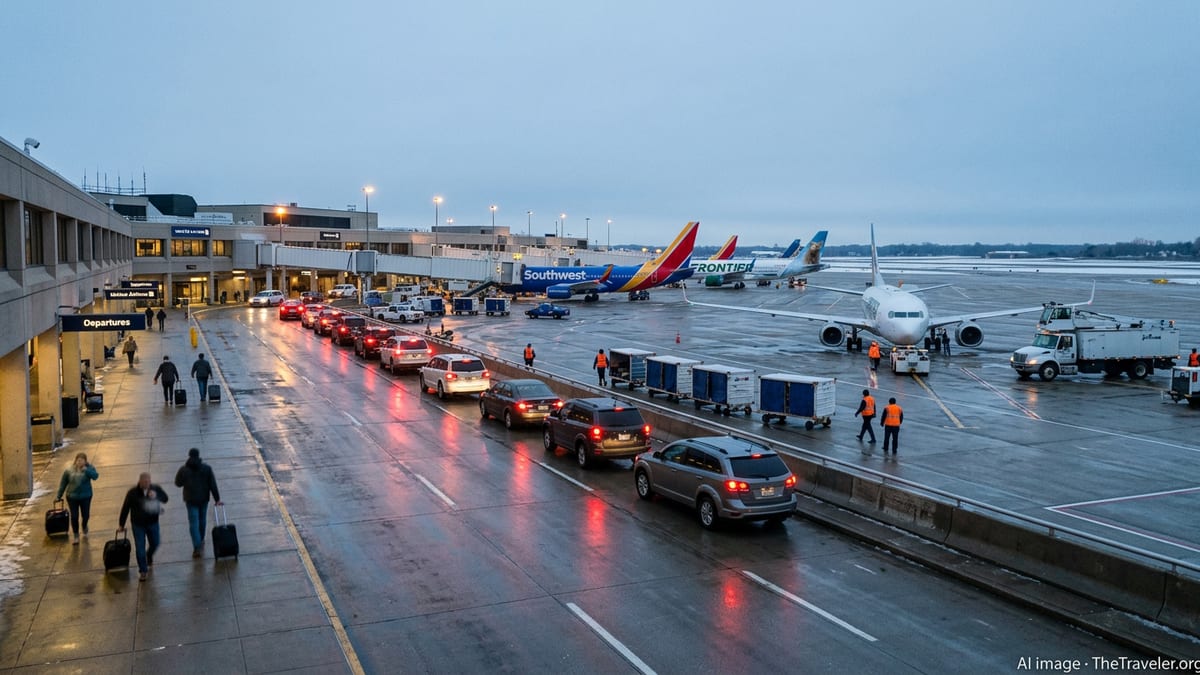
Severe Weather and Network Strain Converge on Cleveland
Publicly available flight-tracking data on March 17 indicated at least 103 delays and 18 cancellations linked to operations at Cleveland Hopkins International, affecting departures and arrivals across the country. The disruption came as airlines were still untangling schedules after a powerful late-winter system swept through the Midwest and up the eastern seaboard over the preceding days.
Reports from aviation forums and traveler postings describe a patchwork of storms and residual operational constraints that left aircraft and crews out of position at multiple hubs. Minneapolis–St. Paul, a key Delta hub, had already seen hundreds of cancellations during a blizzard over the weekend, while airports along the East Coast continued to experience knock-on effects from earlier weather systems.
According to published coverage and airline status boards, Cleveland’s role as a connecting point for several regional routes intensified the impact. When flights into or out of major hubs such as New York, Chicago, Detroit, and Atlanta were delayed, the resulting shortages of aircraft and crews cascaded onto services touching Cleveland, compounding disruptions throughout Monday night and into Tuesday.
Travelers in Cleveland reported long waits at departure gates as rolling delay estimates were repeatedly updated. Some flights faced multiple schedule changes before being canceled outright, while others departed hours behind schedule, contributing to crowding in terminal seating areas and at customer service desks.
Major Hubs Hit: New York, Chicago, Detroit and Beyond
The backlog at Cleveland coincided with wider strain across major US hubs. Flight-status summaries for March 17 showed that routes linking Cleveland with New York-area airports, Chicago O’Hare, and Detroit Metropolitan Wayne County were among the most heavily affected, as carriers attempted to work around weather-related constraints and staffing limits.
According to information compiled from aviation tracking platforms, flights operated or marketed by Delta and its regional partner Endeavor saw a significant share of the disruption on routes feeding into Delta’s core hubs. A combination of earlier cancellations in the upper Midwest and continuing weather-related delays along the East Coast made it difficult for the airline to restore normal operations quickly.
Chicago and New York, with their dense schedules and tight turnaround times, were particularly vulnerable to cascading delays. Once an inbound aircraft arrived late, its subsequent departures from Cleveland and other regional airports often slipped further, pushing some services into crew “timeout” territory where federal duty limits required pilots and flight attendants to be replaced.
Detroit, another key connection point for Midwest and East Coast travel, faced similar pressures. As aircraft and crew rotations were adjusted, several flights linking Detroit and Cleveland, as well as other regional cities, either departed significantly behind schedule or disappeared from departure boards altogether as airlines trimmed their operations to stabilize the system.
Delta, Frontier, PSA and Endeavor Struggle With Knock-On Effects
Operational data and historical performance reports highlight how carriers such as Delta, Frontier, PSA Airlines and Endeavor can be especially exposed when bad weather strikes multiple regions at once. These airlines rely heavily on carefully timed connections through hub airports, and even brief interruptions can create gaps in aircraft availability and crew coverage that take days to resolve.
Federal transportation statistics show that regional carriers like Endeavor and PSA already operate with relatively tight schedules and higher-than-average cancellation rates when severe weather or airspace congestion is involved. Frontier, which runs a point-to-point model with fewer spare aircraft, can face its own challenges when storms or ground stops force planes and crew to remain in place longer than planned.
On March 17, that vulnerability was visible to passengers connecting through Cleveland. Publicly accessible customer reports described situations where flights operated by different carriers were delayed simultaneously, suggesting a combination of factors beyond any single airline’s control. In some cases, even when the weather over Cleveland had improved, continuing restrictions at departure or arrival airports elsewhere in the network prevented flights from leaving on time.
Industry analysts note that the current environment, with tight staffing levels among pilots, flight attendants, and ground workers, leaves limited margin to absorb large-scale disruptions. When multiple carriers face storms in key hubs in the same week, recovery can be slow, and regional airports like Cleveland can experience outsized impacts relative to their size.
Stranded Passengers Face Long Waits and Limited Options
For passengers on the ground at Cleveland Hopkins International, the operational complexities translated into long hours in the terminal. Traveler accounts circulating on social media and aviation discussion boards described crowded gate areas, lines snaking from airline service counters, and difficulty securing same-day alternatives as already-full flights quickly absorbed rebooked passengers.
Publicly shared experiences suggest some travelers were offered reroutes through secondary hubs or overnight stays, while others were left monitoring their mobile apps as departure times shifted repeatedly. With school spring breaks underway in parts of the country, many affected passengers were families heading to or returning from vacations, increasing demand for scarce seats on remaining flights.
Airport advisories have frequently urged travelers in similar situations to verify their flight status before heading to the terminal, use airline apps for rebooking where possible, and allow additional time for check-in and security during large-scale disruptions. On March 17, those standard recommendations offered limited comfort to passengers already waiting past midnight for confirmation that their flights would depart.
Observers note that Cleveland’s terminals and concessions remained operational, but limited late-night options for food and accommodation near the airport meant some travelers prepared to sleep in seating areas while they waited for morning departures.
Broader Questions About Resilience in US Air Travel
The events at Cleveland Hopkins International on March 17 add to a growing pattern in which regional airports feel the most acute effects of national air travel disruptions. When storms, staffing issues, or technical problems emerge at one or more major hubs, smaller markets often see their flights delayed or canceled first as airlines concentrate resources on higher-demand routes.
Recent air travel consumer reports from federal regulators have highlighted ongoing challenges around on-time performance and cancellation rates across several US carriers, particularly during periods of extreme weather. While overall reliability has improved compared with the height of the pandemic, recurring episodes like the March disruption show that the system remains vulnerable to multi-day shocks.
Analysts argue that investments in additional spare aircraft, more flexible crew scheduling, and improved real-time communication tools could help reduce the scale of future meltdowns. However, such measures come with costs, and competitive pressures have kept airlines focused on efficiency, leaving limited slack in the system when conditions deteriorate.
For passengers passing through Cleveland and other mid-sized airports, the latest wave of delays and cancellations serves as a reminder that travel plans in late winter and early spring remain highly dependent on broader network conditions. As airlines and airports continue to refine contingency plans, travelers are likely to face more days like March 17, when a localized trip quickly becomes entangled in a nationwide web of disruptions.