

More news on this day
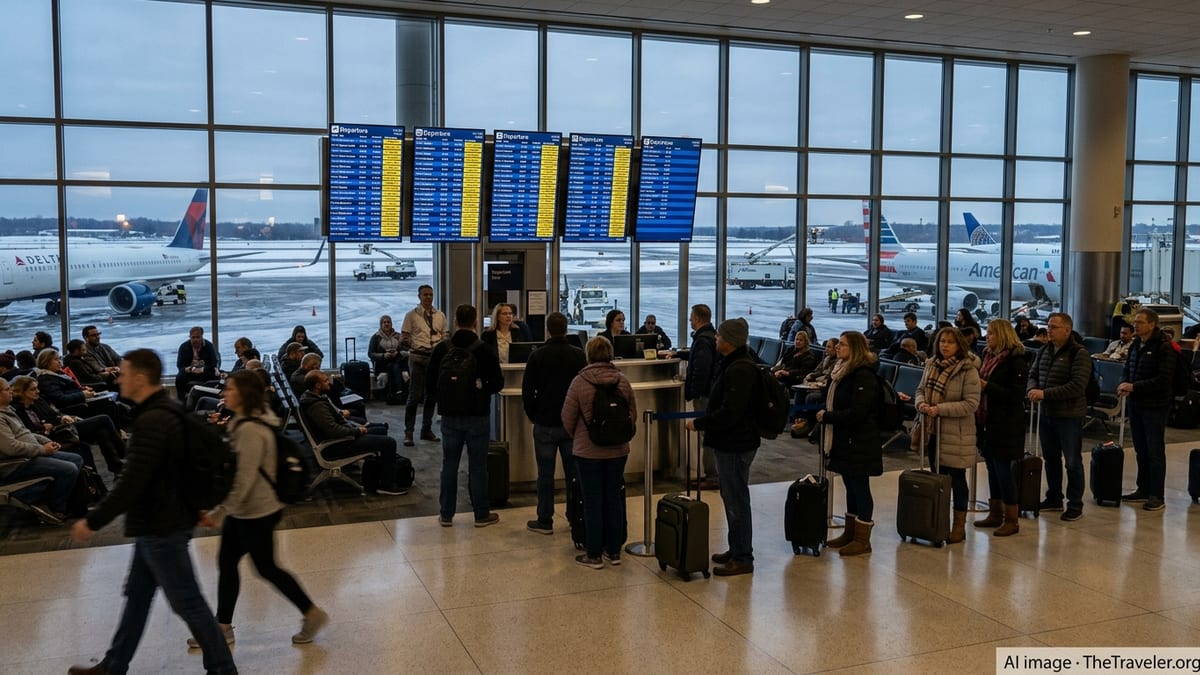
Hundreds of passengers were stranded or severely delayed at Minneapolis–St Paul International Airport on March 28 as a fresh round of disruptions led to three flight cancellations and at least 126 delays, affecting operations across Delta Air Lines, United Airlines, American Airlines and several smaller carriers.
Get the latest news straight to your inbox!
Storm-Weary Hub Faces Another Day of Disruption
Minneapolis–St Paul International Airport has grappled with repeated weather-related challenges throughout March, and the latest disruption on March 28 added new strain to already stretched flight operations. Publicly available tracking data for the day showed three flights canceled and 126 delayed, a relatively small percentage of MSP’s daily schedule but enough to ripple through the hub’s tightly timed network.
The latest wave of delays followed a month in which winter weather repeatedly hit the Upper Midwest, including a major mid-March blizzard that snarled air travel across the region and forced carriers to issue travel waivers for Minneapolis–St Paul and other key Midwestern airports. In that context, even a modest number of additional delays and cancellations increased the pressure on airlines and passengers trying to recover normal schedules.
Although MSP is widely regarded as a resilient cold-weather hub with extensive snow-removal and de-icing capabilities, the combination of heavy regional weather earlier in the month and tight aircraft rotations left little margin for error. When flights ran late into and out of Minneapolis on March 28, knock-on effects quickly appeared on connecting routes across the United States.
Travel forums and social media posts from recent weeks illustrate how repeated schedule disruptions at MSP have led to missed connections and extended airport layovers for travelers who built in what would normally be considered comfortable connection times.
Delta and Other Carriers Feel the Knock-On Effects
As the dominant carrier at MSP, Delta Air Lines bore the brunt of March’s operational strain. The airline operates one of its largest hubs at Minneapolis–St Paul, meaning even a limited number of delayed departures there can cascade through regional and cross-country networks. Travelers connecting through the airport reported recent experiences in which delays of more than an hour erased generous layover buffers and forced last-minute rebookings.
United Airlines and American Airlines also reported schedule adjustments at MSP on March 28, with publicly available flight-tracking boards showing late departures and arrivals on key trunk routes. While the absolute number of canceled flights remained low, late turns and ground holds complicated crew scheduling and aircraft positioning for the remainder of the weekend.
Delta’s large presence at MSP can make it harder for other airlines to absorb displaced passengers during irregular operations. With few competing nonstop options on some routes, travelers sometimes have limited alternatives when a flight is delayed beyond connection windows, particularly late in the day when backup departures are scarce.
Recent customer experiences shared online highlight how cascading delays can erode once-reliable connection patterns through MSP, especially during peak travel days or in the aftermath of major storms that leave aircraft and crews out of position.
Passengers Confront Missed Connections and Long Lines
For passengers on March 28, the numbers translated into longer waits at gates, extended time on airport concourses and, in some cases, unplanned overnight stays. Even when flights eventually departed, delays of 60 to 90 minutes frequently pushed arrivals past the departure times of onward connections, leaving travelers scrambling to secure seats on later services.
Travelers transiting MSP in recent weeks have described scenarios where connection windows of more than an hour were no longer sufficient once inbound flights were held for weather, ground traffic or crew-related issues. Missed connections often meant being rebooked on flights the following morning, with limited hotel availability as multiple passengers sought lodging at the same time.
Check-in counters and customer service desks tend to see surges of passengers when clusters of flights are delayed. On busy days, those surges can translate into long queues as airline staff work through rebooking options, process meal vouchers where applicable and provide updated departure information.
The strain can be particularly acute for international-bound travelers whose long-haul departures from MSP or connecting hubs operate only once per day. When a missed connection pushes a passenger off a transatlantic or transpacific flight, re-accommodation options may be limited for 24 hours or more, complicating hotel and ground transport plans at both ends of the journey.
Why Weather and Network Design Magnify the Impact
The March disruptions at MSP underscore how winter weather, even when it does not shut down an airport entirely, can sharply reduce the efficiency of tightly scheduled airline networks. When storms move through the Upper Midwest, airlines must slow operations for de-icing, increase separation between aircraft and occasionally pause departures and arrivals, all of which trim the number of flights that can operate on time.
Because airlines rely on complex rotations in which a single aircraft might fly four to six legs per day across multiple cities, a delay on one morning departure can cascade into a string of late arrivals and departures across the country. That pattern has been visible across several recent storm systems affecting Minneapolis and other Midwestern hubs, where initial weather delays have persisted into the next day.
Minneapolis–St Paul’s role as a connecting hub intensifies this effect. A significant portion of passengers are not starting or ending their journey in the Twin Cities but using MSP to link between smaller regional airports and larger coastal cities. When one segment of that chain breaks, the entire itinerary is jeopardized, especially when weather disruptions are widespread enough to reduce backup options in neighboring hubs.
Operational planning documents for MSP emphasize tarmac delay management and the importance of balancing aircraft flow with passenger needs when severe weather or ground stops occur, highlighting how airports and airlines must jointly manage limited runway and gate capacity during irregular operations.
What Travelers Can Do When Disruptions Hit MSP
With late-season winter weather still a possibility in Minnesota, travel experts recommend that passengers connecting through MSP build in extra time and closely monitor their itineraries on days when storms affect the Upper Midwest. Airlines frequently publish travel waivers during significant weather events, allowing passengers to adjust travel dates or routes without change fees, and those waivers have been used multiple times this month for Minneapolis and nearby hubs.
When delays mount on the day of travel, early communication with airlines through mobile apps, customer service phone lines or airport agents can improve the chances of securing a workable alternative. Same-day changes onto earlier flights, re-routing through other hubs or shifting to partner airlines may be available on a limited basis, especially for travelers who act quickly once delays begin to appear on departure boards.
Travelers with fixed-time commitments at their destination, such as cruises, events or international connections, may benefit from flying into MSP a day early during periods of active winter weather. While not always practical, separating critical connections from the immediate impact window of a storm can provide a buffer when operations remain uneven, as they did on March 28.
As airlines and airports continue to recover from a turbulent March, passengers using Minneapolis–St Paul International in the coming days can expect schedules to stabilize, but recent events show that even a modest number of cancellations and more than a hundred delays are enough to disrupt travel plans for hundreds of people across multiple states.