

More news on this day
Escalating conflicts and sudden airspace closures from the Middle East to South Asia are disrupting thousands of flights, leaving travelers scrambling to understand their options when a route becomes a no-go zone.
Get the latest news straight to your inbox!
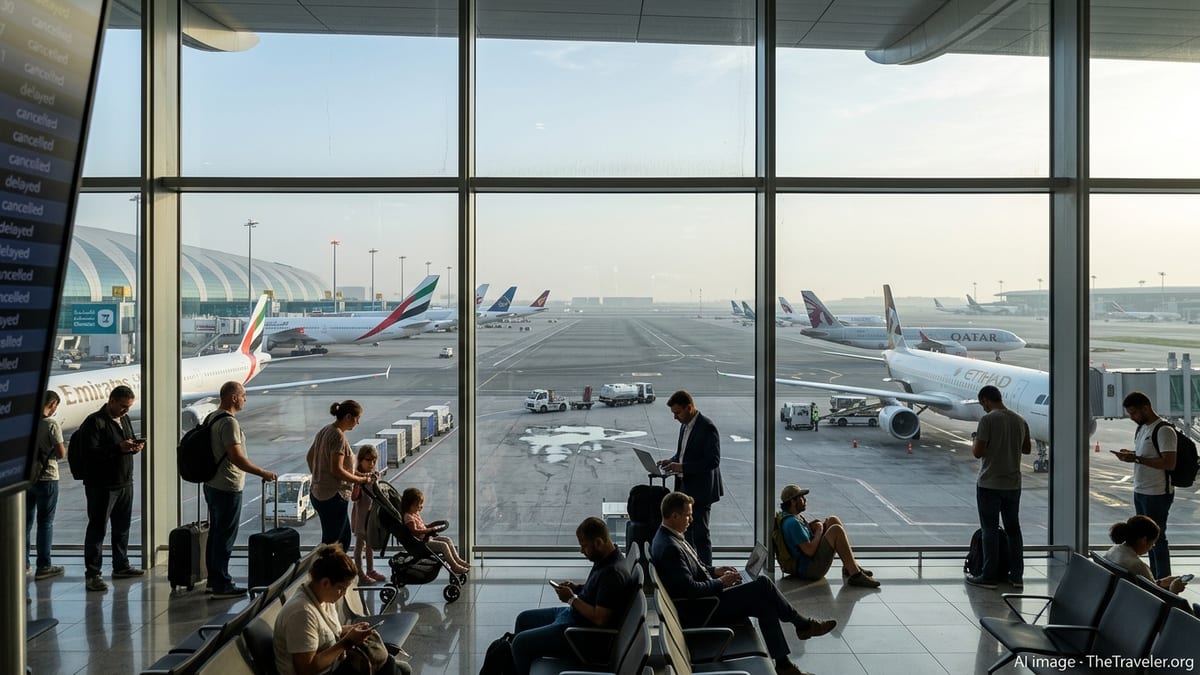
Why airspace closures are causing widespread disruption
Recent military escalations involving Iran, Israel and United States forces have triggered rolling airspace closures across the Middle East and North Africa, creating one of the most significant shocks to global aviation since the pandemic. Publicly available operational updates show that countries including Iran, Iraq, Israel, Jordan, Kuwait, Qatar, Bahrain and the United Arab Emirates have imposed full or partial shutdowns of their skies at various points in 2025 and early 2026.
Analysis of flight data and industry reports indicates that these restrictions have forced airlines to cancel or reroute tens of thousands of services. Routes between Europe and Asia, as well as links from India to the Gulf and onward to North America, have been particularly affected. In early March 2026, specialist travel trackers reported that airspace closures on a single weekend led to detours of two to five hours on many Europe Asia flights as carriers tried to skirt conflict zones.
The knock-on effects ripple far beyond the region. Gulf hubs such as Dubai, Abu Dhabi and Doha handle a substantial share of connecting traffic between Europe, Asia, Africa and Oceania. When these hubs suspend or sharply curtail operations, aircraft and crews end up out of position, which can disrupt journeys for travelers who are not flying anywhere near the Middle East on a map.
These events are unfolding against a broader backdrop of restricted skies. Ukrainian airspace remains closed because of the war, while more limited closures and advisories have appeared over parts of Eastern Europe and South Asia in response to security concerns. The result is a more fragile global route network where a single new conflict can have instant, worldwide consequences for flight schedules.
How airlines respond when your route is suddenly closed
When a government closes all or part of its airspace, airlines typically receive formal notifications through aviation channels and must adapt in real time. Public information from carriers and aviation authorities shows three main responses: outright cancellations, large-scale rerouting and temporary suspension of specific destinations.
In severe cases, such as the shutdowns across several Gulf states at the start of March 2026, major airlines temporarily stopped nearly all operations at key hubs while they assessed risk and waited for revised routing permissions. Flight tracking data from that period points to hundreds of cancellations over just a few days, along with significant numbers of long-haul aircraft diverted to secondary airports in Europe, North Africa and Central Asia.
On other occasions, airlines keep flying but divert around the affected airspace, accepting longer routes and higher fuel costs. Industry coverage in 2025 and 2026 has highlighted carriers routing north via the Caucasus or south over the Arabian Sea and East Africa to avoid Iran and neighboring states. For passengers, that can mean extended flight times, missed connections and unplanned overnight stays.
Airlines generally frame these decisions as a response to safety assessments and regulatory requirements. Publicly available guidance from international aviation bodies emphasizes that operators are expected to avoid conflict zones where there is a credible risk from missiles or military activity. Once a closure is in place, carriers have little flexibility to operate as normal, even on heavily booked routes.
Your immediate steps at the airport or in transit
For travelers, the most urgent question is what to do once a closure upends an itinerary. Recent advisories from civil aviation regulators in Asia and the Middle East strongly encourage passengers to check flight status directly with their airline before leaving for the airport, as schedules may change with minimal notice when airspace restrictions tighten.
If a disruption hits while you are already at the airport, airline counters and mobile apps are usually the primary channels for rebooking. After the latest Middle East closures, many carriers have promoted flexible rebooking policies on their public websites, allowing date changes or rerouting without additional change fees, especially for passengers whose travel originates or transits through affected hubs.
Travel experts recommend documenting everything: keep boarding passes, delay notifications and any expenses you incur because of the disruption, such as hotel stays or meals. These records may be needed later if you seek reimbursement under airline policies, travel insurance or regional passenger-rights regulations.
Travelers in mid-journey diversions face particular challenges. Reports from previous closure events describe long queues at transfer desks as airlines try to rebook passengers whose connecting flights no longer exist or whose routes are now too risky to operate. In such situations, staying in contact via the airline app or call center while you wait in line can sometimes secure an earlier alternative than relying on the desk alone.
Understanding your rights and what compensation may apply
Passenger rights after an airspace closure depend heavily on where you are flying, which airline you are on and why the disruption occurred. Within the European Union, existing air passenger regulations provide compensation for long delays and cancellations in many circumstances, but legal commentary and official guidance note that extraordinary events affecting airspace are often treated differently from routine operational problems.
When closures are linked to armed conflict, security incidents or government decisions, airlines commonly argue that these are extraordinary circumstances beyond their control. In such cases, travelers may still be entitled to care such as meals, hotel accommodation and re-routing at the earliest opportunity, but cash compensation is less likely to apply. Ongoing legislative discussions in Europe aim to clarify some of these gray areas, but for now outcomes can vary by case.
Outside Europe, protections are more fragmented. Some countries, including the United States, focus on requiring airlines to honor their own published customer service commitments rather than imposing a single nationwide compensation scheme. Public consumer guidance in several markets advises passengers to review their carrier’s contract of carriage and to keep written records of any promises about refunds, vouchers or alternative transport.
Travel insurance is often a critical backstop. Policies that include trip interruption or travel delay benefits may cover extra accommodation and meal costs, although many exclude events linked to declared wars or known conflicts. Insurance industry commentary following the latest Middle East closures highlights the importance of reading policy wording carefully and purchasing cover before a situation escalates and becomes a widely known risk.
Planning future trips in a world of fragile airspace
With multiple conflict zones now intersecting major aviation corridors, travelers are increasingly asking how to plan trips that are resilient to sudden closures. Analysts and risk consultancies point out that hubs in geographically sensitive regions may face recurring restrictions, even if individual shutdowns are relatively short lived.
One strategy highlighted in recent travel coverage is to build extra buffer time into itineraries, especially when connecting between long-haul flights. Allowing longer layovers and avoiding last-minute arrivals before important events can reduce the impact if rerouting adds several hours to a journey. Some frequent travelers are also favoring itineraries that use alternate hubs in Europe or East Asia when feasible, even if the ticket price is higher.
Another consideration is airline choice. Large network carriers sometimes have more options to reroute passengers via secondary hubs or alliance partners when a primary corridor closes, while smaller operators may have fewer fallbacks. Publicly available case studies from the recent Middle East disruptions show that some travelers were moved onto partner airlines or rebooked across different continents to reach their destinations.
Ultimately, experts stress that airspace closures connected to conflict are likely to remain part of the travel landscape for the foreseeable future. Staying informed through reliable news outlets, monitoring advisories from aviation regulators and investing in appropriate insurance can help travelers navigate a system where the sky above certain regions can close with little warning.